
30. March 2026
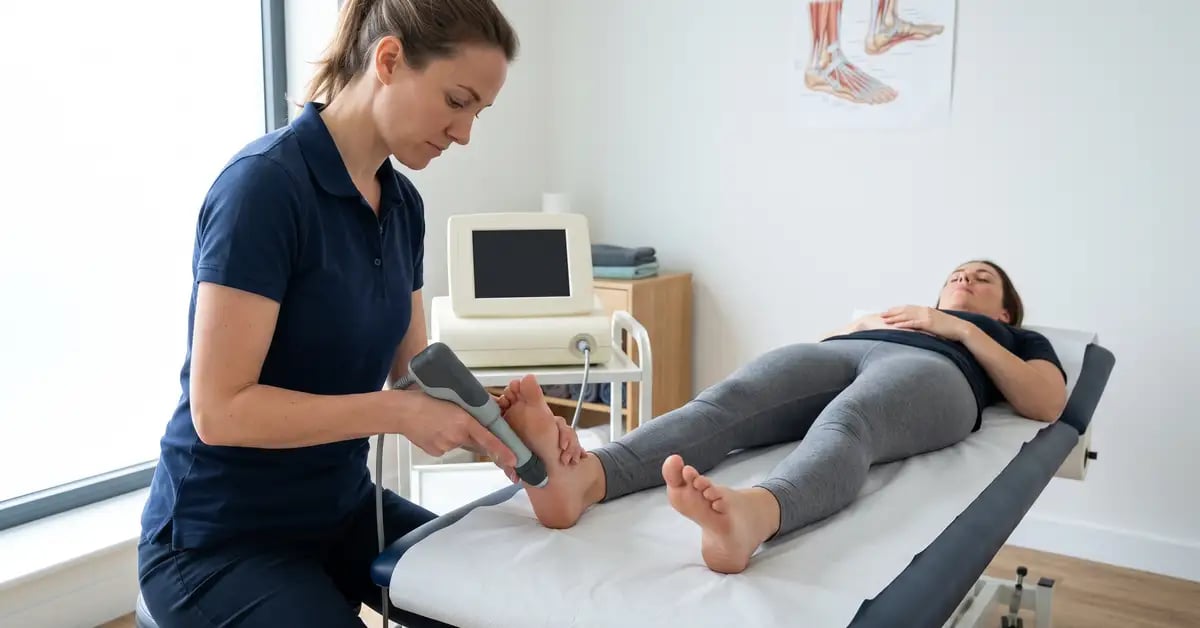
Shockwave therapy, or extracorporeal shockwave therapy (ESWT), is a non-invasive treatment that uses high-energy acoustic waves to stimulate healing in damaged tissues and joints. Originally developed in the 1980s for kidney stones, it's now widely used across physiotherapy and orthopaedics to treat chronic pain conditions like plantar fasciitis, tennis elbow, and calcific tendinopathy. At CK Physio in West London, we integrate shockwave therapy with tailored physiotherapy to accelerate recovery and reduce reliance on painkillers and surgery.
Key Takeaway
Shockwave therapy is a drug-free treatment that aims to restart stalled healing in long-standing tendon problems. The evidence is genuinely mixed: NICE has reviewed it for plantar fasciitis, Achilles tendinopathy and tennis elbow and found no major safety concerns, but judged the evidence on how well it works inconsistent. We use it after conservative treatment has been tried, explain that uncertainty up front, and track your outcomes.
What is Shockwave Therapy?
Shockwave therapy is a medical treatment that delivers high-energy acoustic pulses to injured or degenerative tissue, triggering a repair cascade at the cellular level. Unlike ultrasound (which generates heat through friction), shockwaves create mechanical stress that stimulates blood vessel formation and collagen remodelling—a process called mechanotransduction. This reawakens dormant healing mechanisms in chronic conditions where the body has "given up" trying to repair itself.
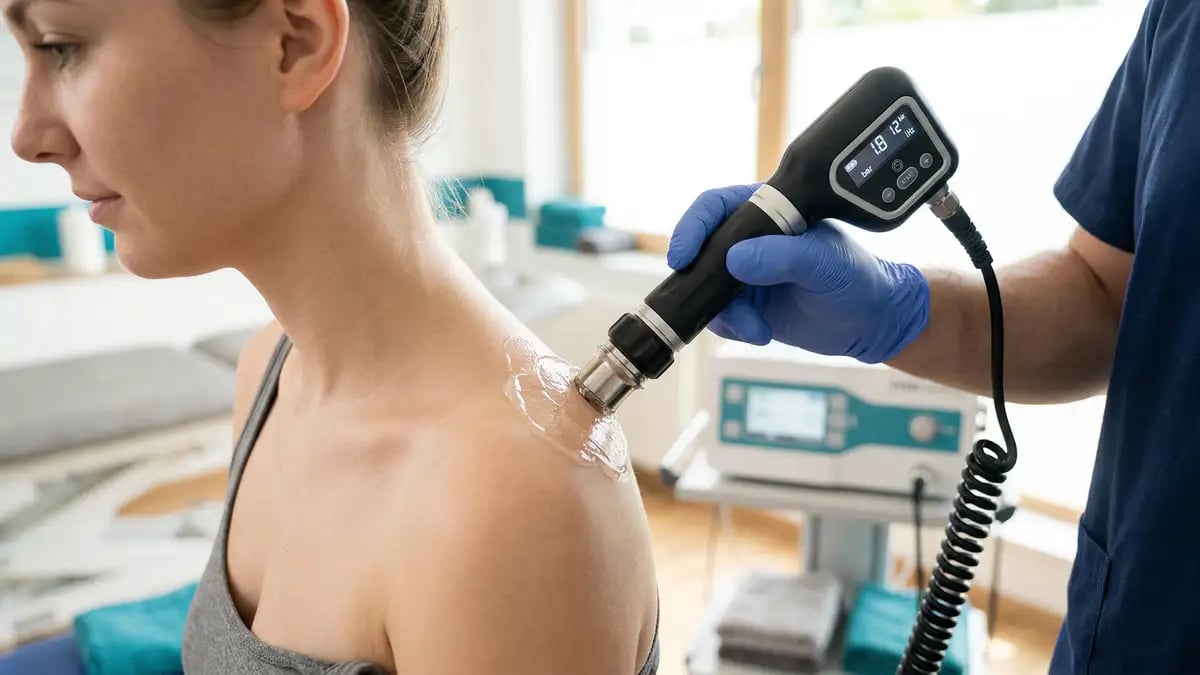
The term "shockwave" refers to the acoustic energy profile, not the sensation. Shockwaves are pressure pulses generated by a specialised machine and transmitted through your skin via conductive gel. They're not electrical; they're sound waves at therapeutic intensity. NICE has reviewed ESWT for several musculoskeletal conditions. Its reservation is about efficacy rather than cost: across its guidance on plantar fasciitis (IPG311), Achilles tendinopathy (HTG426) and tennis elbow (HTG201) it found no major safety concerns but judged the evidence on how well the procedure works inconsistent, and asks clinicians to use it with special arrangements for consent and audit.
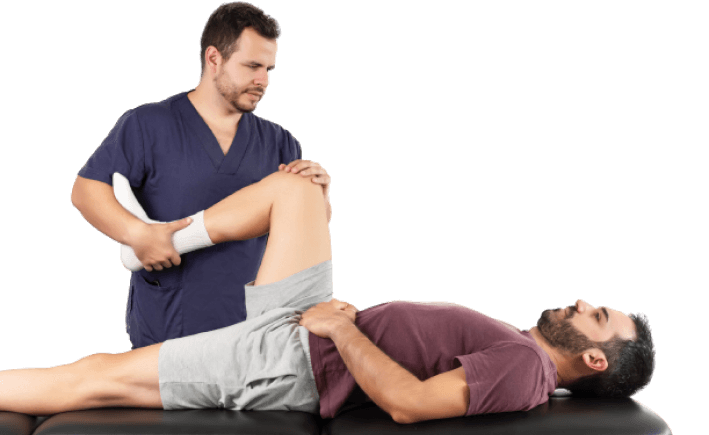
At CK Physio, we use shockwave therapy alongside manual physiotherapy and electrotherapy to personalise your recovery. Rather than relying on shockwaves alone, we combine them with targeted exercises and hands-on treatment to rebuild strength and movement quality—ensuring the benefits last years, not months.
How Does Shockwave Therapy Work?
Shockwave therapy works through three main mechanisms: mechanical stimulation of tissue, triggering of new blood vessel formation (neovascularisation), and activation of growth factors that promote collagen synthesis. When a shockwave pulse reaches damaged tissue, it creates microruptures and cavitation bubbles (tiny imploding air pockets) that stimulate cells to release healing signals. This is entirely different from injury damage—it's controlled, therapeutic stimulation that restarts a stalled healing cycle.
There are two main types of shockwave delivery: focused and radial (or ballistic). Focused shockwaves concentrate energy at a precise point 5–12 cm deep, ideal for small, well-defined lesions like calcific deposits or tendon tears. Radial shockwaves spread energy across a wider area 3–4 cm deep, better suited to larger muscle groups and trigger point release. Both are effective; the choice depends on your condition, tissue depth, and anatomy.
| Characteristic | Focused ESWT | Radial ESWT |
|---|---|---|
| Penetration Depth | 5–12 cm | 3–4 cm |
| Energy Concentration | Pinpoint focal zone | Broad dispersal pattern |
| Best For | Calcific tendinopathy, small tears, deep lesions | Muscle groups, trigger points, surface pain |
| Imaging Required | Usually ultrasound-guided | Palpation + landmarks |
| Discomfort During | 3–5/10 (can be intense) | 2–4/10 (generally milder) |
Research published in PubMed shows that at the cellular level, shockwaves increase expression of angiogenic growth factors—proteins that signal blood vessels to sprout and rebuild. They also reduce inflammatory markers in chronic pain states, which explains why patients often feel pain relief within weeks, even as tissue remodelling continues over months. This is why a course of 3–6 sessions, spaced 1–2 weeks apart, produces cumulative benefit: each session amplifies the healing cascade, and the interval allows tissue to respond and adapt. Treatment protocols vary widely between clinics and studies.
What Conditions Does Shockwave Therapy Treat?
Shockwave therapy is used for a number of long-standing tendon and soft-tissue problems, but the evidence differs a great deal between them — and NICE's reviews are more cautious than much of the research literature. Here is an honest summary of where things stand.
Conditions NICE has reviewed
Plantar Fasciitis: The most studied indication. Reported success rates vary widely between studies — roughly 34–88% depending on patient selection, protocol and follow-up — which is precisely why NICE (IPG311) describes the efficacy evidence as inconsistent. We use it after conservative treatment has been tried, not instead of it.
Achilles Tendinopathy: The honest picture here has shifted. A 2026 meta-analysis of sham-controlled trials found no significant difference between ESWT and sham for chronic mid-portion or insertional Achilles tendinopathy, on either pain or function, at low-to-moderate certainty; a 2024 meta-analysis reached the same conclusion. NICE (HTG426) likewise judges the evidence inconsistent and limited. We will still discuss ESWT for a stubborn Achilles, but as an adjunct to progressive loading rehabilitation — which has the stronger evidence — not as a substitute for it.
Lateral Epicondylitis (Tennis Elbow): NICE (HTG201) found no major safety concerns but judged the evidence on how well it works inconsistent. For long-standing cases that have not responded to exercise-based rehabilitation, we will discuss whether shockwave is worth adding.
Greater Trochanteric Pain Syndrome (GTPS / Hip Pain): NICE (HTG248) judges the evidence on both the efficacy and the safety of shockwave for this condition to be limited in quality and quantity, and says it should only be used with special arrangements for consent and audit. If we use it, it is alongside a strengthening programme and after explaining that uncertainty to you.
Calcific Tendinopathy (Shoulder): Individual trials have reported good results for ultrasound-guided focused shockwave in breaking down calcium deposits. NICE, however, reviewed this specific use in 2022 and reached a different conclusion: in HealthTech guidance HTG645 it found no major short-term safety concerns but judged the evidence on efficacy inadequate, and recommends the procedure be used only in the context of research. We will set out both the trial findings and NICE's appraisal before recommending it for a shoulder.
Uses with limited evidence
Myofascial Trigger Points: Shockwave is sometimes used for chronic muscle tightness and trigger points that have not responded to manual therapy, but the evidence is weak: a 2020 meta-analysis of five small trials found only very low-level evidence of short-term pain relief.
Non-Union Fractures & Delayed Healing: Shockwave is thought to stimulate osteoblast (bone-building cell) activity. Reported healing rates vary between small studies and we do not quote a single figure. This is a specialist application normally managed by an orthopaedic team rather than in an outpatient physiotherapy clinic.
Other Conditions: Knee osteoarthritis, rotator cuff tendinopathy and patellofemoral pain have also been studied, but the evidence is limited and shockwave would not normally be our first choice for them.
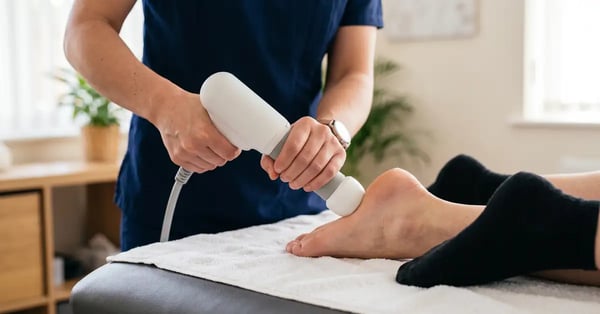
The key principle at CK Physio is that shockwave therapy is most effective when paired with a tailored physiotherapy programme. We assess whether your condition fits the evidence base, personalise the treatment intensity, and ensure you're doing the right exercises to reinforce healing. A course of shockwave alone will likely underperform compared to shockwave plus targeted rehab.
If you're unsure whether your condition is suitable, contact us for a confidential discussion. We can review your imaging and history to advise honestly on whether shockwave therapy is right for you, or recommend an alternative approach.
Ready to explore shockwave therapy?
Call us on 020 8566 4113 to talk through whether shockwave therapy is suitable for your condition.
Learn More About Our Shockwave ServiceWhat Happens During a Shockwave Therapy Session?
A typical shockwave therapy session at CK Physio follows a structured pathway to ensure safety, efficacy, and comfort. Here's what you'll experience from arrival to aftercare.
Assessment & Imaging
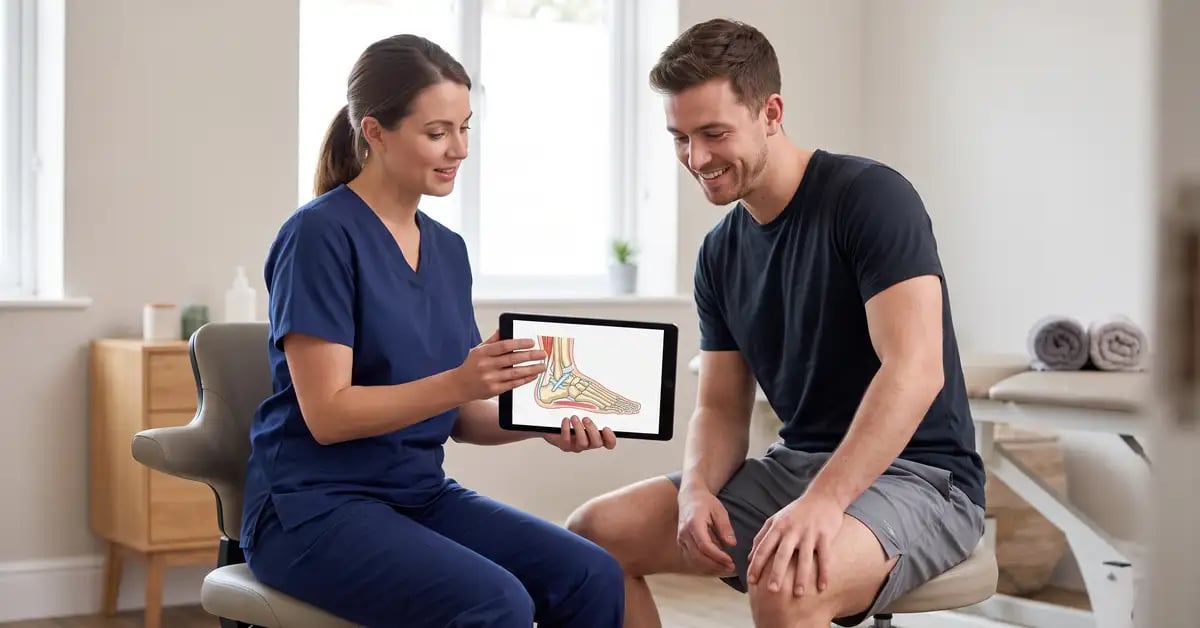
We examine the injured area, discuss your symptoms, and review any ultrasound scans or X-rays. For deep lesions like calcific deposits, we may perform live ultrasound to precisely target the lesion with focused shockwaves. This ensures the energy reaches the right tissue.
Positioning & Preparation
You're positioned comfortably to expose the treatment area. We apply a generous layer of conductive gel (similar to ultrasound gel) to ensure the shockwave applicator makes full skin contact and energy transmits efficiently.
Pulse Delivery (5–20 Minutes)
The physiotherapist holds the applicator against your skin and delivers 1,500–3,000 pulses, depending on the condition and depth. You'll hear a rhythmic tapping sound. The sensation ranges from mild pressure (radial waves) to a sharper, deeper ache (focused waves). We adjust intensity based on your feedback—there's no "no pain, no gain" here. You should be comfortable enough to breathe normally.
Immediate Aftercare
We clean off the gel and check for any immediate reactions (mild redness is normal; bruising is rare). Light ice may be applied if needed. Most patients leave feeling energised rather than sore, though the treated area may feel tender for a few hours.
Home Programme & Follow-Up
You'll receive targeted exercises to reinforce the shockwave effect. We typically space sessions 1–2 weeks apart to allow tissue response. After 3–6 sessions, we assess progress with imaging and functional tests to decide on the next phase—continuation, discharge, or integration with other therapies like electrotherapy or acupuncture.
Is Shockwave Therapy Painful?
This is the question we hear most. The answer: shockwave therapy is uncomfortable, but not unbearably painful, and the discomfort is brief and controllable.
During treatment, most patients report discomfort of 3–5 out of 10 on a pain scale, with radial shockwaves typically milder (2–4/10) than focused waves. The sensation is often described as a rhythmic tapping or deep pressure; it's not sharp or cutting. Your physiotherapist adjusts intensity throughout the session—if you signal discomfort, we dial it back. There's no medical benefit to suffering; in fact, intense pain may cause muscle guarding that reduces efficacy.
The first session is usually the most intense because tissue is tense and nerves are anticipating something unknown. By session two or three, your body adapts, tissues are more responsive, and the sensation feels less shocking. Many patients find that once they experience it once, they're surprised how manageable it is.
For a detailed exploration of pain during shockwave therapy and coping strategies, see our article Is Shockwave Therapy Painful?, which includes patient testimonials and our top tips for comfort during sessions.
After the session, you may experience mild tenderness in the treated area, similar to delayed-onset muscle soreness (DOMS) after intense exercise. This typically fades within 24–48 hours and is a sign that healing is activating.
How Does Shockwave Therapy Compare to Other Treatments?
When deciding on treatment for chronic pain, you likely have several options: physiotherapy, injections, surgery, or other modalities. Here's how shockwave therapy stacks up against the most common alternatives.
| Treatment | Success Rate | Duration of Benefit | Recovery Time | Key Advantage | Key Limitation |
|---|---|---|---|---|---|
| Shockwave Therapy (ESWT) | Varies widely; NICE: evidence inconsistent | Variable | Immediate return to activity | Non-invasive, promotes tissue repair, no medication | Requires 3–6 sessions; not suitable for all conditions |
| Corticosteroid Injection | 60–70% (short-term pain relief) | 3–6 months (fades over time) | Immediate; can return to activity next day | Quick pain relief; good as interim measure | Temporary effect; repeated injections risk tissue damage; doesn't address underlying cause |
| Physiotherapy Alone | 50–70% (varies by condition) | Sustained if exercise maintained | 8–12 weeks for results | Strengthens muscles, improves movement, sustainable long-term | Slower onset; relies on patient adherence; less effective for calcified or degenerate tissue |
| Surgery (e.g., fasciotomy, arthroscopy) | 70–85% (invasive but definitive) | Long-term (unless recurrence) | 4–12 weeks rehabilitation | Definitive fix for structural problems; strong evidence base | Invasive; anaesthetic risk; rehabilitation required; not suitable if tissue can be salvaged |
| Ultrasound Therapy | 45–60% (modest effect) | 3–6 months | Immediate | Comfortable, good for inflammation, complements physio | Moderate efficacy; limited evidence; mostly thermal effect |
The Shockwave Edge: Shockwave therapy bridges the gap between temporary relief (injections, ultrasound) and invasive intervention (surgery). It's a middle path: effective, drug-free, and preserves your tissue. Unlike corticosteroid injections, which mask pain for a few months without addressing the root problem, shockwave therapy stimulates actual tissue repair. Where shockwave helps, benefit tends to build over about 12 weeks rather than appearing immediately. And unlike surgery, there's no downtime—you leave and get on with your day.
The Best Outcome: At CK Physio, we often recommend a combined approach. For example, a patient with plantar fasciitis might receive 2–3 shockwave sessions paired with a progressive strengthening programme, stretching, and potentially one anti-inflammatory injection early on. The injection provides quick pain relief; the shockwave triggers deep healing; and physio rebuilds foot mechanics. This integrated strategy outperforms any single modality.
For more detail on how focused and radial shockwave compare, see our article Focused vs. Radial Shockwave Therapy: Which is Right for You?
How Much Does Shockwave Therapy Cost in London?
Shockwave therapy pricing in London varies by clinic, condition, and equipment. At CK Physio in West London (serving Hanwell, Ealing, and the surrounding area), our pricing is transparent and competitive.

Our Pricing
Shockwave is delivered as a course rather than a single session, because the benefit is cumulative. Most patients start with an assessment plus three sessions. Our bookings page carries the current fees, and our page on shockwave therapy in Ealing & Hanwell explains what a course includes. Treatment is often combined with physiotherapy exercises and complementary modalities like acupuncture or electrotherapy.
Insurance & Private Medical Cover
Many private health insurance providers cover shockwave therapy as a condition of your policy, though some require a physiotherapy referral or pre-authorisation. Common providers that may cover ESWT include:
- BUPA
- AXA PPP
- WPA
- Groupama
- Life UK
Check your policy: Contact your insurer directly to confirm whether shockwave therapy is covered and any conditions (e.g., prior physiotherapy attempts, referral requirement). We're happy to provide invoicing and clinical justification to support your claim. As an HCPC-registered clinic, we meet the standards insurers require.
NHS Availability
The NHS offers shockwave therapy in selected centres, usually orthopaedic departments in larger hospitals. Access is limited, waiting lists are long (often 3–6 months), and availability depends on your local integrated care board (ICB). Referral is typically via your GP to an orthopaedic consultant, not directly through physiotherapy. If you're keen to proceed quickly, private treatment—like ours—bypasses the waiting list entirely.
Value for Money
A course of shockwave at CK Physio covers specialist equipment, assessment by a chartered physiotherapist, and integration with the rest of your rehabilitation rather than shockwave in isolation. We would rather you understood the evidence than felt sold to: if we do not think shockwave is right for your condition, we will say so and suggest an alternative.
Not sure about cost or insurance?
Call us on 020 8566 4113 to discuss pricing, insurance and a treatment plan suited to your condition.
Check Availability & BookWho Should Not Have Shockwave Therapy?
Shockwave therapy is very safe, but there are situations and conditions where it's not appropriate. We take a thorough history during your initial assessment to identify any contraindications and ensure your safety.
Important Safety Information
Do not have shockwave therapy if you have any of the following conditions. Always inform your physiotherapist of your full medical history before treatment begins.
Absolute Contraindications
- Active Malignancy or History of Cancer: Shockwave-induced tissue stimulation could theoretically trigger or accelerate cancer growth. We avoid shockwave near or in regions with active cancer or high risk.
- Pregnancy: Safety data in pregnancy is limited. We do not treat pregnant patients.
- Cardiac Pacemaker or Implanted Defibrillator: Acoustic energy could interfere with device function.
- Severe Coagulopathy or Anticoagulation: Patients on warfarin or with severe bleeding disorders are at risk of excessive bruising or haematoma.
- Infection at the Treatment Site: We avoid shockwave over active cellulitis or infected wounds.
Relative Contraindications (Caution Required)
- Recent Steroid Injection (within 6–8 weeks): Cortisone suppresses inflammation but also healing. If shockwave is given too soon after a steroid injection, efficacy may be reduced. We typically wait 6–8 weeks before treating the same area.
- Very Young Age (Skeletally Immature): Growth plates may be sensitive to high-energy stimulation. Shockwave is generally safe for adults; we use caution in adolescents near growth plates.
- Severe Osteoporosis: Bone fragility increases fracture risk if shockwave is applied over osteoporotic bone. We assess bone density and avoid high-energy focused waves in these cases.
- Neurological Compromise or Sensory Loss: Patients unable to report discomfort are at risk of inadvertent tissue damage. We need reliable feedback during treatment.
- On High-Dose Antiplatelet Therapy (e.g., Clopidogrel): Increased bruising risk, but treatment is often still safe with informed consent.
Even if you have a relative contraindication, treatment may still be possible with careful planning. For example, we can delay treatment after a steroid injection, reduce energy in osteoporotic patients, or position you to avoid pacemaker interference. The key is disclosure: tell us your full medical history, current medications, and any concerns. We'll make a shared decision based on your risk–benefit profile.
Reassurance on Safety: Serious adverse events from shockwave therapy are rare across published trials, though we avoid quoting a precise figure because reporting varies between studies. Common minor effects are temporary redness, mild bruising, soreness or transient swelling, usually settling within 24–48 hours. The NICE has consistently found no major safety concerns in its reviews of ESWT, while noting the evidence on how well it works is inconsistent. Treatment should be delivered by an appropriately trained, CSP-chartered and HCPC-registered clinician.
Why Choose CK Physio for Shockwave Therapy in West London?
Shockwave therapy is only as good as the physiotherapist delivering it. Equipment matters, but expertise, assessment skill, and integration with broader rehabilitation are what drive real recovery. Here's why CK Physio stands out for shockwave therapy in Hanwell, Ealing, and West London.
22 Years of Clinical Excellence
Established in 2003, CK Physio has spent more than two decades building trust across West London. Our physiotherapists are HCPC-registered, meaning they meet rigorous standards set by the Health and Care Professions Council. Experience matters: we've treated thousands of patients with plantar fasciitis, tennis elbow, shoulder pain, and sports injuries. We know what works, what doesn't, and how to adjust treatment on the fly.
Holistic, Integrated Approach
We don't see shockwave therapy in isolation. Shockwave works best when combined with targeted physiotherapy, electrotherapy, acupuncture, and manual therapy. Our clinic offers all these modalities under one roof. Your treatment plan might include:
- Shockwave therapy to stimulate healing
- Soft tissue mobilisation (hands-on treatment) to release tension
- Exercise prescription to rebuild strength and control
- Acupuncture to manage pain and enhance circulation
- Electrotherapy (ultrasound, TENS) to support inflammation control
This integrated model—endorsed in our article What is Holistic Physiotherapy?—produces better outcomes than shockwave alone. You're not bouncing between clinics; you're receiving coordinated, personalised care.
Home Visit Service
Mobility issues? Time-poor? We come to you. Our home visit physiotherapy service extends across West London. Treatment in your own home removes barriers to access and allows us to assess your environment (stairs, workspace, sleep setup) to address pain at its source.
Insurer Partnerships
We are recognised by BUPA, AXA PPP, WPA, Groupama and Life UK. This means faster claims processing, transparent billing, and direct settlement in many cases—you pay less out of pocket. We handle the admin so you can focus on recovery.
Evidence-Based, Transparent Communication
We're honest about what shockwave can and cannot do. If your condition isn't suitable for shockwave—or if we think you'll do better with physio alone—we'll tell you. We provide imaging-guided assessment (ultrasound), detailed progress tracking, and clear explanations of your condition. No hard sell, just professional advice in your best interest.
Local Presence
We're based in Hanwell and serve the local community—Ealing, West London, Acton, Walpole, and beyond. We understand your area's demographics, the pace of local life, and the specific demands of your work and leisure. We're invested in your recovery because we're part of your community.
Ready to Explore Shockwave Therapy?
Take the first step. Get in touch to discuss your condition, ask questions, and find out whether shockwave therapy is the right choice for you. No obligation—just honest, expert advice.
Book an AppointmentFrequently Asked Questions About Shockwave Therapy
We've answered the questions we hear most often. If you have a question not covered here, please get in touch—we're happy to discuss your specific situation.
Q: How many shockwave sessions will I need?
A: Most conditions require 3–6 sessions, spaced 1–2 weeks apart. Plantar fasciitis often responds to 3 sessions; calcific tendinopathy may benefit from 4–5. Some conditions plateau after 3 sessions, while others progress steadily through 6. We reassess after every 2–3 sessions and adjust the plan based on your progress. If you're not improving, we'll discuss alternatives rather than continuing ineffectively.
Q: How long does it take to see results?
A: Some patients feel pain relief within 1–2 weeks of the first session. However, true tissue remodelling takes 8–12 weeks. The sweet spot for assessment is 6–8 weeks into a course—by then, inflammation has calmed and new blood vessel growth is evident on ultrasound. Don't judge efficacy on week two; judge it at week eight.
Q: Is shockwave therapy permanent?
A: Benefits typically last 12–24 months, often extending to 2–5 years with proper maintenance (exercise, activity modification, addressing biomechanical causes). Shockwave heals tissue, but if you return to the exact same activity pattern that caused the injury, pain can recur. The goal is lasting recovery through tissue healing plus behavioural change—and that's why our integrated physiotherapy approach is so important.
Q: Can I have shockwave therapy if I'm taking painkillers or NSAIDs?
A: Yes. You can take paracetamol or ibuprofen before or after shockwave therapy. However, high-dose chronic NSAID use can potentially dampen the inflammatory response that triggers healing. If you're on long-term NSAIDs, discuss with your physiotherapist—we may suggest a short course off medication to allow the healing cascade to activate. Always consult your GP before stopping medications.
Q: Will shockwave therapy interfere with my other treatments (injections, ultrasound, acupuncture)?
A: Shockwave integrates well with ultrasound and acupuncture—in fact, the combination often works better than either alone. However, we recommend waiting 6–8 weeks after a steroid injection before having shockwave to the same area, as cortisone can temporarily suppress the inflammatory response needed for shockwave to work. If you're considering both injections and shockwave, let us plan the sequence so they complement each other. Our page on shockwave therapy in Ealing & Hanwell explains how a course works.
Q: Is shockwave therapy suitable for shoulder and neck pain?
A: It can be considered, but the evidence differs by condition. For calcific tendinopathy of the shoulder, NICE reviewed the evidence in 2022 (HTG645), judged it inadequate and recommends use only in the context of research — so we would discuss that openly before proceeding. Radial shockwave is sometimes used for chronic neck and shoulder muscle tension, where the evidence is limited. Our article Innovations in Shockwave Therapy for Shoulder and Neck Pain explores these applications in detail. Anatomy matters: we ensure the applicator is positioned safely and precisely.
Summary: What You Need to Know
Shockwave therapy is a non-invasive option for some long-standing tendon and heel problems. NICE has looked at it and found no major safety concerns for most uses, but says the evidence on how well it works is mixed. That is why we only use it after conservative treatment, explain the uncertainty up front, and track your outcomes. Where it helps, improvement tends to build over several weeks, and it works best alongside a structured exercise programme. At CK Physio, we integrate shockwave with holistic treatment—manual therapy, exercises, electrotherapy, and acupuncture—to optimise your recovery and return you to the life you love.
The CK Physio Difference: A Commitment to Your Recovery
Choosing a physiotherapy clinic for shockwave therapy is an investment in your health and quality of life. You deserve a team that listens, assesses carefully, and delivers evidence-based care in a supportive environment. That's CK Physio.
Whether you've been struggling with plantar fasciitis for two years, recovering from a sports injury, or seeking an alternative to surgery, we're here to help. We'll assess whether shockwave is right for you, explain what to expect, and craft a personalised treatment plan that combines shockwave with the therapies you need for lasting recovery.
Don't let chronic pain control your life. Reach out today.
Sources: International Society for Medical Shockwave Treatment (ISMST); Versus Arthritis; Chartered Society of Physiotherapy (CSP); NICE clinical guidance; PubMed research database; NHS; CK Physio adheres to HCPC standards and evidence-based practice guidelines.



.svg)

.svg)

.svg)