
1. April 2026
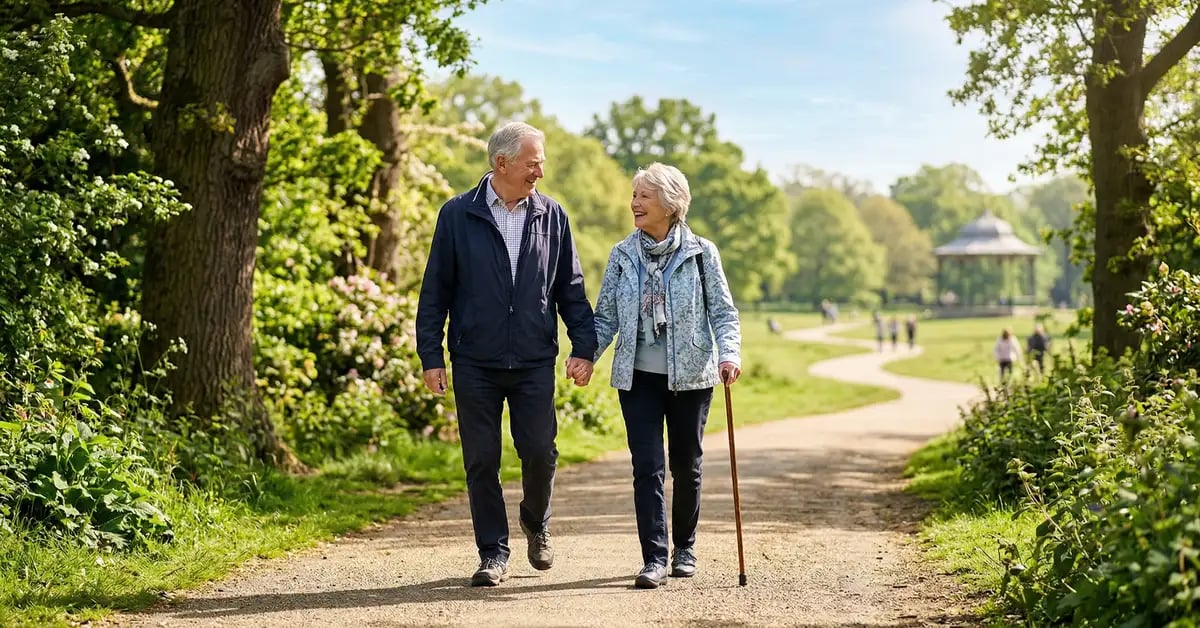
Physiotherapy for the elderly is a personalised, evidence-based approach to maintaining mobility, preventing falls, and supporting independence in adults aged 65 and over. A Cochrane review found that exercise programmes reduce the rate of falls in older people living in the community by around 23%, and the Otago home exercise programme has been shown to reduce falls by around 35% — outcomes that can mean the difference between living independently at home and needing more care. At CK Physio, our Chartered Physiotherapists have looked after older adults across Hanwell, Ealing and West London since 2003, including home visits in selected West London postcodes that remove the stress of clinic travel.
35%
Falls Reduction
With structured physiotherapy (Otago Programme)
~23%
Fewer Falls
With exercise programmes (Cochrane review)
£130
Home Visit
Selected West London postcodes
22+ yrs
CK Physio Experience
Serving Hanwell, Ealing & West London
Sources: Cochrane review of exercise for preventing falls (2019); Robertson et al., meta-analysis of the Otago exercise programme (2002); NICE NG249
Why Is Physiotherapy Important for Elderly People?
Physiotherapy plays a vital role in helping older adults maintain their quality of life as natural age-related changes affect strength, balance, and mobility. From middle age onwards, adults gradually lose muscle mass and strength — a process called sarcopenia — which progressively increases the risk of falls, fractures, and loss of independence. NICE guideline NG249 says that people who have fallen in the last year and have a gait or balance impairment should be offered a falls prevention exercise programme.
The evidence is substantial: strength and balance programmes improve balance, leg strength, walking and everyday function in older adults, and those gains translate into fewer falls, greater independence, and a better quality of life.
For families in West London caring for an elderly parent, physiotherapy can be the difference between safe independent living and a cycle of hospital admissions. CK Physio's personalised physiotherapy programmes are designed around each individual's specific needs, whether that involves recovering from a hip replacement, managing arthritis pain, or building the strength needed to stay mobile and confident at home.
Key Takeaway
Exercise that combines strength and balance training is one of the best-supported ways to maintain mobility and prevent falls in adults aged 65+. A Cochrane review found around 23% fewer falls with exercise programmes, and NICE recommends a falls prevention exercise programme for people who have fallen and have a gait or balance problem. Starting early — before a serious fall occurs — delivers the greatest benefit.
What Conditions Does Elderly Physiotherapy Treat?
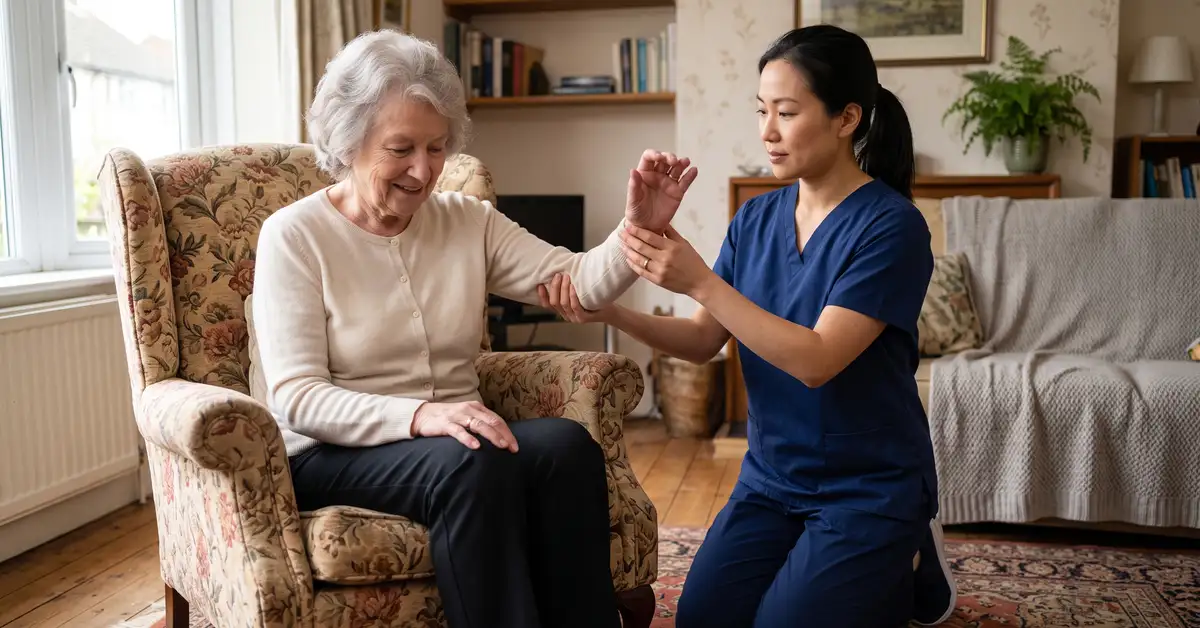
Elderly physiotherapy addresses a wide range of conditions that affect mobility, comfort, and independence in later life. At CK Physio, our Chartered Physiotherapists regularly treat older adults across Hanwell, Ealing, and West London for the following conditions:
Osteoarthritis (OA): The most common joint condition in over-65s, causing pain and stiffness in knees, hips, and hands. NICE says the core treatments for osteoarthritis are therapeutic exercise and weight management (if appropriate), along with information and support.
Post-surgical rehabilitation: Following hip or knee replacement, structured physiotherapy helps you rebuild strength, walking and stair confidence. Getting moving early after surgery also reduces the risk of complications such as deep vein thrombosis.
Balance disorders and falls: Vertigo, dizziness, and impaired balance significantly increase fall risk. Benign paroxysmal positional vertigo (BPPV) can often be treated quickly with repositioning manoeuvres, and progressive balance training reduces falls.
Sarcopenia (age-related muscle loss): Progressive resistance exercise can increase muscle strength and mass even in later life, and helps reduce falls when combined with balance training.
Stroke recovery: Task-specific physiotherapy helps people relearn walking and everyday activities after a stroke, working alongside the wider stroke team.
Parkinson's disease: Targeted gait and balance training can improve walking and help people manage freezing episodes, alongside medical care.
Frailty: Multicomponent programmes combining strength training with good nutrition and social engagement can help some older adults become less frail — the body keeps its capacity to respond to exercise even in advanced age.
Chronic pain: Physiotherapy combining exercise, hands-on treatment where it helps, and pain education can reduce pain and improve function in older adults with long-term joint pain.
How Does Physiotherapy Prevent Falls in Elderly People?
Falls are a leading cause of injury-related hospital admission for adults aged 65 and over in the United Kingdom, and hip fractures after a fall can have a major impact on independence.
Physiotherapy-led falls prevention works by addressing the three main modifiable risk factors: muscle weakness, impaired balance, and environmental hazards. One of the best-known programmes is the Otago Exercise Programme, a structured home-based strength and balance programme developed in New Zealand and widely used in the UK. A meta-analysis of the original Otago trials (Robertson et al., 2002) found it reduced falls and fall-related injuries by around 35%.
The programme involves 30 minutes of targeted lower limb strengthening and balance exercises, performed three times per week, with monthly physiotherapist review. Crucially, it is designed for home delivery — exactly the kind of programme CK Physio's home visit physiotherapy service is structured to deliver across Hanwell, Ealing, and surrounding West London.
Beyond exercise, NICE recommends a multifactorial falls risk assessment for people at higher risk, which can include a medication review and a home hazard assessment.
What Does an Elderly Physiotherapy Assessment Involve?
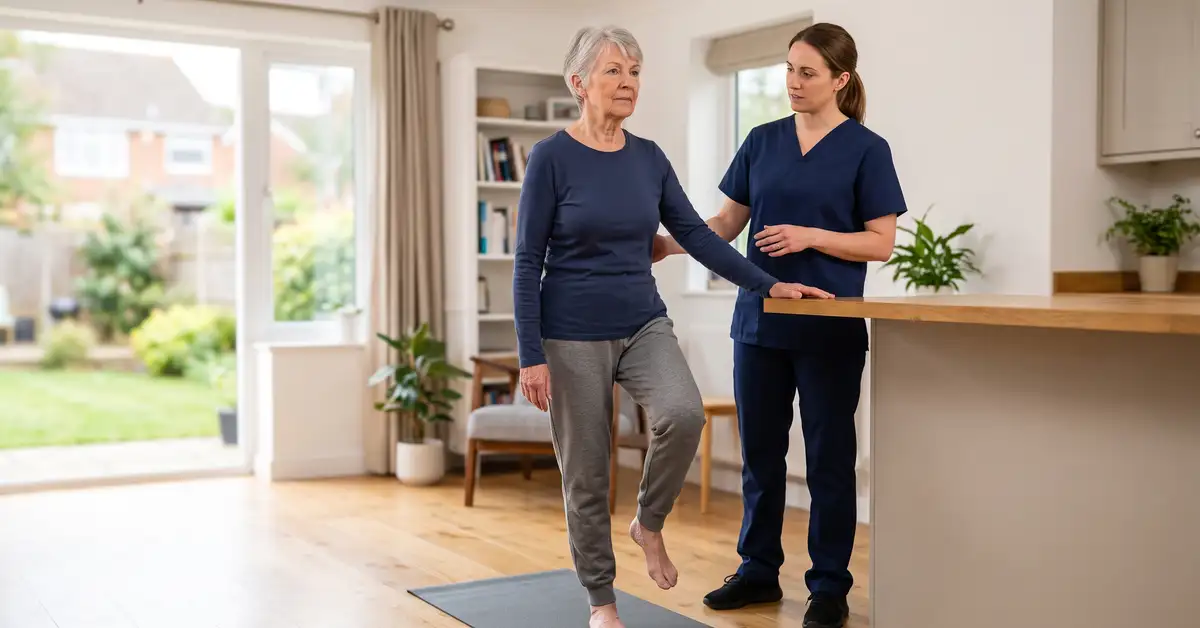
A thorough physiotherapy assessment is the foundation of effective elderly care. At CK Physio, our initial assessment combines clinical observation with validated measurement tools that give us an objective picture of your parent's mobility, balance, and fall risk. This assessment can be carried out at our Hanwell clinic or during a home visit — whichever is more practical for your family.
During the assessment, your physiotherapist will use several evidence-based tools to measure current function and identify specific areas of concern:
Timed Up and Go (TUG) Test
A quick screening test where the patient rises from a chair, walks 3 metres, turns, and returns to sitting. Slower times suggest a higher risk of falling, and the test is a useful way to track progress.
Berg Balance Scale (BBS)
A widely used 14-item balance scale scored 0–56. Lower scores indicate a higher risk of falling, and it is a useful way to measure progress over time.
30-Second Chair Stand Test
Measures lower body strength by counting how many times the patient can stand from a seated position in 30 seconds. Low scores for your age group suggest weakness and a higher risk of falling.
Home Environment Assessment
During home visits, our physiotherapists also look at the living environment for fall hazards — loose rugs, poor lighting, bathroom safety, and stair access — and can suggest an occupational therapy referral where a full home hazard assessment is needed.
Based on these assessments, your physiotherapist creates a personalised treatment plan with measurable goals. We use these same tools to track progress — for example, a 4-point improvement on the Berg Balance Scale represents a clinically meaningful change in fall risk. This data-driven approach ensures that treatment is working and allows us to adjust the programme as your parent's strength and confidence improve.
What Are the Benefits of Home Visit Physiotherapy for Elderly Patients?
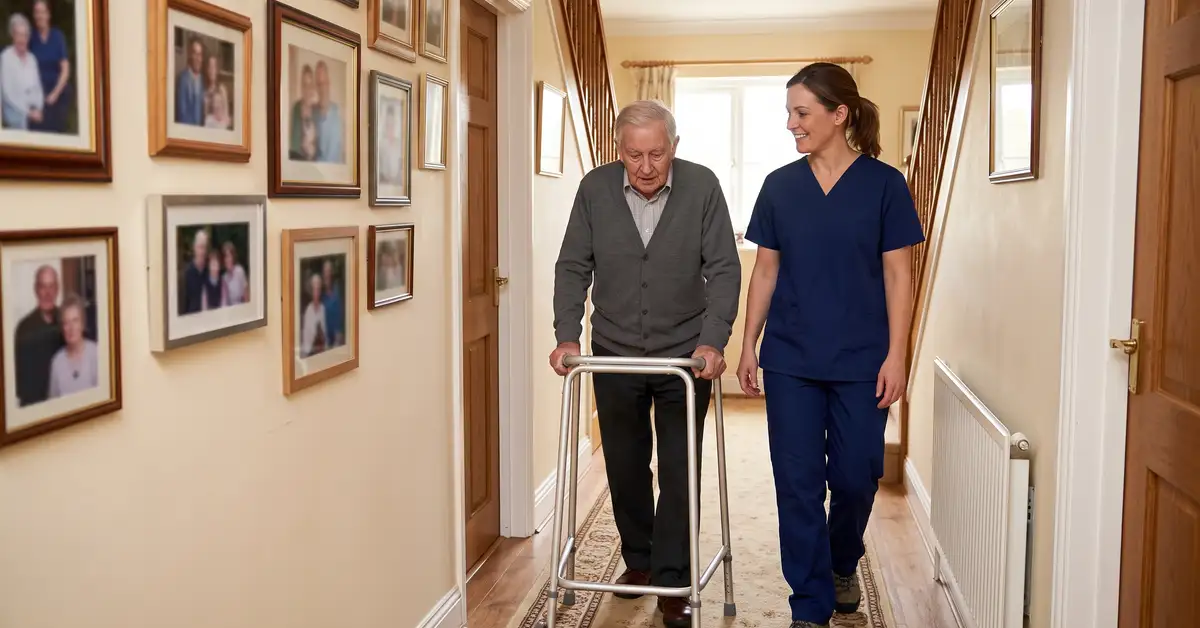
For many older adults, travelling to a physiotherapy clinic is one of the biggest barriers to receiving treatment. Reduced mobility, chronic pain, reliance on carers for transport, and the anxiety of navigating public spaces all contribute to missed appointments and delayed care. Home visit physiotherapy removes these barriers entirely — and the evidence shows it produces outcomes that are equal to or better than clinic-based treatment.
For many older adults, home-based programmes produce outcomes similar to clinic-based treatment, and removing the journey can make it easier to keep going with the programme.
For housebound patients, home visits may be the only practical way to get physiotherapy at all, and treatment in familiar surroundings helps people practise the exact activities they need to manage day to day.
CK Physio has looked after older adults across Hanwell, Ealing and West London since 2003, and offers home visits in selected West London postcodes, by prior arrangement. Home visits also mean we can look at environmental fall hazards as part of each session, something that is not possible in a clinic.
The Bottom Line
For many older adults, home visit physiotherapy delivers similar functional outcomes to clinic-based treatment, with the added benefit of practising in the real environment. A home visit with CK Physio costs £130, in selected West London postcodes.
Concerned about a parent's mobility or fall risk? Our Chartered Physiotherapists provide expert home visit physiotherapy across Hanwell, Ealing, and West London.
Book a Home Visit AssessmentHow Long Does Elderly Physiotherapy Take to Show Results?
One of the most common questions families ask is how quickly they can expect to see improvement. The answer depends on the condition being treated and the starting point, but the research provides useful benchmarks for setting realistic expectations.
For falls prevention programmes like the Otago Exercise Programme, a typical course runs over several months with regular exercise at home. Many people notice better balance and confidence within a few weeks, and keeping the exercises going is what maintains the benefit.
After a hip replacement, structured physiotherapy helps you progress walking, stairs and everyday tasks over the first few months.
For osteoarthritis pain, a structured exercise programme usually takes several weeks to make a noticeable difference, and the benefits last as long as you keep exercising.
| Condition | Typical Timeline | Expected Outcome |
|---|---|---|
| Falls prevention | 12 weeks (improvement from 4–6 weeks) | Fewer falls (around 23% with exercise programmes) |
| Post-hip replacement | 6–12 weeks | Progressive return to walking and stairs |
| Osteoarthritis pain | 8 weeks for pain relief | Less pain and better function while exercise continues |
| Frailty reversal | 12 weeks | Improved strength and function |
| Sarcopenia | 12–16 weeks | Improved strength |
| Parkinson's gait | 8–12 weeks | Better walking and balance |
| Balance disorders (BPPV) | 2 weeks | Often settles quickly with repositioning manoeuvres |
Sources: Cochrane review of exercise for preventing falls (2019); Robertson et al. (2002); NICE NG249
At CK Physio, we set clear, measurable goals from the first assessment and review progress at regular intervals using validated outcome tools. This means you and your family always know whether the programme is working — and we can adjust the approach if needed.
What Exercises Are Safe and Effective for Elderly Adults?
The most effective exercise programmes for older adults combine targeted strength training, progressive balance work, and regular walking, and combining these components works better than any single element alone.
For strength training, a typical approach is 2–3 sessions per week targeting the major leg muscle groups — hip abductors, quadriceps, hip flexors and calf muscles — progressing gradually as strength improves.
Balance training should progress in difficulty over time, starting with supported standing exercises and advancing to single-leg stance, tandem walking, and eventually dual-task training (performing a cognitive task while balancing).
For frailer older adults who cannot safely stand for long, seated exercise programmes are a valuable starting point and can be progressed as confidence grows. CK Physio's physiotherapists can design a programme appropriate to any level of ability.
Important Safety Note
Do not start a new exercise programme without professional guidance. Elderly adults with cardiac conditions, uncontrolled blood pressure, recent fractures, or acute joint inflammation need a physiotherapist's assessment before beginning strengthening exercises.
CK Physio's Chartered Physiotherapists are HCPC-registered and CSP members, ensuring that every exercise programme is safely tailored to your parent's specific health conditions and medications.
Why Are NHS Physiotherapy Waiting Times a Concern for Elderly Patients?
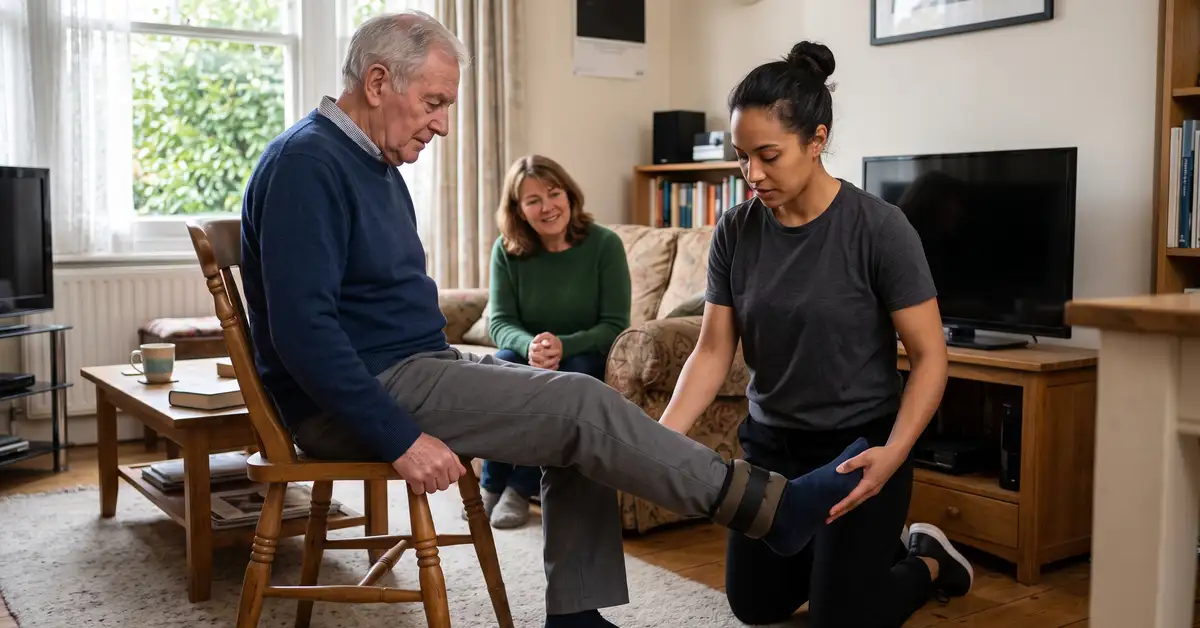
Access to timely physiotherapy matters for older adults, and NHS waiting times for community physiotherapy vary considerably by area.
Delays matter because an older person who has fallen is at higher risk of falling again, and losing confidence and mobility while waiting can be hard to reverse.
Private physiotherapy offers an alternative for families who would rather not wait. Appointments are often available sooner than NHS waits, and our home visit service in selected West London postcodes means your parent can start their programme at home. CK Physiotherapy is recognised by BUPA, AXA PPP, WPA, Groupama and Life UK, so if your parent has private health insurance, their sessions may be covered. You can book directly, without a GP referral.
How Much Does Private Elderly Physiotherapy Cost?
At CK Physio, an initial assessment and treatment costs £80, follow-up sessions cost £65 and a home visit costs £130. Our bookings page carries the live fee schedule.
The number of sessions depends on your parent's needs, and we will be clear about what we expect at the first assessment. We are open Monday to Thursday 8am–8pm, Friday 8am–6pm and Saturday 9am–12pm, which can help family carers who want to be present.
Falls prevention exercise is widely regarded as good value for money, because the cost of treating a hip fracture and its consequences is far higher than the cost of prevention.
What This Means for Families
Private physiotherapy is an investment in your parent's independence and safety. A structured strength and balance programme can reduce the risk of falls and is far less costly than the consequences of a fall. CK Physio is recognised by BUPA, AXA PPP, WPA, Groupama and Life UK, and you can book directly without a GP referral.
How Does Physiotherapy Support Elderly People With Dementia?
Dementia affects close to a million people in the UK. As cognitive function declines, so too does physical function — but exercise and physiotherapy can help people with dementia stay active and keep doing everyday activities for longer.
The approach differs from standard elderly physiotherapy. Exercises are taught through simple, repeated practice with physical demonstration and gentle guidance, rather than complex verbal instructions.
Dual-task training, which combines simple cognitive tasks with physical movement (for example, counting while walking), can be built in gradually where it is safe and appropriate.
Home visit physiotherapy is particularly valuable for dementia patients, who often become anxious and disoriented in unfamiliar environments. Receiving treatment in their own home, with familiar surroundings and routine, supports both physical progress and emotional wellbeing. CK Physio's home visits in selected West London postcodes provide this continuity of environment that is so important for patients with cognitive impairment.
Frequently Asked Questions About Elderly Physiotherapy
Is physiotherapy safe for elderly people with multiple health conditions?
Yes, physiotherapy is safe for elderly adults with multiple health conditions when delivered by qualified professionals. CK Physio's Chartered Physiotherapists are HCPC-registered and trained to modify exercise programmes around specific conditions including heart disease, diabetes, osteoporosis, and respiratory conditions. A thorough initial assessment identifies any precautions, and all exercises are carefully tailored to each individual's capabilities.
How often should elderly patients attend physiotherapy?
Most evidence-based programmes recommend 2–3 physiotherapy-guided sessions per week for 12 weeks, with daily home practice between sessions. CK Physio typically starts with weekly or fortnightly supervised sessions and provides a structured home exercise programme for the days in between. The frequency is adjusted based on the condition, the patient's ability to exercise independently, and clinical progress.
Can physiotherapy help after a hip or knee replacement?
Physiotherapy is essential after hip or knee replacement surgery. Structured post-operative physiotherapy helps you progress walking, stairs and everyday tasks safely. CK Physio's home visit service is particularly valuable for post-surgical patients who have limited mobility in the early weeks of recovery.
What is the difference between NHS and private elderly physiotherapy?
The main differences are waiting time and appointment flexibility. NHS waiting times vary by area and session frequency can be limited. Private physiotherapy through CK Physio can often start sooner and includes the option of home visits in selected West London postcodes. Both NHS and private physiotherapists hold the same professional qualifications (HCPC registration, CSP membership).
Does insurance cover elderly physiotherapy?
Many private health insurance policies cover physiotherapy for elderly patients. CK Physiotherapy is recognised by BUPA, AXA PPP, WPA, Groupama and Life UK. We also accept GP referrals and self-referrals. Contact your insurer to confirm your coverage, or speak to our team who can advise on the referral process.
How can I tell if my elderly parent needs physiotherapy?
Common signs that an elderly parent may benefit from physiotherapy include: difficulty getting up from a chair, unsteadiness when walking, holding onto furniture for balance, a recent fall or near-miss, increasing reliance on others for daily tasks, or visible changes in posture and gait. If you notice any of these, a physiotherapy assessment can identify specific risks and create a plan to address them before a serious incident occurs.
Worried About Your Parent's Mobility or Fall Risk?
CK Physio's Chartered Physiotherapists have helped older adults across Hanwell, Ealing and West London maintain their independence since 2003. Whether at our clinic or in your parent's home, we provide expert, personalised care, and you can book directly without a GP referral.
Sources: Cochrane review (2019), NICE NG249, Chartered Society of Physiotherapy, Health & Care Professions Council




.svg)

.svg)

.svg)