pattern
Our approach

How we use electrotherapy

product-card

Assessment first

We work out what is causing your pain before choosing any treatment, and electrotherapy is only one option among many.

Alongside exercise

Electrotherapy is never used on its own. At most, it is a short-term aid to help you move and do the exercises that drive recovery.

Honest about the evidence

For many common problems the evidence is weak, and NICE advises against some types. We will tell you if it is unlikely to help you.

pattern
When it may help, and when it will not

What the evidence says about electrotherapy

Electrotherapy is not a cure, and its value depends on the condition. This is what NICE and the NHS say about common uses.

Layer_1

Short-term pain relief

The NHS says TENS can help relieve some types of short-term and long-term pain, such as pain from a sports injury or arthritis, but that it does not work for everyone. We may use it to help you stay active while other treatment takes effect.

Layer_1

Low back pain and sciatica

NICE advises against TENS, interferential therapy and ultrasound for low back pain with or without sciatica. We treat back pain with exercise, advice and, where it helps, hands-on treatment as part of an exercise programme.

Layer_1

Osteoarthritis

NICE advises against TENS, ultrasound, interferential therapy, laser therapy, pulsed short-wave therapy and muscle stimulation for osteoarthritis, because there is not enough evidence of benefit. Exercise is the core treatment we offer.

Layer_1

Long-term (chronic primary) pain

For chronic primary pain, NICE advises against TENS, ultrasound and interferential therapy because there is no evidence of benefit. We focus on exercise, education and a plan you can keep up yourself.

Layer_1

Weak muscles after injury or surgery

Electrical muscle stimulation is sometimes used to help a weak muscle start working again. It does not replace strengthening exercise, and NICE does not recommend it for osteoarthritis. We will discuss whether it is worth trying.

Layer_1

Drop foot after stroke or MS

Functional electrical stimulation (FES) for drop foot is a specialist treatment. NICE considers the evidence adequate for improving walking. If it might help you, we can talk through how to ask your GP or neurology team about it.

pattern
Types of electrotherapy

What electrotherapy involves

Electrotherapy covers several different treatments. Your physiotherapist will explain whether any of them is likely to help you, and what the evidence says.

TENS
Interferential therapy
Therapeutic ultrasound
Laser therapy
Short-wave diathermy
Shockwave (not electrotherapy)

TENS

TENS (transcutaneous electrical nerve stimulation) passes a weak electrical current through sticky pads on your skin. You should feel tingling, not pain. The NHS describes it as giving temporary pain relief. Small TENS machines can also be used at home; we can show you how to place the pads.

product v2 tab

Interferential therapy

Interferential therapy uses two medium-frequency currents that cross under the skin. It feels like a deep tingling. NICE advises against it for low back pain, osteoarthritis and chronic primary pain, so we use it rarely and only as a short-term add-on.

Tab-img

Therapeutic ultrasound

Therapeutic ultrasound uses high-frequency sound waves delivered through a gel and a hand-held head. Most people feel little or nothing. NICE advises against it for low back pain, osteoarthritis and chronic primary pain.

Links-banner

Laser therapy

Low-level laser therapy applies light energy to the skin over a painful area. It does not burn or cut. NICE advises against laser therapy for osteoarthritis because there is not enough evidence of benefit.

Links About Top Image

Short-wave diathermy

Short-wave diathermy uses electromagnetic energy to gently warm deeper tissues. NICE advises against pulsed short-wave therapy for osteoarthritis. It is not suitable for everyone, for example people with some metal implants, so we always screen you first.

product banner v1

Shockwave (not electrotherapy)

Shockwave therapy is a different treatment that uses sound-wave pulses for some long-standing tendon and heel problems. It is not a form of electrotherapy. Read about shockwave therapy at CK Physio.

Tab-img
product-v2-exp1
experience-icon
20+ year experience
product-v2-exp2
Why CK Physiotherapy

Chartered physiotherapists in Hanwell since 2003

CK Physiotherapy has treated patients from Hanwell, Ealing and across West London since 2003. Our physiotherapists are registered with the Health and Care Professions Council (HCPC) and are members of the Chartered Society of Physiotherapy. We are recognised by BUPA, AXA PPP, WPA, Groupama and Life UK.

We would rather tell you that electrotherapy is unlikely to help than sell you a treatment you do not need. Most of what helps people recover is assessment, exercise, advice and, where useful, hands-on treatment, and that is where we put our time.

Prices, safety and getting here

Electrotherapy at our Hanwell clinic

At CK Physiotherapy, electrotherapy is used, where it is likely to help, as part of a physiotherapy appointment at 57 Elthorne Avenue, Hanwell W7 2JY, in the London Borough of Ealing. An initial assessment and treatment costs £80, follow-up sessions cost £65, and you do not need a GP referral to book.

This section covers what happens at an appointment, what it costs, what NICE says about electrotherapy, who should not have it, and how to find us.

What happens at an appointment?

Your first appointment lasts up to 45 minutes and starts with a full assessment, not with a machine. We ask about your symptoms, medical history and goals, examine how you move, and explain what we think is causing the problem. If electrotherapy is likely to help, we explain why, what it will feel like and what the evidence says, and we check that it is safe for you before using it.

Electrotherapy is always combined with exercise, advice and, where useful, hands-on treatment. If it is unlikely to help, we will tell you and focus on the treatments that are.

Electrotherapy prices

Electrotherapy is used within a physiotherapy appointment, so you pay the standard appointment fee.

Initial assessment and treatment (up to 45 minutes) £80
Follow-up treatment (up to 30 minutes) £65
1-hour session £130
Home visit (by prior arrangement) £130

These are self-pay fees from July 2026. Our bookings page carries the live fee schedule and is always the most up-to-date source.

Insurance: CK Physiotherapy is recognised by BUPA, AXA PPP, WPA, Groupama and Life UK. Cover varies between policies, so please contact your insurer before your first appointment and bring your registration details and authorisation code.

What NICE says about electrotherapy

For several common conditions, NICE advises against electrotherapy because the evidence does not show a benefit. These are the recommendations, quoted from nice.org.uk:

  • Low back pain and sciatica (NICE NG59): “Do not offer transcutaneous electrical nerve simulation (TENS) for managing low back pain with or without sciatica” and “Do not offer interferential therapy for managing low back pain with or without sciatica.” NICE also advises against ultrasound for low back pain.
  • Osteoarthritis (NICE NG226): “Do not offer any of the following electrotherapy treatments to people with osteoarthritis because there is insufficient evidence of benefit”, listing TENS, ultrasound therapy, interferential therapy, laser therapy, pulsed short-wave therapy and neuromuscular electrical stimulation (NMES).
  • Chronic primary pain (NICE NG193): NICE advises against TENS, ultrasound and interferential therapy “because there is no evidence of benefit”.
  • Drop foot after stroke, MS or other neurological conditions (NICE HTG178): NICE says the evidence on the safety and efficacy of functional electrical stimulation (FES), in terms of improving gait, “appears adequate to support the use of this procedure” with normal arrangements for clinical governance, consent and audit.

That is why we do not offer electrotherapy as a stand-alone treatment, and why most of your time with us will be spent on assessment, exercise and advice.

Who should not have electrotherapy

The NHS guidance on TENS says not to use it if:

  • you have epilepsy
  • you have a pacemaker
  • you are pregnant, unless your doctor or midwife tells you to

It should also not be used on irritated, broken, infected or numb skin. Before using any form of electrotherapy, your physiotherapist will check your medical history, because other conditions and implants can rule out particular types. If you are not sure what is causing your pain, see a healthcare professional first.

When to see a doctor instead of a physiotherapist

Call 999 or go to A&E if you have back pain and any of these:

  • pain, tingling, weakness or numbness in both legs
  • loss of feeling around your genitals or anus
  • changes in your bladder or bowels, such as difficulty peeing, or peeing or pooing yourself
  • changes in sexual function or sensation
  • chest pain, or pain that started after a serious accident

Ask for an urgent GP appointment or contact NHS 111 if you have back pain and feel hot, cold, shivery or generally unwell, or the pain is severe, started suddenly or is getting worse quickly. See your GP if you have lost weight without trying. This follows the NHS guidance on back pain.

Home visits

If you cannot easily travel to the clinic, a physiotherapist can come to you. We offer physiotherapy home visits in selected West London postcodes, by prior arrangement, at £130 per visit. Call us on 020 8566 4113 to check whether we cover your area.

Getting to us from Ealing and Hanwell

Our clinic is at 57 Elthorne Avenue, Hanwell, London W7 2JY. The nearest bus stop, Elthorne Park Road, is about 100 metres away and is served by the E8 and 195. Routes 207, E3 and 483 stop at Church Road, the E2 at Hessel Road and the SL8 at Hanwell Broadway, each roughly 700–800 metres away. The nearest Underground stations are Boston Manor and Northfields, both on the Piccadilly line.

Street parking is available near the clinic. Permit restrictions apply from 9–10am and 2–3pm; if your appointment falls in those times, bring your car registration details and your physiotherapist can arrange a visitor permit for you.

We are open Monday to Thursday 8am–8pm, Friday 8am–6pm and Saturday 9am–12pm.

Electrotherapy: common questions

Does electrotherapy work?

It depends on the condition. The NHS says TENS can give temporary pain relief for some types of pain, but it does not work for everyone. NICE advises against TENS, interferential therapy and ultrasound for low back pain, against several types of electrotherapy for osteoarthritis, and against TENS, ultrasound and interferential therapy for chronic primary pain. We use electrotherapy selectively, alongside exercise, and never on its own.

Does electrotherapy hurt?

It should not. With TENS and interferential therapy you feel a tingling or buzzing sensation, and the NHS says TENS should not be painful. Ultrasound and laser usually cause little or no sensation. Tell your physiotherapist straight away if anything feels uncomfortable.

How much does electrotherapy cost at CK Physio?

Where it is appropriate, electrotherapy is used as part of a physiotherapy appointment. An initial assessment and treatment costs £80 and follow-up sessions cost £65. A 1-hour session or a home visit costs £130. Our bookings page carries the live fee schedule.

Who should not have electrotherapy?

The NHS says not to use TENS if you have epilepsy or a pacemaker, or if you are pregnant unless your doctor or midwife tells you to. Your physiotherapist will check your medical history before using any form of electrotherapy, because other conditions and implants can rule out particular types.

Can I use a TENS machine at home?

Yes. TENS machines can be bought or hired from pharmacies and shops. The NHS advises checking with a GP or other healthcare professional first that TENS is safe for you, and looking for a CE or UKCA mark. Your physiotherapist can show you where to place the pads.

Do I need a GP referral for electrotherapy?

No. You can book private physiotherapy at CK Physio directly, without seeing your GP first. Some private insurers ask for a GP referral before they will authorise treatment, so check your policy if you are claiming.

Can I use my private health insurance?

Yes. CK Physiotherapy is recognised by BUPA, AXA PPP, WPA, Groupama and Life UK. Contact your insurer before your first appointment and bring your registration details and authorisation code.

pattern
What our patients say

Patient reviews

A few words from patients about their physiotherapy at CK Physio. You can read more on our testimonials page.

H
Hussain S
Quote

I've been going to see Bryan off and on for a few years now, mainly back issues. If I followed his instructions, I would probably see him a lot less, but that’s on me! I have seen about 10 physios over the last 15 years, and Bryan is definitely in the top tier. Knows what he's doing, is very professional, and carries out proper treatment for the full session. CK Physiotherapy, as a whole, is very organised and very polite every time I call. Would recommend.

A
Alton
Quote

It is one of the best physios I have seen in my 10+ years of seeing physiotherapists at times. (private & public health). Angela was great, a true specialist, and knew her field of physiotherapy very, very well. I can't wait to get started on my rehab program and work with your support to return from injury!

appointmnt- pattern
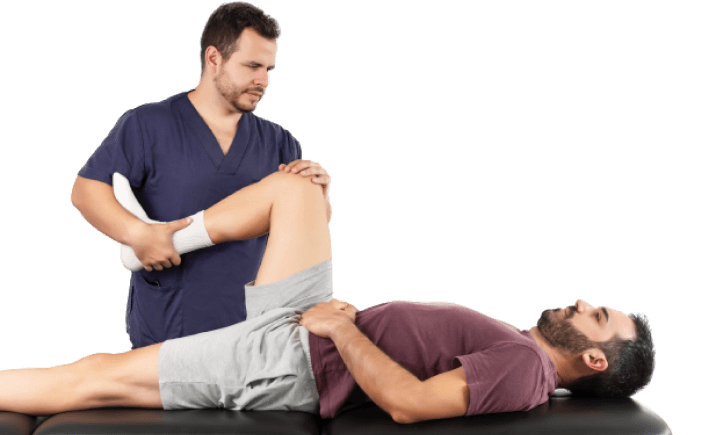
physiotherapist-performing-mobility-exercises-leg-patient
tw-col-s-1
tw-col-s-2
two-col-s-4
tw-col-s-3
Not sure electrotherapy is right for you?

Talk to a chartered physiotherapist

Further reading

Read more about electrotherapy

Articles by our physiotherapists on TENS, interferential therapy and other electrotherapy treatments.

52 min

Rotator cuff injury & shoulder ...
Shoulder tendonitis, more accurately called rotator cuff tendinopathy, is the most common cause of ...

1 July, 2026

31 min

Hip bursitis & gluteal tendinopathy: a ...
That nagging pain on the outside of your hip — the one that flares when you lie on it at night or ...

19 June, 2026

30 min

Postnatal recovery: physiotherapy guide for ...
Postnatal physiotherapy is the evidence-based way to recover from the musculoskeletal effects of ...

9 June, 2026