

Written by Bryan Kelly, Chartered Physiotherapist (MCSP, HCPC). Medically reviewed by CK Physio Team. Last reviewed: 12 Oct 2026.
The short answer: Physiotherapy helps back pain by combining a thorough assessment, clear advice and an exercise plan built around you. Hands-on techniques are added when they help you move. This mirrors what NICE recommends in guideline NG59, which was last updated on 29 July 2026. Most back pain is not serious, and there is a great deal you can do to help it settle.
Key points at a glance
- Back pain is very common: an estimated 9.5 million people in the UK report low back pain each year (Arthritis UK, State of Musculoskeletal Health 2025).
- NICE recommends self-management advice and exercise as the foundation, with manual therapy only as part of a package that includes exercise.
- Routine scans, TENS, ultrasound, interferential therapy, traction and back belts are not recommended for low back pain.
- You do not need a GP referral to book a private physiotherapy assessment at CK Physio in Hanwell.
- Numbness around your genitals or bottom, or new bladder or bowel problems, need emergency care: call 999 or go to A&E.
 How does physiotherapy help back pain?
Physiotherapy works out what is driving your pain and explains it in plain language. It then gives you a step-by-step plan of exercise and activity to rebuild strength, movement and confidence. Hands-on techniques may be used to ease pain and help you move, but the aim is always to help you manage your back yourself.
A good physiotherapy plan for back pain usually helps you to:
- Understand your pain. Most back pain is “non-specific”, meaning no single damaged structure is to blame. Pain does not always mean damage.
- Keep moving safely. Staying as active as you reasonably can, and getting back to work and normal activities, is part of the treatment, not something to put off until you feel better.
- Build capacity. Exercise that gets gradually harder strengthens your back, hips and legs, so everyday tasks feel easier.
- Lower the chance of another flare-up. A 2024 Lancet trial called WalkBack followed people who had recovered from low back pain. Those given a walking and education programme guided by a physiotherapist stayed free of a new episode for longer than those who had no treatment.
Low back pain is the leading cause of years lived with disability in the UK (Arthritis UK, 2025). Getting the right support early makes a difference.
What does NICE recommend for back pain and sciatica in 2026?
NICE guideline NG59 recommends advice that helps you manage your own back pain, plus exercise, including group exercise. Where appropriate, manual (hands-on) therapy can be added alongside the exercise. NICE advises against several passive treatments and against routine scans. In July 2026 it also withdrew its recommendations on psychological therapy for low back pain.
| NICE recommends or suggests considering | NICE does not recommend for low back pain |
|---|---|
| Advice and information to help you self-manage | Routine X-rays or MRI scans in a non-specialist setting |
| Encouragement to continue normal activities and return to work | Belts, corsets, foot orthotics or rocker-sole shoes |
| Exercise programmes, including group exercise | Traction |
| Manual therapy (manipulation, mobilisation, soft-tissue techniques) as part of a package that includes exercise | Acupuncture for low back pain |
| Risk assessment tools (such as STarT Back) to tailor your care | Ultrasound, TENS, PENS or interferential therapy |
| Short-term anti-inflammatory medicine where appropriate (via your GP or pharmacist) | Opioids for chronic low back pain; spinal injections for low back pain |
At CK Physio, our care follows this guidance. We will be straight with you about what the evidence supports, and about what it does not.
What happens at your first physiotherapy appointment?
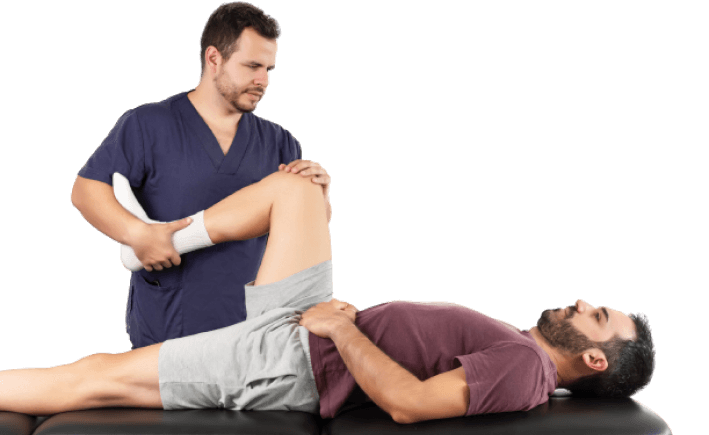
Your first appointment is a thorough assessment. Your physiotherapist listens to your story, checks for any warning signs and examines how you move. You will agree a plan together before you leave.
- Your story. When the pain started, what eases or aggravates it, and your work, sleep, activity and goals.
- Safety screening. Questions to rule out the rare serious causes of back pain (see the urgent-care box below).
- Physical examination. How your back, hips and legs move. If you have leg symptoms, your physiotherapist also checks strength, sensation and reflexes.
- Explanation. What is likely to be going on, in plain English, and what that means for you.
- Your plan. A starting exercise programme, advice for work and daily life, any hands-on treatment that will help, and how many follow-up sessions are likely to be useful.
Want more detail? Read our guide to what a lower back pain assessment involves.
Which physiotherapy treatments help back pain?
Exercise therapy is the foundation, supported by education and, when helpful, manual therapy. Research shows that any single back pain treatment usually has only a modest effect. That is why a combined, active plan you can continue at home tends to work best.
- Exercise therapy: strengthening, mobility and fitness work matched to what you enjoy and can keep up. This might be walking, Pilates-style control work, gym-based strengthening or a simple home programme.
- Education and self-management: understanding your pain, pacing your activity and planning for flare-ups.
- Manual therapy: joint mobilisation, manipulation and soft-tissue techniques to ease pain and stiffness, always as part of a plan that includes exercise.
- Gradual return to activity: practical steps back to work, sport, lifting children or long commutes.
A 2025 review in BMJ Evidence-Based Medicine looked at non-surgical treatments for persistent low back pain. It found that exercise and spinal manipulation may be effective, but the effects were small (Cashin et al., 2025). This is why we focus on helping you build your own long-term skills rather than relying on any one passive treatment.
Can physiotherapy help sciatica, disc bulges and desk-related back pain?
Yes. Physiotherapists assess and treat sciatica, disc-related pain and desk-related back pain using the same evidence-based approach, adapted to your symptoms. That means advice, exercise that builds up gradually and, where useful, hands-on care.
- Sciatica: pain that travels from the back into the leg, often with tingling or numbness, caused by an irritated nerve root. Physiotherapy focuses on calming your symptoms, keeping you moving and gradually rebuilding strength. Our complete guide to physiotherapy for sciatica explains the full pathway.
- Disc bulges: these appear on scans in many people with no pain at all, so a scan finding does not always explain your symptoms. With the right guidance, gradually loading your back is usually safe and helpful.
- Office and work-from-home back pain: long spells in one position can leave your back stiff and sore. Changing position regularly, taking short walking breaks and building general strength tend to help more than finding the “perfect” posture. See our work-from-home pain guide.
- Pregnancy and after birth: back and pelvic pain are common during and after pregnancy. We adapt your assessment and exercises to your stage of pregnancy or recovery. Read our postnatal physiotherapy guide.
How many physiotherapy sessions will I need for back pain?
It depends on your symptoms, how long you have had them and your goals. Many people need only a few sessions to get a clear plan and the confidence to manage on their own. Longer-standing pain may need more support. We will give you a personal estimate after your first assessment.
We aim to make you independent, not reliant on appointments. Between sessions you will have a home exercise programme, and we review and progress it as you improve.
When should I seek urgent help for back pain?
Call 999 or go to A&E immediately if you have back pain together with any of the following. These can be signs of cauda equina syndrome, a rare but serious condition that needs emergency treatment:
- numbness, tingling or a change in feeling around your genitals, bottom or inner thighs (including when wiping after using the toilet)
- new difficulty passing urine or controlling your bladder, or leaking urine
- new loss of bowel control
- pain, weakness or numbness in both legs, or leg weakness that is getting rapidly worse
- a change in sexual function
Contact your GP or NHS 111 promptly if your back pain comes with any of the following:
- fever or feeling generally unwell
- unexplained weight loss
- a history of cancer
- constant, severe pain at night
- it started after a significant fall or accident
These symptoms are rare. If none of them apply to you, your back pain is very likely to settle with the right guidance. For more on when to see someone and why, read our article on back pain causes and red flags.
Should I see a physiotherapist, osteopath or chiropractor for back pain?
All three are regulated professions that commonly treat back pain. The best choice is a clinician who follows NICE guidance. That means assessing you properly, putting exercise and self-management at the centre of your care, and using hands-on treatment only as part of that plan.
| Physiotherapist | Osteopath | Chiropractor | |
|---|---|---|---|
| UK regulator | Health and Care Professions Council (HCPC) | General Osteopathic Council (GOsC) | General Chiropractic Council (GCC) |
| Typical emphasis | Assessment, exercise rehabilitation, self-management, manual therapy | Manual therapy, with exercise advice | Spinal manipulation, with exercise advice |
| Works across the NHS? | Yes, widely, including first-contact roles in GP practices | Limited | Limited |
Whoever you see, check that they are registered. For a side-by-side look, read our physiotherapy vs chiropractic guide.
How much does physiotherapy for back pain cost in London?
Private physiotherapy prices vary by clinic and appointment length. CK Physio’s current fees are listed on our bookings page, so you know what to expect before you book.
Many private health insurers cover physiotherapy. Some ask for a GP or insurer referral first, so it is worth checking your policy before booking. See our treatment fees.
Back pain physiotherapy in Hanwell, Ealing and West London
CK Physio is an independent physiotherapy clinic at 57 Elthorne Avenue, Hanwell, London W7 2JY, in the London Borough of Ealing. Patients come to us from Hanwell, Ealing Broadway, West Ealing, Northfields, Southall, Greenford, Brentford and across West London.
- Getting here: free parking outside the clinic, close to Hanwell station and several bus routes.
- Opening hours: Monday to Thursday 8am–8pm, Friday 8am–6pm, Saturday 9am–12pm.
- Cannot travel? We offer home visit physiotherapy across West London.
- No referral needed for self-funded appointments.
Ready to take the next step?
Book an initial assessment with one of our Chartered Physiotherapists. We will help you understand your back pain, agree a plan that fits your life, and support you to get moving again.
Frequently asked questions about back pain physiotherapy
Do I need a GP referral to see a physiotherapist for back pain?
No. You can book a private physiotherapy assessment at CK Physio directly. If you are using private health insurance, your insurer may ask for a GP or insurer referral first, so check your policy.
Should I rest or keep moving with back pain?
Keep moving as much as you comfortably can. NICE recommends encouraging people to continue normal activities, and long periods of bed rest are not advised. Your physiotherapist can show you which movements to start with.
Do I need an X-ray or MRI scan for back pain?
Usually not. NICE advises against routine imaging in non-specialist settings. Scans often show age-related changes that are also common in people without pain. Imaging is useful when the results are likely to change your treatment, for example if a serious cause is suspected.
Is it safe to exercise with a disc bulge?
For most people, yes. Guided exercise that builds up gradually is usually safe and helpful for disc-related pain. Your physiotherapist will tailor the type and amount of exercise to your symptoms.
Does physiotherapy for back pain hurt?
Physiotherapy should not be unpleasant. Some exercises or hands-on techniques can cause brief, mild discomfort. Your physiotherapist will work within your comfort and adjust the plan with you.
What should I wear to my appointment?
Wear comfortable, loose clothing such as shorts or tracksuit bottoms and a T-shirt, so your physiotherapist can see how you move.
Can you help if my back pain started during pregnancy?
Yes. We assess and treat back and pelvic pain during pregnancy and after birth, adapting exercises and techniques to your stage of pregnancy or recovery.
About the author: Bryan Kelly is a Chartered Physiotherapist (MCSP, HCPC) and the founder of CK Physio. He qualified at Curtin University in 1995 and has been practising in West London since 1997, specialising in musculoskeletal care.
Medical review: Reviewed by CK Physio Team on 12 Oct 2026. This article is based on NICE guideline NG59 (last updated 29 July 2026), the NHS back pain resource and current peer-reviewed research. It is general information and not a substitute for an individual assessment.
Next review due: October 2027, or sooner if NICE guidance changes.
References
- National Institute for Health and Care Excellence (NICE). Low back pain and sciatica in over 16s: assessment and management (NG59). Last updated 29 July 2026. Available at: https://www.nice.org.uk/guidance/ng59
- NICE. NG59 update information. July 2026. Available at: https://www.nice.org.uk/guidance/ng59/chapter/Update-information
- NHS. Back pain. Available at: https://www.nhs.uk/conditions/back-pain/
- NHS. Sciatica. Available at: https://www.nhs.uk/conditions/sciatica/
- Royal Free London NHS Foundation Trust. Cauda equina syndrome (patient information leaflet). Available at: https://www.royalfree.nhs.uk/patients-and-visitors/patient-information-leaflets/cauda-equina-syndrome
- Arthritis UK. State of Musculoskeletal Health 2025. Available at: https://arthritis-uk.org/about-arthritis/data-and-statistics/the-state-of-musculoskeletal-health/
- Health and Safety Executive (HSE). Work-related musculoskeletal disorders statistics, Great Britain. Available at: https://www.hse.gov.uk/statistics/causdis/
- Cashin AG, et al. Non-surgical and non-interventional treatments for low back pain: systematic review and meta-analysis of placebo-controlled randomised trials. BMJ Evidence-Based Medicine. 2025. doi: 10.1136/bmjebm-2024-112974. Available at: https://pubmed.ncbi.nlm.nih.gov/40107697/
- Pocovi NC, et al. Effectiveness and cost-effectiveness of an individualised, progressive walking and education intervention for the prevention of low back pain recurrence in Australia (WalkBack): a randomised controlled trial. The Lancet. 2024; 404(10448): 134–144. doi: 10.1016/S0140-6736(24)00755-4. Available at: https://doi.org/10.1016/S0140-6736(24)00755-4
- Chartered Society of Physiotherapy. Why choose a Chartered Physiotherapist? Available at: https://www.csp.org.uk/public-patient/find-physiotherapist/why-chartered-physiotherapist
- Health and Care Professions Council. HCPC register. Available at: https://www.hcpc-uk.org/




.svg)

.svg)

.svg)