

25. May 2026
Running injuries are common — around half of UK recreational runners will pick up at least one injury in a 12-month period — but the vast majority recover fully with structured, evidence-based physiotherapy and a properly managed return to training. What separates the runners who come back stronger from those who get stuck in a cycle of niggles is rarely the injury itself. It is how training load is managed, how rehabilitation is structured, and how the return to running is staged. This guide covers the 7 most common running injuries we see in the CK Physiotherapy clinic in Hanwell and Ealing, what the evidence says works for each, how to come back safely, and where shockwave therapy fits in for the stubborn cases.
Why do running injuries happen?
The single biggest driver of running injury is a mismatch between training load and tissue capacity — usually a sudden spike in volume, intensity or hill exposure that asks more of your body than it has prepared for. Most running injuries are not caused by a single moment of trauma. They are the cumulative result of repeated loading on tissue that has not yet adapted to handle it: tendons, muscles, bones and joints respond well to gradual progression, but they respond badly when you jump from 20 to 35 miles per week, or add hill repeats to a steady-state programme without preparation.
That is the underlying mechanism. The downstream picture is more nuanced. Biomechanical factors — running form, cadence, hip and trunk strength, foot type, shoe choice — modulate where the load goes. Recovery factors — sleep, nutrition, life stress, age, prior injury history — modulate whether your tissues can repair between sessions. The combination determines who develops "runner's knee" and who gets away with a sudden marathon block. Running injuries are not bad luck; they are predictable.
How common are running injuries in the UK?
UK recreational runners experience an injury rate of around 40–70% per year, with the knee, lower leg, Achilles and plantar fascia accounting for the majority of cases. Parkrun alone draws hundreds of thousands of weekly participants across the country, and mass-participation events — London Marathon, Royal Parks Half, Ealing Half Marathon, BUPA London 10K, the parkrun ecosystem — keep that running population growing year on year. The injury count grows with it.

The seasonal pattern is consistent. January and February see a wave of injury onset as runners ramp mileage for London Marathon prep in cold, often-wet conditions on stiff cold muscles. A second wave hits in late summer / early autumn as runners build for the Ealing Half and Royal Parks Half. Parkrun's weekly all-year cadence creates a steady background load, but it is the large training-load spikes — not the running itself — that drives most injuries.
Demographically, injury risk rises modestly with age past the mid-thirties, but well-prepared masters runners stay remarkably resilient. Female runners see slightly higher rates of patellofemoral pain and certain stress fractures. Middle-aged male runners are over-represented in Achilles tendinopathy and calf muscle tears. None of these patterns are deterministic — they reflect modifiable risk factors more than fixed traits.
The 7 most common running injuries
Across UK and international cohort studies, the same seven injuries account for the great majority of running-related physiotherapy presentations. Knowing which one you are dealing with shapes everything that follows.
| Injury | Where it hurts | Typical recovery |
|---|---|---|
| Patellofemoral pain ("runner's knee") | Front of the knee, around or behind the kneecap. Worse downhill, on stairs, after sitting. | 6–12 weeks with hip + knee strengthening |
| ITB syndrome | Outer side of the knee. Often comes on at a predictable time/distance into a run. | 4–8 weeks with lateral hip strengthening |
| Achilles tendinopathy | Back of the heel or 2–6cm up the tendon. Morning stiffness is classic. | 12–24 weeks with heavy slow resistance loading; shockwave for stubborn cases |
| Plantar fasciitis | Underside of the heel, worst with the first steps in the morning. | 6–18 weeks; chronic >6 months responds well to shockwave |
| Medial tibial stress syndrome ("shin splints") | Inside of the lower shin. Diffuse rather than pinpoint tenderness. | 4–12 weeks with load management + calf strengthening |
| Stress fractures (tibia, metatarsals, femoral neck) | Sharp pinpoint bony tenderness, pain at rest, often night pain. Worse with hopping. | 6–12 weeks no running + graded return; femoral neck = urgent referral |
| Hamstring / proximal hamstring tendinopathy | Back of the thigh or deep buttock crease. Worse with sitting + uphill running. | 8–16 weeks with progressive eccentric loading (Nordic curls / Askling protocol) |
The first three injuries on this list — patellofemoral pain, ITB syndrome and Achilles tendinopathy — account for a substantial share of all running clinic visits. If you have lasting outer-knee pain, deep heel-of-the-tendon pain, or front-of-knee pain on stairs, you are not unusual. You are very, very far from alone.
The 10% rule and what the evidence actually says about training load
The "10% rule" — increase weekly mileage by no more than 10% from one week to the next — is a useful starting heuristic, but the contemporary evidence is more nuanced. Modern training-load research (popularised by Tim Gabbett and colleagues) frames injury risk around the relationship between your acute load (last week's training) and your chronic load (your rolling 4-week average). Sudden spikes — where acute load runs well above chronic — are where injuries cluster.
For UK marathon runners, this matters in two specific windows. First, the early build phase, where keen runners often jump from 15 miles a week to 30 in three weeks. Second, the final long-run block, where back-to-back 18- and 20-milers come on top of accumulated fatigue. Both windows reward patience and punish heroics. The strongest predictor of finishing a marathon healthy is not your peak weekly mileage — it is the consistency with which you respected progression in the eight weeks before it.
What does the evidence say works?
Most running injuries respond best to a combination of progressive loading (specific to the injured tissue), strength work for adjacent tissues, gait or technique tweaks where appropriate, and a properly staged return to running. Single-modality treatments rarely match a well-built rehabilitation programme. Here is what the strongest evidence supports for the most common injuries:
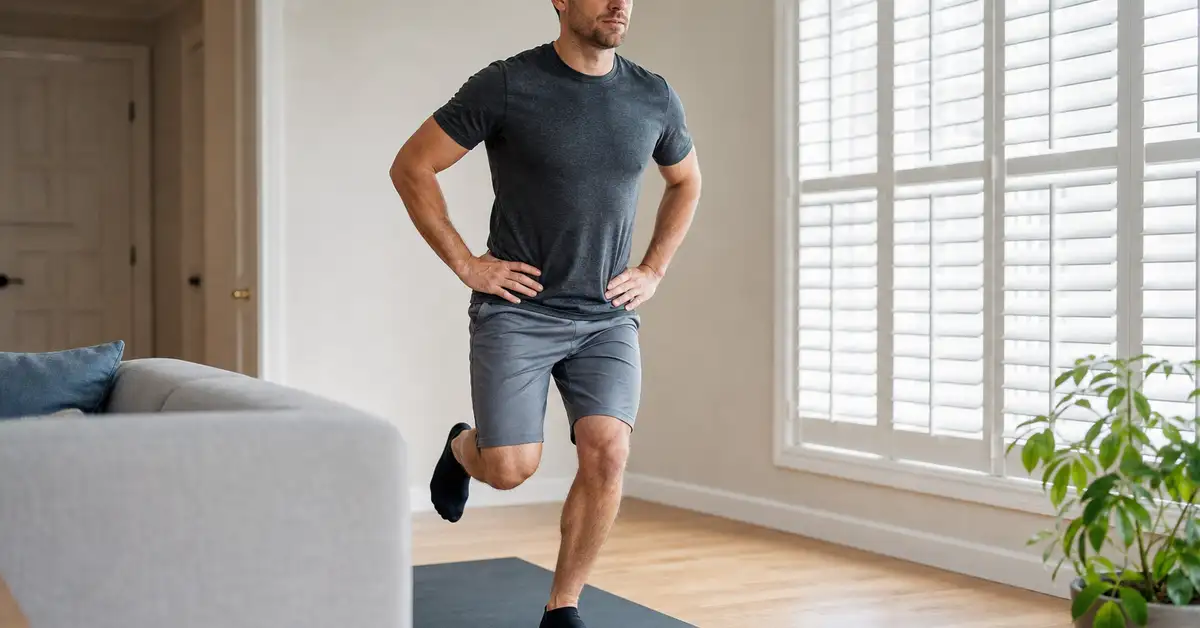
- Patellofemoral pain — hip-abductor and hip-external-rotator strengthening (clams, side-lying leg raises, single-leg squats), often more important than isolated quad work. Read our pillar on patellofemoral pain syndrome for the full programme.
- ITB syndrome — lateral hip strengthening (not stretching the ITB itself, which is biomechanically unproductive). Foam rolling provides short-term symptom relief but doesn't "break down" the ITB — and it shouldn't be sold as if it does.
- Achilles tendinopathy — heavy slow resistance (HSR) training or the Alfredson eccentric protocol. Both have strong evidence. Read our guide to Achilles tendonitis recovery for sets, reps and progression.
- Plantar fasciitis — high-load calf and intrinsic foot strengthening, plus stretching protocols. For cases lasting longer than 6 months, shockwave therapy has the strongest evidence base. See our plantar fasciitis guide.
- Medial tibial stress syndrome ("shin splints") — load management is the foundation. Calf strengthening and gait-cadence work help. Distinguishing this from a tibial stress fracture matters — see red flags below.
- Stress fractures — relative rest with protected loading, then a careful walk-to-run progression. Female-athlete triad / RED-S screening matters in younger female runners.
- Hamstring tendinopathy — eccentric loading (Nordic hamstring curls, Romanian deadlifts), then graded return. Sitting and uphill running often need temporary modification.
Return-to-running protocols that actually work
Return-to-running is a continuum, not an event. You progress from rest, to pain-free walking, to walk-run intervals, to continuous easy running, and only then to hills, speed and races — typically over 4–8 weeks for a moderate injury.
The single most useful self-monitoring framework comes from the Silbernagel pain-monitoring model. Pain during a session up to 3–5 out of 10 is acceptable if (a) it does not worsen markedly during the run, (b) it settles within 24 hours, and (c) the trend over weeks is downward. Pain that escalates during a session, persists into the next day, or worsens week-on-week tells you the tissue cannot tolerate current load — back off, don't push.
Shockwave therapy for chronic running injuries
Extracorporeal shockwave therapy (ESWT) has the strongest evidence in running injury rehabilitation for chronic plantar fasciitis lasting more than six months and chronic Achilles tendinopathy that has not responded to high-quality conservative care. It is not a first-line treatment — it is what you reach for when a runner has done their loading programme diligently for several months and is still stuck.
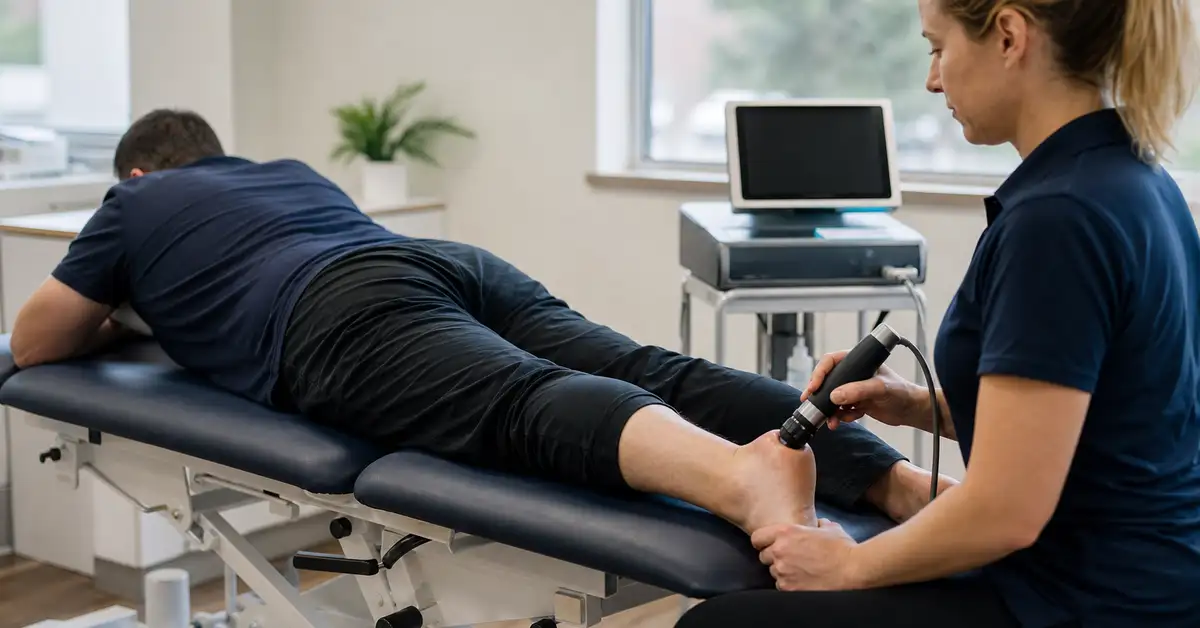
The mechanism is mechanical, not electrical: high-energy acoustic pressure waves delivered via a handheld probe stimulate cells, promote new blood vessel formation, modulate pain pathways, and disrupt some of the pathological changes that develop in long-standing tendinopathy. A typical course is 3–6 sessions, weekly or fortnightly. Sessions take 5–10 minutes. Some discomfort during treatment is normal and modulated by adjusting settings.
NICE has issued interventional procedures guidance on ESWT for plantar fasciitis and Achilles tendinopathy, and it is widely used in UK physiotherapy practice as an adjunct to ongoing loading work. Clinically, the best results come when shockwave is layered on top of a strong rehabilitation programme — not used as a substitute for one. CK Physiotherapy has shockwave on-site, which is a meaningful advantage for West London runners stuck with chronic heel pain or stubborn Achilles cases; many local competitors do not offer it. See our full guide to shockwave therapy for what to expect.
Preparing for UK races: what runners get wrong
The most common mistake in UK race prep is treating the build phase like a hero's journey and the taper like an afterthought. A 12–16 week marathon block earns its result in the consistency of weeks 4–10, when most injuries actually happen — not in the eye-catching long runs of weeks 12–14.
Some race-specific patterns we see often in the clinic: London Marathon (April) runners pick up early-block injuries on cold, wet winter pavements when the tissues are stiff and warm-ups skimped. Ealing Half (September) runners over-cook the August mileage on hot, dehydrated long runs without sufficient recovery. Parkrun-only runners are by far the safest population — short, consistent, weekly. The biggest single race-prep variable a runner can control is their willingness to take a planned easy week every fourth week.
Tapering, often misunderstood, is one of the few interventions that has clear performance benefits AND injury benefits. Cut volume by 30–50% in the final 1–2 weeks while keeping some intensity. Resist the urge to fit in "missed sessions" in race week. Niggles in race week need a clinical eye, not a hero's pre-race long run.
When to see a physio (and when to see a GP urgently)
See a chartered physiotherapist if pain persists more than 7 days despite sensible load reduction, gets worse week-on-week, is recurring at the same site, or makes you change your gait. A clinic visit at that point usually saves weeks of trial-and-error self-management.
However, some running symptoms need urgent medical assessment — not physiotherapy. Contact your GP, NHS 111, or attend A&E for any of the following:
- Focal pinpoint bony tenderness with night pain or pain at rest (suspected stress fracture, especially the femoral neck — needs urgent imaging)
- Calf pain with warmth, swelling or redness — particularly after long-haul travel (potential deep vein thrombosis)
- Chest pain, syncope or severe breathlessness during or after running (urgent cardiac assessment)
- Sudden severe back pain with weakness, numbness, or loss of bladder/bowel control (potential cauda equina)
- Female athletes with absent or irregular periods plus recurring stress injuries (RED-S / female athlete triad — needs medical management alongside physio)
How CK Physiotherapy treats runners in West London
At CK Physiotherapy, our chartered physiotherapists work with recreational and competitive runners across West London — from parkrunners to marathon runners to triathletes — combining detailed assessment, evidence-based loading programmes, manual therapy where indicated, shockwave therapy for chronic cases, and structured return-to-running plans.
Your first session is a thorough one-to-one assessment. We take a full running history — current weekly mileage, race goals, recent training load changes, previous injuries, footwear — alongside a movement screen, strength testing, and (where useful) treadmill gait observation. From there we build a programme around your event calendar: the right loading dose for your tissue, the right strength work for your gait pattern, the right return-to-running schedule for your London Marathon, Royal Parks Half or first parkrun back.
For runners with chronic plantar fasciitis or long-standing Achilles tendinopathy who have done good conservative work without resolving, we have shockwave therapy on-site — a real differentiator in the West London market. For runners juggling demanding jobs and tight training windows, our home-visit option across Hanwell, Ealing and surrounding areas means rehabilitation fits around your life rather than the other way around.
Our current fees are listed on our bookings page. We offer home visits across Hanwell, Ealing and surrounding West London. We are recognised by BUPA, AXA PPP, WPA, Groupama and Life UK, are HCPC-registered, and have been Chartered Society of Physiotherapy members since 2003.
Frequently asked questions
How long should I rest after a running injury?
It depends on the injury. For a minor niggle (transient soreness, mild tendon pain that resolves in 24 hours and doesn't worsen with gentle running), complete rest is rarely needed — instead, reduce weekly volume by 25–50% and monitor. For substantial injuries (tendinopathy with clear morning stiffness, persistent MTSS, suspected stress fracture), longer periods of reduced or no running are needed. The rule of thumb: if pain persists more than a week despite sensible load reduction, or worsens week-on-week, get a professional assessment rather than continuing self-directed rest.
Can I keep running through a niggle?
Sometimes, with care. Pain that is mild (3–5/10), does not worsen during the session, and returns to baseline within 24 hours may be compatible with reduced training — especially alongside rehab exercises. Pain that escalates during a run, persists into the next day, or makes you change your gait means the tissue is not tolerating current load. The Silbernagel pain-monitoring model offers a pragmatic framework: some discomfort is acceptable, but the overall trend must move towards improvement, not deterioration.
Should I use a foam roller for ITB pain?
Foam rolling can help with short-term symptom relief and mobility, but it does not "break down" the iliotibial band — the ITB is a strong fascial structure that doesn't biomechanically adapt to rolling. For ITB syndrome, the high-value intervention is lateral hip strengthening (single-leg work, side-lying leg raises, banded clams), not stretching or rolling. Use the foam roller as a comfort aid; do the strength work because it works.
Are minimalist or maximalist running shoes better?
Neither universally prevents injury. The current "comfort filter" approach in the research literature suggests runners do best in shoes that feel comfortable to them, which probably correlates with their individual optimal loading pattern. What does increase injury risk is abrupt shoe changes — going from a heavy cushioned shoe to a minimalist one in a single week, for instance. Any meaningful shoe transition should be gradual (introduce the new shoe for shorter runs over 6–8 weeks). Comfort, gradual transitions and attention to your own response matter more than any particular shoe philosophy.
How do I know if it's a stress fracture?
Warning signs include focal pinpoint bony tenderness (you can put a finger right on the painful spot), pain that worsens with impact and hopping, and pain that persists at rest or wakes you at night. Unlike muscular soreness — which is more diffuse and improves with rest within a couple of days — stress fracture pain is localised and persistent. Any suspicion of a stress fracture, especially at high-risk sites (femoral neck, navicular, anterior tibia) or in female runners with menstrual irregularity, needs prompt imaging and medical management. Do not "run through" a suspected stress fracture.
Does shockwave therapy work for plantar fasciitis?
Yes — particularly for cases lasting longer than six months that have not responded to stretching, calf strengthening, footwear modification and rest. Trials in chronic plantar fasciitis show clinically meaningful improvements in pain and function with shockwave compared to sham, especially when high-energy focused shockwave is used and integrated with ongoing loading work. NICE has issued interventional procedures guidance supporting its use under standard clinical governance. A typical course is 3–6 sessions, weekly or fortnightly. CK Physio offers shockwave on-site.
Do I need a gait analysis?
For most uninjured runners, no — gait analysis is not a precondition for safe running. For runners with recurrent injuries at the same site, persistent biomechanical compensations, or training plateaus despite consistent rehab, a clinical gait observation can add real value. The point of gait work is not to chase a "perfect" running form; it is to identify specific loading patterns that may be feeding into your injury and to test whether small cueing changes (cadence increase, foot-strike modification, hip control work) reduce symptoms. A good physiotherapist treats gait analysis as a clinical tool, not a sales tool.
Book a running assessment with CK Physio
Whether you are managing a stubborn niggle, returning from injury for the London Marathon, or just want to run more without breaking, our chartered physiotherapists work with you in the clinic in Hanwell or at home across Ealing and West London. Shockwave therapy on-site for chronic cases. BUPA and AXA PPP registered. Typically seen within days.
About the author. This guide is published by the clinical team at CK Physiotherapy in Hanwell, West London. Our chartered physiotherapists are registered with the Health and Care Professions Council (HCPC) and members of the Chartered Society of Physiotherapy (CSP). We have been treating running and musculoskeletal injuries across Hanwell, Ealing and West London since 2003.
Sources and further reading: British Journal of Sports Medicine; NHS — Running for beginners and injury; Chartered Society of Physiotherapy; Cochrane Library — Running injury reviews; NICE interventional procedures guidance on shockwave therapy; parkrun UK. Cross-pillar reading: patellofemoral pain, Achilles tendonitis, plantar fasciitis, shockwave therapy. outer hip pain and gluteal tendinopathy physiotherapy in West London




.svg)

.svg)

.svg)