
Sports Physiotherapy • Recovery & Rehabilitation
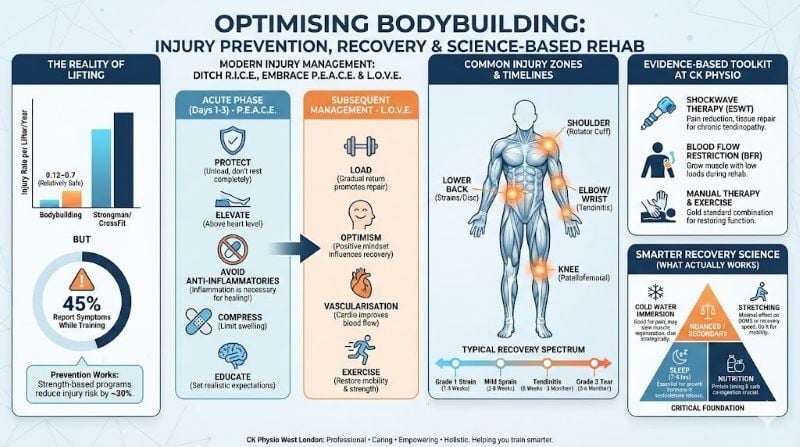
If you're serious about bodybuilding, you're asking a great deal of your body. The intense, repetitive nature of resistance training—pushing muscles to fatigue session after session—creates both remarkable adaptations and significant injury risk. Here's the good news: research shows that bodybuilding actually carries the lowest injury rates among all weight-training sports, at just 0.12–0.7 injuries per lifter per year. Compare this to strongman training (4.5–6.1 injuries per 1,000 hours) or CrossFit (2.4–3.3 per 1,000 hours), and bodybuilding emerges as relatively safe.
Physiotherapy for Bodybuilders: Your Complete Guide to Recovery, Injury Prevention and Performance
CK Physiotherapy in West London helps bodybuilders and strength athletes recover from injuries, prevent future problems, and optimise their training through evidence-based rehabilitation. With the UK now home to 11.3 million gym members—a record 16.6% of the population—and 61% of exercisers completing regular strength sessions, demand for specialist physiotherapy care has never been higher. This comprehensive guide explains how physiotherapy supports your bodybuilding goals, from treating common injuries to the latest recovery science.
Why Bodybuilders Benefit from Physiotherapy
However, 'relatively safe' doesn't mean injury-free. Studies indicate that 45% of competitive bodybuilders report symptoms while training, and athletes over 40 experience significantly higher injury rates. This is where physiotherapy becomes invaluable—not just for treating injuries when they occur, but for preventing them in the first place.
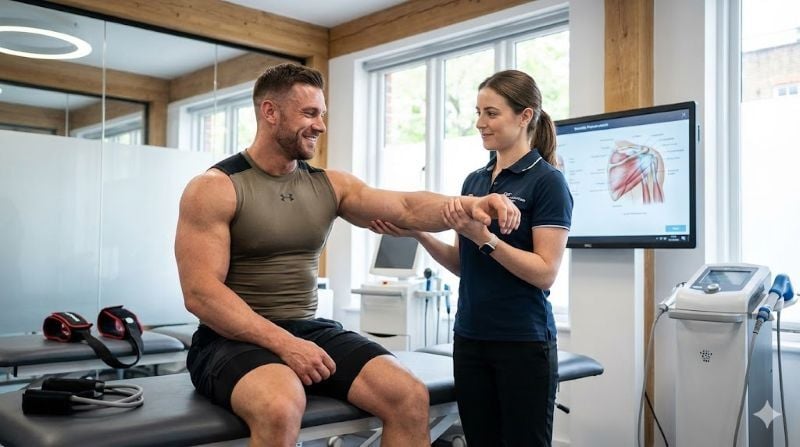
At CK Physiotherapy's sports injury clinic in West London, we work with bodybuilders and strength athletes to:
- Identify and correct movement dysfunctions before they become injuries
- Accelerate recovery from strains, tendinitis, and other common conditions
- Develop tailored rehabilitation programmes that get you back to training safely
- Optimise your training approach through evidence-based guidance on recovery and load management
Key insight: A 2025 meta-analysis of 16 randomised controlled trials found that strength-based injury prevention programmes reduce total injury risk by 30%, with particularly strong effects for groin injuries (31% reduction) and hamstring injuries (63% reduction). Prevention really does work.
Common Bodybuilding Injuries and Recovery Timelines
Understanding the injuries most likely to affect you—and how long they typically take to heal—helps you make informed decisions about seeking treatment. The most commonly injured body regions in bodybuilders rank as:
- Shoulder (including rotator cuff issues, impingement)
- Lower back (muscle strains, disc problems)
- Knee (patellofemoral pain, tendinopathy)
- Elbow (tennis elbow, golfer's elbow)
- Wrist and hand (strains, carpal tunnel)
The primary injury types are muscle strains (most common), tendinitis, ligament sprains, and cartilage wear. Contributing factors typically include fatigue (21% of injuries), excessive overload (18–35%), insufficient warm-up (14–42%), and lack of spotting (7%). Interestingly, men are 1.7 times more likely to sustain a gym injury than women.
| Injury Type | Typical Recovery Time | Key Considerations |
|---|---|---|
| Grade 1 muscle strain | 1–3 weeks | Mild fibre damage; can often continue modified training |
| Grade 2 muscle strain | 3–8 weeks | Moderate tear; physiotherapy essential for proper healing |
| Grade 3 (complete tear) | 3–6 months | May require surgery; structured rehab critical |
| Tendinitis/tendinopathy | 6 weeks to 3+ months | Load management crucial; shockwave therapy often beneficial |
| Mild ligament sprain | 2–8 weeks | Walking often possible at 2 weeks; full function 6–8 weeks |
These timelines are general guides—individual recovery depends on factors including your age, overall health, injury severity, and how quickly you begin appropriate treatment. If you're unsure whether an injury needs professional attention, it's always better to get assessed early. Read more in our guide to physiotherapy for bodybuilders and muscle recovery.
The PEACE & LOVE Protocol: Modern Injury Management
If you've been following the old RICE protocol (Rest, Ice, Compression, Elevation) for injuries, it's time for an update. The sports medicine community has moved on, and understanding why matters for your recovery.
The PEACE & LOVE framework, published in the British Journal of Sports Medicine in 2020, represents a significant shift in how we approach soft tissue injury management. The key insight is that inflammation is not your enemy—it's a necessary part of healing. Excessive use of ice and anti-inflammatory medications may actually delay recovery by interfering with your body's natural repair processes.
PEACE (Acute Phase: First 1–3 Days)
- P – Protection: Unload or restrict movement for 1–3 days to prevent aggravation, but avoid prolonged rest
- E – Elevation: Elevate the injured limb above heart level to promote fluid drainage
- A – Avoid anti-inflammatories: NSAIDs and ice may impair tissue healing—use sparingly if at all
- C – Compression: External pressure helps limit swelling and improves quality of life
- E – Education: Understand your injury and set realistic expectations; avoid over-treatment
LOVE (Subsequent Management)
- L – Load: Gradually return to activity. Mechanical stress promotes repair and tissue remodelling
- O – Optimism: Positive psychology—your beliefs and expectations influence recovery outcomes
- V – Vascularisation: Cardiovascular activity improves blood flow and supports healing
- E – Exercise: Active approaches restore mobility, strength, and proprioception
This doesn't mean ice has no place—it can help with pain management in the immediate aftermath. But the evidence now suggests that icing beyond 10 minutes may show detrimental effects on muscle power and recovery. If you've been reaching for the ice pack as your first response to every training twinge, consider a more nuanced approach.
Evidence-Based Treatment Modalities for Strength Athletes
At CK Physiotherapy, we use a range of treatments backed by the latest clinical research. Here's what the evidence says about the modalities most relevant to bodybuilders:
Extracorporeal Shockwave Therapy (ESWT)
Shockwave therapy has received its first international consensus protocol in 2025, with 69 standardised statements published via a modified Delphi study. This treatment uses acoustic waves to stimulate your body's healing response, promoting new blood vessel formation, collagen synthesis, and tissue repair.
What the evidence shows: A 2024 meta-analysis of 18 randomised controlled trials confirmed significant pain reduction and improved function for upper-limb tendonitis. Clinical benefit typically emerges at 6–12 weeks. Combined shockwave plus exercise is now specifically recommended for plantar heel pain, Achilles tendinopathy, lateral elbow tendinopathy, and rotator cuff tendinopathy.
At CK Physio: We offer focused shockwave therapy rather than radial—research shows focused shockwave delivers more precise, deeper penetration for better outcomes. Learn more about what to expect from shockwave therapy.
Blood Flow Restriction (BFR) Training
Blood flow restriction has crossed from gym trend to evidence-based rehabilitation tool. This technique involves applying a cuff to partially restrict blood flow during low-load exercise, creating metabolic stress that stimulates muscle growth without the mechanical stress of heavy weights.
What the evidence shows: A 2025 meta-analysis found BFR significantly improves muscle strength compared to low-load control training (standardised mean difference = 1.11) with no significant increase in pain. Multiple 2024–2025 systematic reviews confirm BFR enhances recovery after ACL reconstruction with no apparent complications.
Why it matters for bodybuilders: BFR allows you to maintain muscle mass during injury rehabilitation when heavy loading isn't possible. The standard protocol uses 20–30% of your one-rep max with 40–80% arterial occlusion pressure across four sets (30-15-15-15 reps).
Manual Therapy & Therapeutic Exercise
The foundation of physiotherapy remains hands-on treatment combined with targeted exercise prescription. Our physiotherapy treatments include joint mobilisation, soft tissue manipulation, and individualised exercise programmes designed around your training goals.
What the evidence shows: A 2025 meta-analysis of 69 randomised controlled trials found that therapeutic patient education combined with physiotherapy interventions shows moderate-certainty evidence for reducing pain, disability, and catastrophising in subacute and chronic musculoskeletal conditions. The combination of education, manual therapy, and exercise consistently outperforms any single approach.
Electrotherapy
Electrotherapy encompasses various modalities including TENS for pain relief, EMS for muscle stimulation, and therapeutic ultrasound. While NICE guidelines don't specifically recommend electrotherapy for general low back pain, sports-specific evidence supports its use for certain conditions.
Learn more in our comprehensive guide to the key benefits of electrotherapy in physiotherapy.
Recognising and Managing Overtraining Syndrome
Overtraining syndrome (OTS) remains one of the most challenging conditions for serious lifters—and one of the most under-recognised. Unlike a specific injury you can point to, overtraining creeps up gradually, and by the time most athletes recognise it, they're already deep into a prolonged recovery period.
There's no gold-standard test for overtraining. It remains a diagnosis of exclusion, meaning your physiotherapist or doctor must rule out other causes first. However, a 2025 narrative review highlights emerging understanding of how overtraining affects the body, including gut microbiome disruption and systemic inflammation affecting the HPA (hypothalamic-pituitary-adrenal) axis.
Warning Signs to Watch For
Physical Signs
- Persistent fatigue despite adequate rest
- Decreased performance over 2+ weeks
- Elevated resting heart rate
- Increased frequency of illness or injury
- Prolonged muscle soreness
Psychological Signs
- Loss of motivation to train
- Mood disturbances or irritability
- Sleep disturbances
- Difficulty concentrating
- Depression or anxiety
Performance decline typically begins from the second week of overtraining. If you're noticing persistent decreases in strength, power, or endurance despite adequate nutrition and sleep, it's time to reassess your training load.
Treatment is non-pharmacological: structured rest (which may take weeks to months), sleep optimisation, stress management, and a graduated return-to-training with reduced intensity. Working with a physiotherapist can help you develop a sensible return-to-training protocol that doesn't simply repeat the patterns that led to overtraining in the first place.
What the Latest Recovery Science Tells Us
The evidence on popular recovery methods has shifted considerably in recent years. Here's what you need to know:
Post-Exercise Stretching: The Evidence Has Shifted
A 2025 meta-analysis found no compelling evidence that post-exercise stretching improves muscle soreness, strength, performance, flexibility, or pain threshold as a standalone intervention. This doesn't mean stretching is worthless—mobility work has its place—but if you're stretching primarily to reduce DOMS or speed recovery, the science suggests your time might be better spent elsewhere.
Cold Water Immersion: Nuanced Benefits
A 2025 network meta-analysis of 55 RCTs identified the optimal cold water immersion protocol as 11–15°C water for 11–15 minutes. CWI is effective for reducing delayed onset muscle soreness (DOMS). However, the same research that supports this also suggests cryotherapy may delay muscle regeneration—helpful for pain management, potentially counterproductive for adaptation. Use strategically, not habitually.
Sleep: The Most Underrated Recovery Tool
A 2025 study identified the specific brain circuits responsible for growth hormone release during sleep. Clinical data shows a single night of sleep deprivation reduces testosterone by approximately 25%. With 45% of the Western population failing to reach the recommended 7–9 hours—and over 50% of athletes experiencing sleep disturbance—this remains the most underutilised recovery strategy available.
Nutritional Recovery: Timing Matters
The latest evidence confirms carbohydrate-protein co-ingestion is beneficial when carbohydrate intake is suboptimal. Pre-sleep protein (27.5g) during a 12-week resistance programme produced 6% greater quadriceps growth and 25% greater leg press strength versus placebo. Emerging roles for omega-3 fatty acids, creatine, and even caffeine co-ingestion for glycogen synthesis are gaining evidence.
When to See a Physiotherapist
Many bodybuilders try to 'train through' injuries, hoping they'll resolve on their own. Sometimes they do. But certain symptoms warrant professional assessment:
- Pain that persists beyond 2 weeks despite rest and modified training
- Sharp, sudden pain during a lift (especially with an audible 'pop')
- Significant swelling, bruising, or visible deformity
- Weakness or inability to use the affected body part normally
- Numbness, tingling, or referred pain
- Recurring injuries to the same area
- Symptoms of overtraining that don't resolve with rest
How Much Does Private Physiotherapy Cost in the UK?
Private physiotherapy in London typically costs £80–£150 per session, with initial consultations at £100–£130 and follow-ups at £65–£100. At CK Physiotherapy, initial treatments last up to 45 minutes and include a detailed assessment. We're recognised by BUPA, AXA PPP, WPA, Groupama and Life UK.
Do you need a GP referral? No—you can self-refer directly to a private chartered physiotherapist. Learn more about accessing physiotherapy care.
Frequently Asked Questions
How can physiotherapy help bodybuilders?
Physiotherapy helps bodybuilders recover from injuries faster, prevent future problems through movement screening and prehabilitation, and optimise training through evidence-based guidance on load management and recovery. CK Physiotherapy in West London offers treatments including shockwave therapy, manual therapy, and exercise rehabilitation specifically tailored for strength athletes.
What are the most common bodybuilding injuries?
The most common injury sites are shoulders, lower back, knees, elbows, and wrists. Injury types typically include muscle strains, tendinitis (especially in the rotator cuff, elbow, and patellar tendon), ligament sprains, and gradual cartilage wear. Contributing factors include fatigue, excessive load, insufficient warm-up, and poor technique.
Can I still train while recovering from an injury?
Often, yes—but it depends on the injury. The PEACE & LOVE protocol emphasises that appropriate loading actually promotes healing, rather than complete rest. Your physiotherapist can help you modify your training to work around the injury whilst maintaining fitness and muscle mass. Techniques like blood flow restriction training allow low-load exercise that still stimulates muscle growth.
Is physiotherapy or sports massage better for bodybuilding recovery?
They serve different purposes. Sports massage helps with muscle tension and general recovery between sessions. Physiotherapy addresses specific injuries, movement dysfunctions, and rehabilitation—physiotherapists can diagnose conditions and prescribe exercise programmes. Many bodybuilders benefit from both: regular sports massage for maintenance, physiotherapy when dealing with injuries or persistent problems. CK Physiotherapy offers various massage therapies as part of comprehensive treatment.
What are the signs of overtraining in bodybuilders?
Warning signs include persistent fatigue despite rest, declining performance over 2+ weeks, elevated resting heart rate, mood disturbances, sleep problems, loss of motivation, increased illness frequency, and prolonged muscle soreness. If you notice multiple symptoms, reduce training volume and consult a professional. Overtraining recovery can take weeks to months, so early intervention is important.
Ready to Optimise Your Training and Recovery?
Whether you're dealing with an injury or want to prevent one, CK Physiotherapy's team of chartered physiotherapists can help you train smarter and recover faster.
Book Your Appointment57 Elthorne Avenue, Hanwell, W7 2JY • 020 8566 4113 • Early morning, evening & Saturday appointments available
References & Further Reading
- Dubois, B. & Esculier, J.F. (2020). Soft-tissue injuries simply need PEACE and LOVE. British Journal of Sports Medicine, 54(2), 72-73. PubMed
- Leisure DB (2025). State of the UK Fitness Industry Report 2025. View Report
- ukactive (2025). UK Health & Fitness Market Report 2025. ukactive
- Chen, J. et al. (2025). The effects of low-load resistance training combined with blood flow restriction on knee rehabilitation. PLOS One, 20(6). PLOS One
- Hughes, L. et al. (2017). Blood flow restriction training in clinical musculoskeletal rehabilitation: a systematic review and meta-analysis. British Journal of Sports Medicine, 51(13), 1003-1011. PubMed
- Physiopedia (2024). Peace and Love Principle. Physiopedia
- Keogh, J.W. & Winwood, P.W. (2017). The Epidemiology of Injuries Across the Weight-Training Sports. Sports Medicine, 47(3), 479-501. PubMed
- Chartered Society of Physiotherapy. www.csp.org.uk




.svg)

.svg)

.svg)