
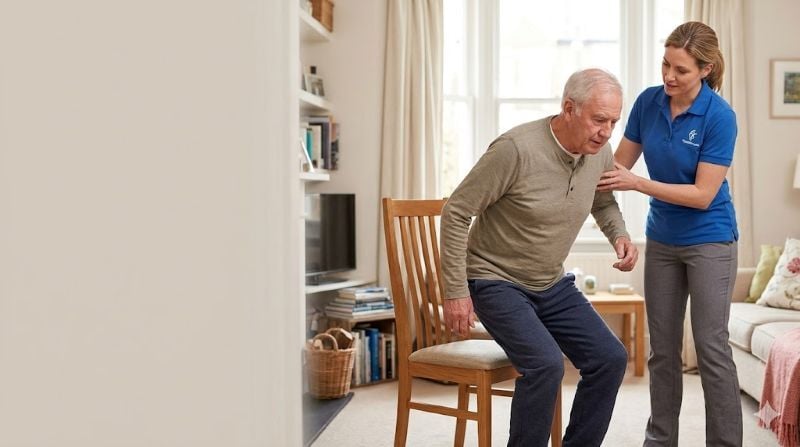

Home physiotherapy after an illness or hospital stay helps you rebuild the strength, mobility and confidence lost during a period of rest or inactivity. At CK Physio, our Chartered Physiotherapists visit you at home across Ealing, Hanwell and West London, often within days, with no GP referral needed to begin private treatment.
Key Takeaway
After an illness or hospital admission, the body can lose strength and mobility surprisingly quickly — a process called deconditioning. Starting tailored physiotherapy early, at home, helps you recover function safely and at your own pace. Home visits remove the single biggest barrier to recovery for many people: the journey to a clinic.
Recovering from an illness, an operation or a spell in hospital is rarely as simple as the treatment ending. Many people — and especially older adults — find that once they are home, everyday movements feel harder than before: getting out of a chair, managing the stairs, or walking to the bathroom with confidence. This is normal, it is well understood, and it is treatable. Research from the NHS highlights just how fast this can happen: ten days of bed rest in hospital can age the muscles of someone over 80 by the equivalent of roughly ten years. The encouraging news is that the body responds well to the right kind of gentle, progressive activity. This guide explains what recovery at home involves, who it helps, and what you and your family can realistically expect.
10 yrs
Muscle ageing
Equivalent to 10 days bed rest, over-80s
30–41%
Affected by deconditioning
Older adults after an acute admission
No referral
To start privately
You can self-refer to a private physiotherapist
Sources: East Lancashire Hospitals NHS Trust — Deconditioning; hospital-associated deconditioning prevalence, peer-reviewed literature.
What is deconditioning after illness?
Deconditioning is the loss of physical strength, stamina and mobility that follows a period of reduced activity — such as time spent in bed during an illness or a hospital stay. When muscles are not used, they weaken quickly, balance and coordination decline, and joints can stiffen. The original medical problem may be fully treated, yet the deconditioning it caused becomes a separate challenge of its own. It is one of the most common reasons people feel “not themselves” for weeks after returning home.
For older adults, the effect is more pronounced because muscle is harder to rebuild with age. The good news is that targeted physiotherapy is one of the most effective ways to reverse it. At CK Physio, our Chartered Physiotherapists design a recovery plan around your current ability and your own goals — whether that is climbing the stairs unaided, walking to the local shops, or simply feeling steady on your feet at home again.
Who is home recovery physiotherapy for?
Home recovery physiotherapy suits anyone whose strength, mobility or confidence has declined after an illness, operation or hospital stay — and for whom getting to a clinic is difficult. It is particularly valuable for older adults and for people supporting an elderly parent or relative. Bringing expert care into the home removes the travel barrier entirely and lets treatment happen in the environment where the person actually needs to move safely.
People who commonly benefit include those recovering from:
- A hospital stay — following a fall, infection, or planned procedure
- Surgery — such as a hip or knee replacement, where guided rehabilitation supports a safe return to movement
- A general decline after illness — feeling weak, unsteady, or fatigued once home
- A fall or loss of confidence — where fear of falling again limits everyday activity
- A respiratory illness — rebuilding stamina gradually after a chest infection or a viral illness
An Important Note on Recovery After a Viral Illness
Exercise is not always the right starting point. Recovery from some viral illnesses, including Long COVID, can involve fatigue that worsens after activity — known as post-exertional symptom exacerbation. Pushing too hard, too soon can set recovery back.
What this means: A proper assessment should always come first. Current physiotherapy guidance emphasises pacing and energy management before any progressive exercise. Always be assessed by a qualified professional, and speak to your GP, before beginning a recovery programme after a significant viral illness.
What does a home physiotherapy visit involve?
A home physiotherapy visit brings a full clinical assessment and hands-on treatment directly to your door — no waiting room, no travel, and the comfort of familiar surroundings. Understanding what to expect can take a lot of the uncertainty out of arranging care for yourself or a relative.
A thorough assessment
Your physiotherapist reviews your health history, current difficulties and personal goals, then assesses your strength, balance, walking and ability to manage everyday tasks.
A personalised plan
Together you agree realistic goals and a tailored treatment plan. This may include gentle strengthening, balance and walking practice, manual therapy and practical advice suited to your home.
Hands-on treatment at home
Your physiotherapist brings the equipment needed and works with you in your own space — using the real stairs, the real chair and the real routes you use every day.
Review, progress and family updates
Progress is reviewed each visit and the plan adjusted as you improve. With your consent, we can keep family informed and liaise with your GP to keep everyone aligned.
Supporting a parent or relative after a hospital stay? Our home visit physiotherapy brings expert care to their door.
Explore Home VisitsHow long does recovery after illness take?
Recovery time after an illness or hospital stay varies from person to person, and honest expectations matter more than promises. As a general guide, the longer someone has been inactive and the older they are, the more gradual the recovery tends to be — one widely cited rule of thumb is that regaining lost condition can take roughly twice as long as the period of inactivity itself. Many people notice meaningful improvements in everyday tasks within a few weeks of starting consistent, well-targeted physiotherapy, while fuller recovery unfolds over a longer period.
What makes the biggest difference is starting sooner rather than later. Beginning physiotherapy in the first week or two at home, before further decline or loss of confidence sets in, gives the best foundation for a safe and steady recovery. At CK Physio, our Chartered Physiotherapists set goals with you and track progress visit by visit, so you can see the gains clearly and adjust the pace to what feels right for your body.
Because every recovery is different, your physiotherapist will give you a realistic, individual picture at your first assessment rather than a fixed timetable. Factors such as the original illness, any underlying conditions, nutrition, sleep and the support available at home all shape the journey. The aim throughout is not just to treat symptoms but to restore the things that matter to you — moving well, feeling well, and getting back to the life and people you enjoy.
Why choose home physiotherapy over a clinic?
Home physiotherapy is often the better choice when travelling to a clinic is the hardest part of getting help. For someone recovering from illness, the journey itself — getting dressed, into a car, and through a waiting room — can be exhausting or simply not possible. Treating people in their own home removes that barrier and lets recovery happen exactly where daily life takes place.
Practical advantages
No travel, no waiting rooms, and appointments that fit around the person’s routine. Treatment uses the actual stairs, chairs and spaces they navigate every day, making progress directly relevant to real life.
Comfort and confidence
Familiar surroundings reduce stress and help many people engage more fully with their recovery. Family can be involved, and care feels personal — in keeping with CK Physio’s holistic, non-invasive approach.
This does not mean home care suits everyone or every stage of recovery — some treatments are still best delivered in a clinic, and your physiotherapist will always advise honestly on what is most appropriate. For many people recovering after illness, though, expert physiotherapy delivered at home offers a gentler, more convenient and more consistent path back to independence.
Home physiotherapy compared with waiting for community care
Many people are entitled to NHS community physiotherapy after discharge, and it is a valuable service. The challenge is timing: waiting lists can mean a delay of several weeks, during which deconditioning can worsen. Private home physiotherapy can begin quickly and works alongside — not instead of — any NHS care a person is receiving.
| Consideration | Private home physiotherapy | Waiting for community care |
|---|---|---|
| Time to start | Often within days | Can be several weeks |
| Where | In your own home | Home or clinic, varies by area |
| Referral | Self-referral — no GP needed | Usually via GP or hospital team |
| Personalisation | One-to-one, tailored plan | Varies with local resources |
This comparison is general guidance; NHS provision varies by area. CK Physio complements, and does not replace, NHS care.
Frequently asked questions about home physiotherapy after illness
Can a physiotherapist visit you at home?
Yes. Private physiotherapists can assess and treat you in your own home, bringing the equipment they need. CK Physio offers home visit physiotherapy across Ealing, Hanwell and the surrounding West London area, which is ideal for anyone who finds travelling to a clinic difficult during recovery.
Do you need a GP referral for private home physiotherapy?
No, a GP referral is not required to begin private physiotherapy. You can self-refer and arrange an assessment directly. If you wish, and with your consent, your physiotherapist can liaise with your GP to keep your wider care coordinated throughout your recovery.
How soon after a hospital stay should physiotherapy start?
Starting within the first week or two of returning home is generally ideal, because it helps prevent further decline in strength and confidence. The right timing depends on the individual, so an early assessment is the best way to decide when and how to begin safely.
What is deconditioning after illness?
Deconditioning is the loss of muscle strength, stamina, balance and mobility caused by a period of inactivity, such as bed rest during illness. It can affect anyone but is more common and more pronounced in older adults. Targeted physiotherapy is an effective way to reverse it.
Is exercise safe after a viral illness like Long COVID?
Not always, and caution is essential. Some people experience worsening symptoms after activity, so current guidance prioritises pacing and energy management before progressive exercise. Always be assessed by a qualified professional and speak to your GP before starting a recovery programme after a significant viral illness.
Ready to rebuild strength and confidence at home?
CK Physio’s Chartered Physiotherapists provide caring, holistic home visit physiotherapy across Ealing, Hanwell and West London — helping you or your loved one recover safely after illness or a hospital stay.
Sources: East Lancashire Hospitals NHS Trust — Hospital Deconditioning, Chartered Society of Physiotherapy — Long Covid Clinical Guidance, NICE NG188 — Managing the Long-term Effects of COVID-19, World Physiotherapy — Safe Rehabilitation Approaches for Long COVID.
CK Physio Clinical Team
Chartered Physiotherapists, CK Physiotherapy
CK Physio has provided professional, caring physiotherapy in Hanwell and Ealing since 2003. Our HCPC-registered Chartered Physiotherapists specialise in holistic, non-invasive care delivered in the clinic or in the comfort of your own home.




.svg)

.svg)

.svg)