
3. June 2026
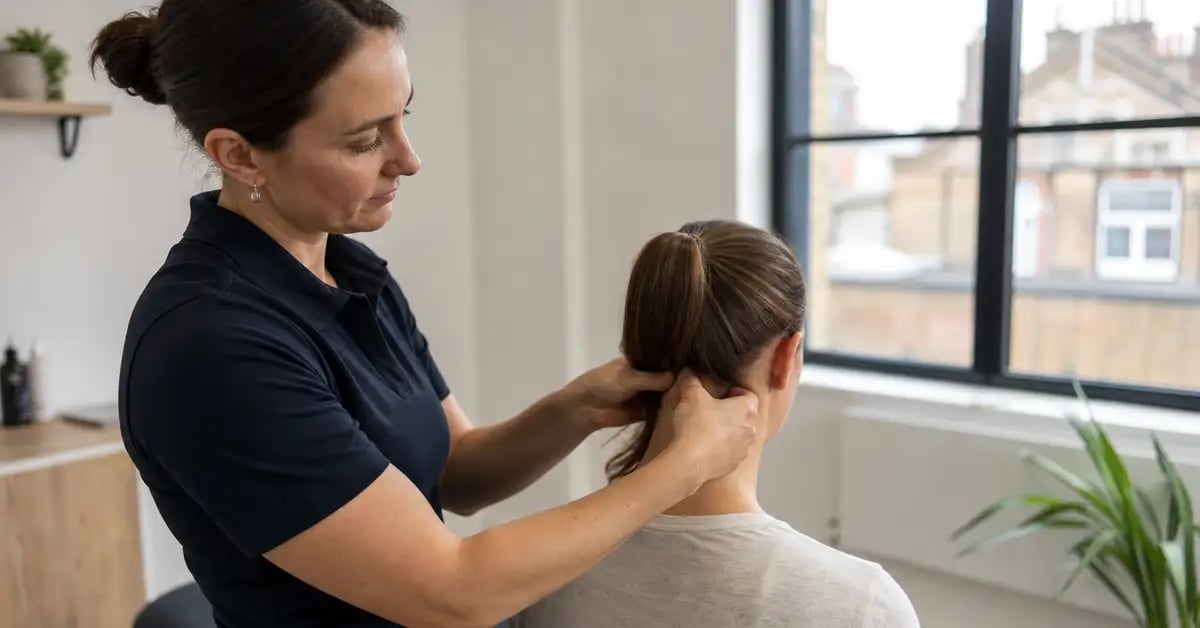
Many headaches actually start in the neck — and those are exactly the kind that physiotherapy treats well. If your headache sits on one side, creeps up from the base of your skull, or flares after a long day hunched over a laptop, the source may be your upper neck rather than your head. This guide explains the two headache types most responsive to physiotherapy — cervicogenic headache (driven by the neck) and tension-type headache — how to tell them apart from migraine, what the evidence says actually works, the exercises that help, and the red flags that mean you should see a doctor first. It is written for adults across Hanwell, Ealing and West London, especially desk and hybrid workers whose headaches and screens go hand in hand.
Can a headache really come from your neck?
Yes — and it is more common than most people realise. The nerves from your top three neck joints (C1, C2 and C3) share the same junction box in the brainstem as the nerves that supply your face and forehead. Anatomists call this the trigeminocervical convergence. In plain terms, your brain can struggle to tell the difference between a signal coming from a stiff, irritated upper-neck joint and one coming from your head — so pain that begins in the neck is felt over the eye, temple or forehead. This is why a problem in the neck can masquerade convincingly as a "head" ache.
Two headache types are strongly linked to the neck. Cervicogenic headache is a secondary headache, meaning it is a symptom of a genuine problem in the cervical spine — the headache is referred up from the joints, discs and muscles of the upper neck. Tension-type headache, the most common headache of all, is a primary headache, but it is closely tied to the muscles and posture of the neck and jaw. Both have a mechanical, treatable component, which is precisely why a hands-on, exercise-based approach so often helps where painkillers only paper over the cracks.
Cervicogenic, tension-type or migraine? How to tell them apart
The single most useful clue is where the headache starts and what sets it off. Cervicogenic headaches are almost always one-sided and "side-locked" (the same side every time), begin at the back of the head or neck, and are provoked by neck movements or sustained postures. Tension-type headaches feel like a tight band squeezing both sides of the head. Migraine is typically more severe, often throbbing, and comes with nausea or sensitivity to light and sound. The table below is a quick orientation — not a diagnosis, which needs a proper assessment.
| Feature | Cervicogenic | Tension-type | Migraine |
|---|---|---|---|
| Location | One side, from neck/base of skull to forehead | Both sides, band-like | Often one side, can switch sides |
| Pain character | Deep, dull ache; not throbbing | Pressing or tightening | Throbbing, moderate to severe |
| Triggers | Neck movement, sustained posture, pressure on the neck | Stress, fatigue, prolonged desk work | Hormones, sleep, diet, sensory triggers |
| Other symptoms | Reduced neck movement, neck stiffness | Few; mild tenderness around the head | Nausea, light/sound sensitivity, aura |
| Does physio help? | Strongly — best-supported treatment | Yes, especially the neck/jaw component | As a helpful add-on, not a cure |
One important caveat from the Chartered Society of Physiotherapy: true cervicogenic headache is relatively uncommon, and it is easy to over-diagnose it in someone who actually has migraine or tension-type headache plus neck pain. That is why assessment matters — and why a good physiotherapist screens carefully rather than assuming every headache is "just the neck".
What causes neck-related headaches?
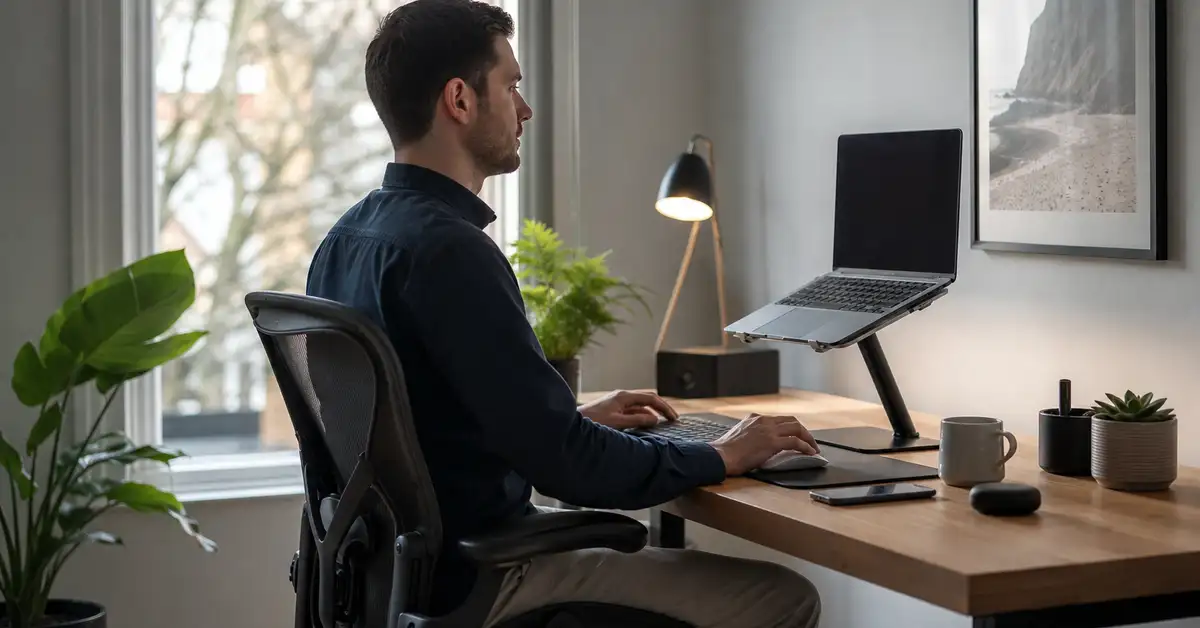
Most neck-related headaches come down to stiff upper-neck joints, tight or fatigued muscles, and the forward-head posture that desk work encourages. In studies of people with neck-related headache after whiplash, the C2–C3 facet joint was the most common source, with the C1–C2 segment — responsible for much of your head-turning — another frequent culprit. When these joints stiffen or become irritated, they refer pain into the head.
The muscles play their part too. The small suboccipital muscles at the base of the skull, along with trigger points in the upper trapezius and the muscles down the side of the neck, are commonly tender and overactive. Meanwhile the deep neck flexors — the postural muscles that should quietly support your head — tend to weaken, leaving the bigger surface muscles to overwork. The result is a head that drifts forward of the shoulders, loading the neck and feeding the cycle. If this sounds familiar, our guide to muscle imbalance and poor posture explains the mechanics in more depth, and the same pattern underlies what many people now call "text neck". A previous neck injury, such as whiplash, can also be the starting point for persistent cervicogenic headaches.
How a physiotherapist assesses your headache
A proper headache assessment is part detective work, part safety screen. Your physiotherapist will first rule out anything that needs medical attention (see the red flags below), then look for the mechanical signs that point to the neck. A few specific tests do most of the heavy lifting:
- The cervical flexion-rotation test. Lying down with the neck fully bent forward, you rotate your head each way. A healthy neck rotates roughly 44° to each side; in cervicogenic headache driven by the C1–C2 joint, that rotation is typically cut by around 17° on the affected side. It is one of the most reliable ways to separate a neck-driven headache from migraine.
- The craniocervical flexion test. Using a small pressure cuff behind the neck, your physio measures how well your deep neck flexors switch on and hold — the muscles that so often fail in headache and posture problems.
- Joint and muscle examination. Gentle pressure on individual neck segments can reproduce your familiar headache, which is a strong clue to its source, while palpation maps tender muscles and trigger points.
- Posture and movement. How you sit, type and hold your phone all feed into the picture.
Reassuringly, when a physiotherapist finds the combination of restricted upper-neck movement, painful upper-neck joints and impaired deep-muscle control, that cluster has been shown to identify cervicogenic headache with very high accuracy — meaning your treatment can be aimed precisely at the cause.
Red flags: when a headache needs urgent medical attention
Physiotherapy is for mechanical, neck-related headaches — not for headaches that signal something serious. Seek urgent medical help (call 999 or go to A&E, or contact your GP or NHS 111 the same day) if a headache comes with any of the following:
- A sudden, severe "thunderclap" headache that reaches maximum intensity within five minutes
- Headache with fever, neck stiffness, confusion, drowsiness or a rash
- Headache with weakness, numbness, slurred speech, or changes to your vision
- A new or progressively worsening headache, especially after age 50 or with a history of cancer
- Headache that is consistently worse when lying down, coughing, sneezing or straining
- Headache following a recent head or neck injury
- Headache with a painful, red eye, or with jaw pain when chewing
Sudden neck pain and headache combined with neurological symptoms can — rarely — signal a problem with a neck artery and must be treated as an emergency. When red flags are present, hands-on neck treatment is not appropriate until serious causes have been excluded.
What does the evidence say works? Treatments ranked
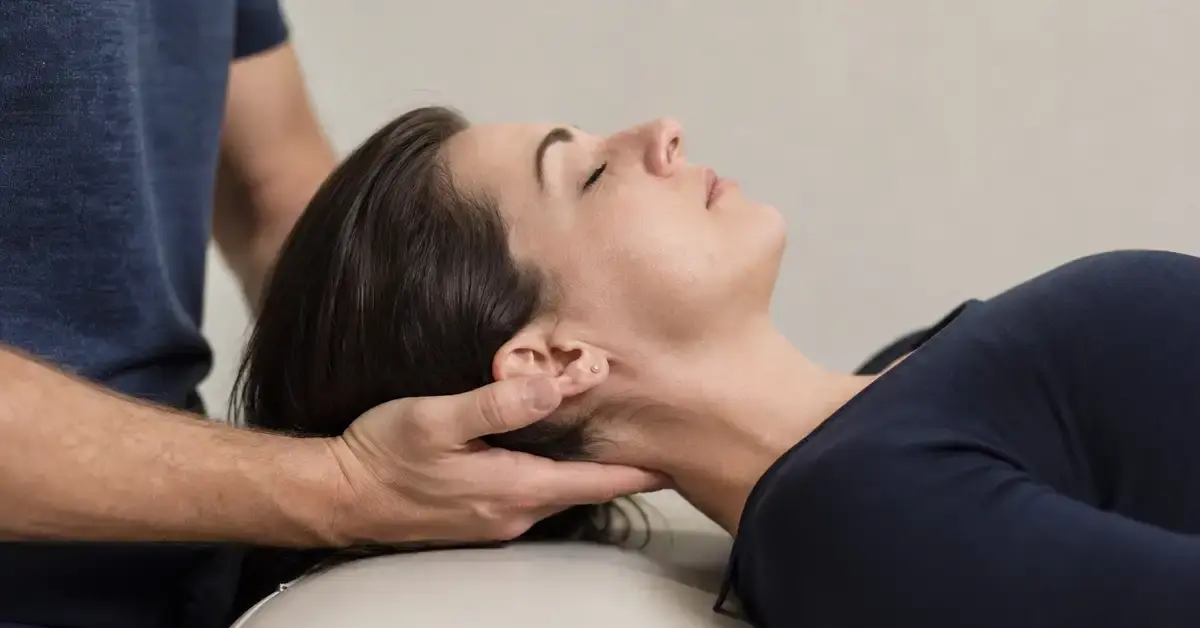
For cervicogenic headache, the strongest evidence backs hands-on manual therapy combined with targeted exercise. A systematic review of 20 randomised trials involving nearly 1,500 patients found moderate-to-large short-term reductions in headache frequency and intensity from manual therapy, with benefits in some studies still present at 12 months. Combining manual therapy with exercise is more effective and longer-lasting than either alone — which is why it forms the backbone of good treatment. Here is roughly how the options stack up by weight of evidence:
- Manual therapy (joint mobilisation, and manipulation where appropriate) — strongest for cervicogenic headache. Restores movement to stiff upper-neck segments and reduces referred pain.
- Manual therapy + exercise combined — the best overall approach. A typical starting course is 8–10 sessions over about six weeks.
- Therapeutic exercise — well supported. Deep neck flexor training, plus shoulder-blade and upper-back work, improves pain, function and even sleep.
- Ergonomic changes + physiotherapy — powerful for desk workers. A 2023 controlled trial found combining the two cut headache frequency by around half at six months, well ahead of either on its own.
- Soft-tissue work and dry needling — useful add-ons for tender muscles and trigger points, giving short-term relief alongside the core treatment.
- Acupuncture — an option. NICE says to consider a course of up to 10 sessions over 5 to 8 weeks to help prevent chronic tension-type headache, and for migraine prevention if preventive medicines have not worked or are unsuitable.
- Electrotherapy/TENS — weakest evidence; only ever a minor adjunct, never the main plan.
Tension-type headache responds to physiotherapy too — cervical exercise, manual therapy, posture work and relaxation all help — though the effects are more modest than for cervicogenic headache and work best when treatment targets the head, neck and jaw together. One note on safety: high-velocity neck manipulation is effective but is not for everyone. A careful physiotherapist screens for vascular risk first and chooses gentler techniques when manipulation is not advisable.
Exercises for neck-related headaches
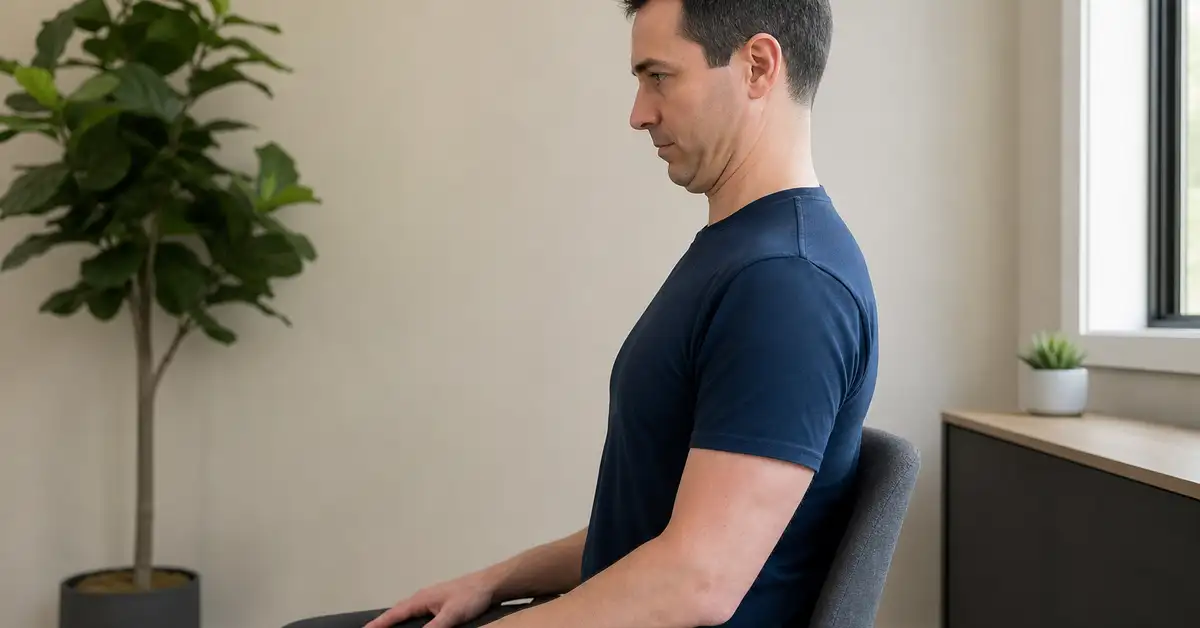
A short, consistent home programme beats a long one you never do. The exercises below are the staples your physiotherapist is most likely to prescribe. Start gently, stay within a comfortable range, and stop anything that brings on dizziness or visual symptoms. As a rule, quality of movement matters far more than effort.
| Exercise | How | Dose |
|---|---|---|
| Chin tucks (deep neck flexor) | Gently draw the chin straight back to lengthen the back of the neck, keeping surface muscles relaxed | Hold 5–10s × 10, twice daily |
| Shoulder-blade setting | Draw the shoulder blades gently back and down; progress to wall slides and Y/T raises | 10–12 reps, once or twice daily |
| Thoracic mobility | Seated or on all-fours rotations and cat-cow to free up the upper back | 8–10 each way, daily |
| Suboccipital release | Gentle nodding stretches, or a soft ball under the base of the skull with slow controlled movement | 30–60s, as needed |
Adherence is the quiet predictor of success: people who stick with their programme do markedly better, yet up to 70% of patients drift off their exercises. The fix is to keep it small and anchor it to a habit — do your chin tucks with your morning coffee, your thoracic rotations on a work break. A physiotherapist will progress the dose as your deep muscles rebuild endurance, then move you towards upright, real-world positions.
How long until headaches improve?

Most people with a neck-driven headache notice a meaningful change within four to six weeks of consistent treatment and home exercise. Recovery is rarely a straight line, but the trajectory below is typical. Longstanding or chronic headaches, or those tangled up with migraine, take longer and benefit from a more gradual, multidisciplinary approach.
What speeds things up? Clear mechanical drivers, good desk ergonomics and sticking to your exercises all point to a faster, fuller recovery. What slows them down? Longer-standing symptoms, high stress, poor sleep and an unaddressed workstation. The encouraging news is that almost all of those factors are ones you and your physiotherapist can change.
Preventing neck headaches at your desk
For hybrid and desk workers, the workstation is often where neck headaches are won or lost. The Health and Safety Executive requires employers to assess display-screen workstations and build in regular breaks — because poor setups reliably cause neck, shoulder and upper-limb strain. A few changes do most of the good:
- Screen at eye height. The top of the monitor roughly level with your eyes stops the chronic downward tilt; if you use a laptop, raise it on a stand and add a separate keyboard and mouse.
- Support your posture. Back supported, feet flat, shoulders relaxed, forearms roughly level with the desk.
- Move often. Take a micro-break every 30–45 minutes — even 30 seconds to roll the shoulders, turn the neck and sit tall resets the load. Slot a thoracic rotation or two into the break.
- Mind the basics. Decent sleep, staying hydrated and managing stress all lower the background tension that tips a stiff neck into a headache.
If you work from different spots — kitchen table one day, sofa the next — the inconsistency itself is a risk. Ergonomic advice tailored to how you actually work is part of what a physiotherapy assessment should deliver.
How CK Physio treats neck-related headaches
Our approach is assessment-led and evidence-based: find the source, treat it with hands-on therapy and targeted exercise, then fix the habits that caused it. At CK Physiotherapy, our HCPC-registered, CSP-member chartered physiotherapists begin with a thorough assessment to confirm whether your headache is genuinely coming from the neck — and to rule out anything that needs a GP. From there, treatment typically blends manual therapy to free up stiff upper-neck joints, a deep neck flexor and posture programme you can do at home, soft-tissue work for tender muscles, and practical ergonomic advice for your desk.
We have served Hanwell, Ealing and the surrounding West London area for over 22 years. Our current fees are listed on our bookings page, we are recognised by BUPA, AXA PPP, WPA, Groupama and Life UK, and we are open Monday to Thursday 8am–8pm, Friday 8am–6pm and Saturday 9am–12pm. If getting to the clinic is difficult — a bad flare, a newborn, a parent you care for — our home-visit physiotherapy service brings the same assessment and treatment to you.
Frequently asked questions
Can physiotherapy cure cervicogenic headaches?
Physiotherapy is the best-supported treatment for cervicogenic headache and can substantially reduce how often and how badly headaches strike. Systematic reviews show moderate-to-large short-term benefits, with some gains maintained at a year — especially when manual therapy is combined with exercise and ergonomic changes. Because it treats the actual cause in the neck, many people find their headaches resolve or improve dramatically, though longstanding cases may need ongoing self-management.
How do I know if my headache is coming from my neck?
Neck-driven headaches are usually one-sided and always on the same side, start at the neck or base of the skull, and are brought on or worsened by neck movement or sustained posture. A physiotherapist can often reproduce your familiar headache by gently pressing on or moving the upper neck, and may find reduced rotation on a specific test. Throbbing pain with nausea or sensitivity to light and sound points more towards migraine.
How many physiotherapy sessions will I need?
A typical starting course is around 8–10 sessions over roughly six weeks. Many people notice improvement within four to six weeks of consistent treatment and home exercises, with fuller recovery often by about three months. Chronic or longstanding headaches may take longer.
What is the difference between a tension headache and a cervicogenic headache?
A tension-type headache is usually a band-like pressing pain on both sides of the head, mild to moderate, and not made worse by normal activity. A cervicogenic headache is usually one-sided, starts in the neck, and is provoked by neck movement or posture, with reduced neck range of motion. Physiotherapy helps both, but cervicogenic headache tends to respond more directly because its cause is mechanical.
Which exercises help headaches that come from the neck?
The core programme is deep neck flexor training (chin tucks) to restore the deep stabilising muscles, plus shoulder-blade strengthening, thoracic (upper-back) mobility, gentle neck range-of-motion work and suboccipital self-release. These are best done most days of the week and progressed gradually — technique matters more than effort, and anything that causes dizziness should be stopped.
When is a headache a medical emergency rather than something physio can treat?
Seek urgent care for a sudden "thunderclap" headache peaking within five minutes; headache with fever, neck stiffness, confusion or weakness; a new or worsening headache with a cancer history; headache with new neurological signs; a new daily or continuous headache; or headache triggered by coughing or straining. Sudden neck pain and headache with neurological symptoms can signal an artery problem and must be treated as an emergency. Physiotherapy — especially neck manipulation — is not appropriate until serious causes are ruled out.
Can my desk setup really cause headaches?
Yes. Poor display-screen setups are a known contributor to neck strain and headaches, and the evidence is striking: combining good ergonomics with physiotherapy is far more effective for desk-related neck headaches than physiotherapy alone — cutting headache frequency by around half at six months in one trial. Raising your screen to eye height, supporting your posture and taking frequent micro-breaks are simple, high-value changes, especially for hybrid workers using laptops in different places.
Stop guessing where your headache comes from
If your headaches keep coming back, a chartered physiotherapy assessment can tell you whether your neck is the source — and what to do about it. Clinic appointments in Hanwell, and home visits in selected West London postcodes. Call 020 8566 4113.
Book an assessment Ask us a questionAbout the author. Written by the clinical team at CK Physiotherapy, a West London practice established in 2003. Our physiotherapists are registered with the Health and Care Professions Council (HCPC) and members of the Chartered Society of Physiotherapy (CSP). This article is for general information and is not a substitute for individual assessment, diagnosis or treatment. If you are worried about a headache, please seek professional advice.
Sources: International Classification of Headache Disorders, 3rd edition (ICHD-3); NICE CG150, Headaches in over 12s: diagnosis and management; Cervicogenic Headache, StatPearls; Manual and exercise therapy for cervicogenic headache, systematic review of 20 RCTs; Physical therapy in tension-type headache (systematic review); Chartered Society of Physiotherapy clinical update; red and orange flags for secondary headaches (SNNOOP10); HSE: working safely with display screen equipment.




.svg)

.svg)

.svg)