

Women's Health & Pregnancy Care
If you're experiencing pain during pregnancy, you might be wondering whether it's simply something you need to put up with. The answer is no. Pregnancy discomfort is common, but that doesn't mean it's inevitable or untreatable. Modern physiotherapy offers safe, effective approaches that can significantly improve your comfort and quality of life—whether you're in your first trimester or approaching your due date.
Pregnancy Physiotherapy in West London: Your Complete Guide to Managing Discomfort Safely
Evidence-based care for back pain and pelvic girdle pain during pregnancy—from the team at CK Physio, Ealing.
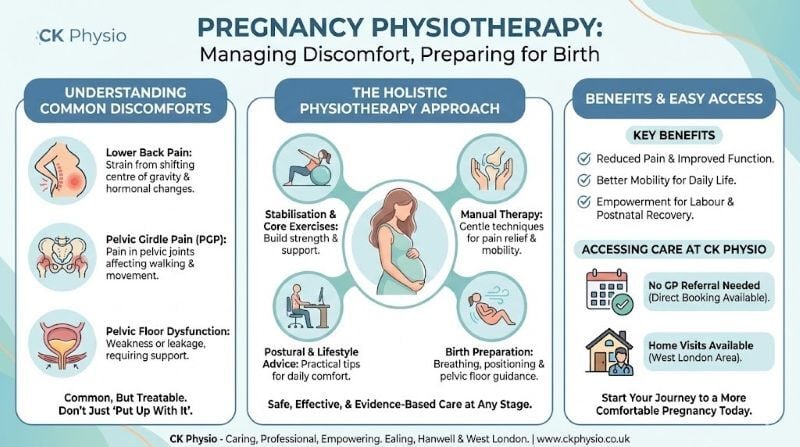
Pregnancy physiotherapy helps women manage the musculoskeletal changes and discomforts that commonly occur during pregnancy, including back pain, pelvic girdle pain, and pelvic floor dysfunction. Research published in 2024 found that 63% of pregnant women experience lumbopelvic pain at some stage during their pregnancy, with symptoms often intensifying as pregnancy progresses. At CK Physio in West London, our chartered physiotherapists provide personalised, evidence-based care to help you move more comfortably throughout your pregnancy and prepare your body for birth.
This guide draws on the latest clinical evidence, including seven major systematic reviews published between 2024 and 2025, to explain how pregnancy physiotherapy works, what conditions it can help with, and what you can expect from treatment at CK Physio.
Why Does Pregnancy Cause Physical Discomfort?
Your body undergoes remarkable changes during pregnancy. As your baby grows, your centre of gravity shifts forward, placing increased strain on your lower back and pelvis. Hormonal changes, particularly the release of relaxin, cause your ligaments to become more flexible in preparation for birth—but this can also reduce joint stability and contribute to pain.
The most common pregnancy-related musculoskeletal conditions include:
Lower Back Pain
A 2023 meta-analysis published in BMC Pregnancy and Childbirth estimated that 40.5% of pregnant women globally experience back pain. Prevalence increases throughout pregnancy: from 28.3% in the first trimester to 47.8% in the third trimester. Back pain during pregnancy is often caused by postural changes, muscle fatigue, and the increased load on your spine.
Pelvic Girdle Pain (PGP)
Pelvic girdle pain affects approximately one in five pregnant women, according to NICE guidance. You might hear it referred to as symphysis pubis dysfunction (SPD), though PGP is now the preferred clinical term as it more accurately describes the condition. PGP causes pain in the joints at the front and back of your pelvis and can make activities like walking, climbing stairs, and turning over in bed uncomfortable.
Pelvic Floor Dysfunction
A survey conducted by the Chartered Society of Physiotherapy, Netmums, and the Royal College of Midwives found that one in three women develop urinary incontinence during pregnancy, with the same proportion still experiencing symptoms one year after giving birth. Pelvic floor muscle training during pregnancy is now considered fundamental for preventing these issues.
CK Physio doesn't offer specialist pelvic health physiotherapy. If you have pelvic floor symptoms, such as leaking urine, speak to your GP. The NHS says a GP can refer you to your local NHS continence service, which includes specialist physiotherapists, and in some cases you may be able to refer yourself (see the NHS guidance on urinary incontinence treatment).
Other common complaints include sciatica (pain radiating down the leg), rib pain, carpal tunnel syndrome, and round ligament pain. All of these can be assessed and managed by a physiotherapist experienced in pregnancy care.
What Does Pregnancy Physiotherapy Involve?
A 2024 systematic review published in the International Journal of Gynecology & Obstetrics confirmed that exercise combined with education is more effective than education alone for reducing pain and disability during pregnancy. This reflects the approach we take at CK Physio: combining hands-on treatment with personalised exercise programmes and practical advice.
Your First Appointment
Your initial assessment will include a thorough discussion of your symptoms, medical history, and how your discomfort affects your daily life. Your physiotherapist will conduct a physical examination—adapted for pregnancy—to identify the source of your pain and any contributing factors such as posture, muscle imbalances, or movement patterns.
Treatment Approaches
Based on your assessment, your treatment plan may include:
- Stabilisation exercises — A 2025 study in BMC Women's Health found HIGH-level evidence that stabilisation exercises effectively reduce pain in the short term, with significant improvements in both pain levels and function
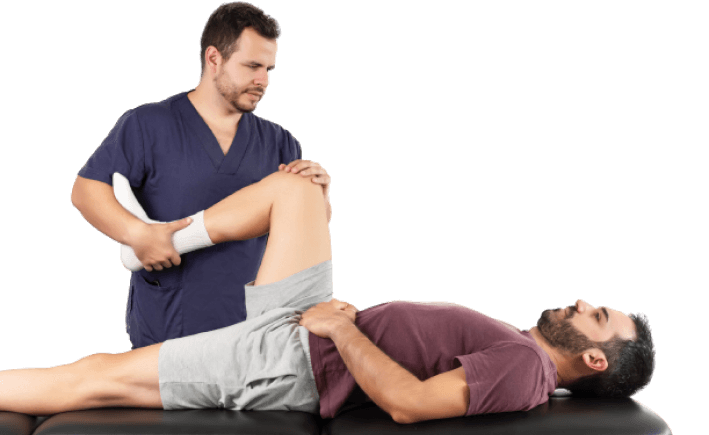
- Manual therapy — Gentle, hands-on techniques to improve joint mobility and relieve muscle tension. View our treatment options
- Postural advice — Practical guidance on sitting, standing, sleeping positions, and daily activities to reduce strain
- Pain management strategies — Including the use of supportive belts, heat therapy, and activity modification
- Birth preparation — Including breathing techniques and optimal positioning
A 2025 narrative review in the Annals of Medicine reinforced that biopsychosocial approaches—combining exercise, education, and manual therapy—outperform single-modality treatments. This is why we take a holistic approach, addressing not just your physical symptoms but also providing the knowledge and confidence you need to manage your condition.
When Should You See a Pregnancy Physiotherapist?
 You can start pregnancy physiotherapy at any stage. Many women begin in the second trimester when symptoms become noticeable, but there's no need to wait—early intervention is often associated with better outcomes.
Consider booking an appointment if you experience:
- Back pain that affects your sleep, work, or daily activities
- Pain in your pelvis, groin, or hips
- Difficulty walking, climbing stairs, or turning over in bed
- A desire to prepare your body for labour and birth
⚠️ When to Seek Urgent Medical Advice
Contact your midwife, GP, or maternity unit immediately if you experience vaginal bleeding, regular painful contractions before 37 weeks, chest pain, sudden swelling in your face or hands, severe headache, calf pain or swelling, or decreased fetal movement. These symptoms require medical assessment.
Most women benefit from 4–8 physiotherapy sessions during pregnancy, though this varies depending on your individual needs. Many women with pelvic girdle pain notice significant improvement within 2–3 sessions. Your physiotherapist will recommend an appropriate frequency based on your assessment and may suggest periodic check-ins as your pregnancy progresses.
Pregnancy Physiotherapy by Trimester
Is Pregnancy Physiotherapy Safe?
Yes. Physiotherapy is safe throughout pregnancy when delivered by a qualified chartered physiotherapist with experience in women's health. The NHS recommends physiotherapy as a first-line treatment for pregnancy-related musculoskeletal pain, and NICE antenatal care guidance (NG201) says to consider referral to physiotherapy services for women with pregnancy-related pelvic girdle pain.
A 2025 systematic review published in BMJ Open, analysing 54 randomised controlled trials, confirmed that physiotherapy has a preventative effect for lower back pain, pelvic girdle pain, excessive weight gain, and incontinence—as well as treatment benefits for women already experiencing symptoms.
Your physiotherapist will adapt all treatments to your stage of pregnancy and individual circumstances. Certain positions (such as lying flat on your back for extended periods) are avoided later in pregnancy, and any hands-on techniques are modified appropriately.
Important: Physiotherapy may not be appropriate if you have certain pregnancy complications. Your physiotherapist will discuss your medical history and liaise with your midwife or obstetrician if needed to ensure your care is coordinated and safe.
Home Visit Pregnancy Physiotherapy in West London
CK Physio offers home visit physiotherapy across Ealing, Hanwell, Acton, Northfields, Greenford, Brentford and surrounding areas of West London. Home visits can be particularly beneficial during pregnancy when:
- Mobility difficulties in the third trimester make travelling uncomfortable
- You're caring for other children and clinic visits are logistically challenging
- You prefer the privacy and comfort of treatment in your own home
- You want your physiotherapist to assess and advise on your home environment, including sleeping position and workstation setup
From Pregnancy to Postnatal Recovery
The care you receive during pregnancy directly supports your postnatal recovery. Women who strengthen their pelvic floor and deep core muscles before birth typically experience fewer complications—including reduced incidence of urinary incontinence and diastasis recti (abdominal separation).
NHS England mandated all integrated care boards to commission perinatal pelvic health services by March 2024, recognising the importance of continuous care from pregnancy through the postnatal period.
At CK Physio, we recommend a postnatal assessment at 6–8 weeks after birth to:
- Assess for diastasis recti
- Address any ongoing pain or discomfort
- Create a safe return-to-exercise plan
- Provide guidance on carrying, lifting, and caring for your baby
Frequently Asked Questions
Is physiotherapy safe during pregnancy?
Yes, physiotherapy is safe throughout pregnancy when delivered by a chartered physiotherapist experienced in women's health. The NHS recommends physiotherapy as a first-line treatment for pregnancy-related musculoskeletal pain. Treatments are adapted to each trimester and your individual medical history.
When should I start pregnancy physiotherapy?
You can start at any stage. Many women begin in the second trimester when pain becomes noticeable, but early intervention is recommended if pelvic girdle pain or back pain appears. Your midwife can advise on pelvic floor exercises from early pregnancy.
What does pregnancy physiotherapy involve?
A thorough musculoskeletal assessment followed by a personalised programme including core stability work, manual therapy, postural advice, and pain management strategies. Your physiotherapist also provides guidance on safe exercise and birth preparation.
Can physiotherapy help with pelvic girdle pain (PGP)?
Yes. NICE antenatal care guidance (NG201) says: “For women with pregnancy-related pelvic girdle pain, consider referral to physiotherapy services for: exercise advice and/or a non-rigid lumbopelvic belt.” Treatment includes exercises to improve pelvic stability, manual therapy, movement modification advice, and where appropriate, a supportive pelvic belt.
Is PGP the same as SPD?
Pelvic girdle pain (PGP) is the current clinical term that has largely replaced symphysis pubis dysfunction (SPD). PGP is a more accurate description as it encompasses pain in any of the pelvic joints, not just the symphysis pubis at the front of the pelvis.
Do I need a GP referral for pregnancy physiotherapy?
No. Chartered physiotherapists are first-contact practitioners—you can book directly without a GP referral. For NHS physiotherapy services, you may need a referral from your midwife, GP, or obstetrician. Book directly with CK Physio.
How many physiotherapy sessions will I need during pregnancy?
Most women benefit from 4–8 sessions, though this varies based on your individual needs. Many women with pelvic girdle pain see significant improvement within 2–3 sessions. Your physiotherapist will recommend a frequency based on assessment and may suggest periodic check-ins throughout pregnancy.
Is home visit pregnancy physiotherapy available in West London?
Yes. CK Physio offers home visit physiotherapy across West London including Ealing, Hanwell, and surrounding areas. Home visits are ideal for women with mobility difficulties in the third trimester or those who prefer treatment in their own environment.
What qualifications should a pregnancy physiotherapist have?
Look for HCPC registration and Chartered Society of Physiotherapy (CSP) membership. Ideally, additional postgraduate training in women's health or pelvic health physiotherapy. Membership of the Pelvic Obstetric and Gynaecological Physiotherapy (POGP) network indicates specialist expertise.
Does pelvic girdle pain go away after birth?
For most women, PGP improves significantly within the first few months after birth. However, some women continue to experience symptoms without appropriate treatment. A postnatal physiotherapy assessment can help identify any ongoing issues and guide your recovery.
Ready to Move More Comfortably During Pregnancy?
Our chartered physiotherapists at CK Physio in Ealing are experienced in helping women manage pregnancy-related discomfort. Book your assessment today—no GP referral needed.
Book Your Appointment →References & Further Reading
- National Institute for Health and Care Excellence (2021). Antenatal care [NG201]. NICE Guidelines.
- NHS England (2024). Implementation guidance: Perinatal pelvic health services.
- NHS (2023). Exercise in pregnancy. NHS UK.
- Tommy's (2024). Pelvic floor exercises during and after pregnancy.
- Pelvic Obstetric and Gynaecological Physiotherapy (POGP). Patient information resources. Chartered Society of Physiotherapy Professional Network.
- Chartered Society of Physiotherapy (2024). Pelvic girdle pain. CSP Frontline.
- National Institute for Health and Care Excellence. Management of pelvic girdle pain in pregnancy: Evidence review U. NICE Guideline NG201.




.svg)

.svg)

.svg)