

Written by: The CK Physio Clinical Team, Chartered Physiotherapists
Medically reviewed by: CK Physio Clinical Team — HCPC-registered physiotherapists and members of the Chartered Society of Physiotherapy
Published 28 April 2023 · Last updated 29 August 2026 · 9–11 min read
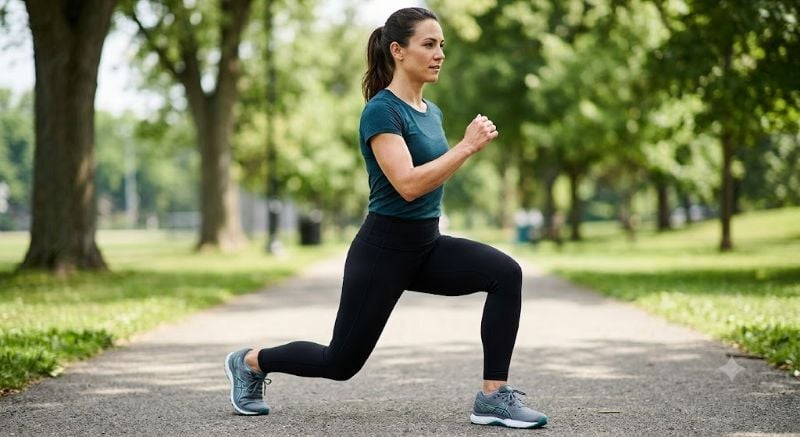
A gentle stroll rarely needs a formal warm-up, but a brisk, long or hilly walk does. Warm up for five to ten minutes by starting slowly and adding a handful of dynamic moves — leg swings, hip openers, ankle circles, walking lunges. Save static stretches (calves, hamstrings, quads, hip flexors, glutes) for afterwards, when they feel best and do most.
 Spring in West London tempts everyone back onto the towpaths and into Walpole Park after a quiet winter. The lighter evenings, the blossom on Ealing Common, the pull of a proper walk with friends — it's genuinely one of the best things about this part of the year. But it also brings a small, predictable spike in the aches and niggles we see at our Hanwell clinic: tight calves, sore heels, cranky knees, stiff hips. Almost all of them come from doing too much, too soon, after months of shorter, cooler, slower activity.
This guide is a physiotherapist's answer to what actually helps — and what doesn't. It's written for adults who want to walk more this spring, whether that's a lunchtime loop of Pitshanger Park, a Saturday along the Grand Union Canal, or the first serious hike since last September.
The Bottom Line
Dynamic moves before, static stretches after — and start every walk by walking slowly for the first five minutes. Stretching is excellent for range of motion, stiffness and comfort. It does not reliably prevent injury or next-day soreness — graded, progressive load does. Build your walking up by roughly 10% a week and your body will thank you.
Do you need to warm up before walking?
For a gentle stroll on flat ground, no — walking slowly for the first five minutes is warm-up enough. For a brisk, long, hilly or intentionally quicker walk, yes: five to ten minutes of dynamic movement and a slow start will make you feel better and move more freely.
The reasoning is proportionate. Walking is a low-intensity activity for most people, so the warm-up needed is small. What matters is that the muscles you're about to load — calves, glutes, hip flexors, hamstrings — are moving through their full range before you push the pace. The NHS guidance on warming up recommends around six minutes of movement before more vigorous exercise, and checking with a GP first if you're unsure whether the exercises suit your current fitness level.
If you're heading out for a genuinely brisk walk (using the free NHS Active 10 app to keep pace, for example), or up something like Horsenden Hill, treat it more like a workout than a wander — and warm up accordingly.
Dynamic vs static stretching: which, and when?
Dynamic stretches (moving through range) go before your walk. Static stretches (holding a position) go after. A long static hold before exercise can briefly reduce muscle power, so save the calf-against-the-wall stretches for the end.
The 2025 international Delphi consensus on stretching, published in the Journal of Sport and Health Science, agrees that short-duration static and dynamic stretching within a warm-up increase range of motion and are very unlikely to cause harm. But prolonged static stretching before power tasks produces a small, temporary performance dip. For walking specifically, the dip barely matters — but the habit still holds: move first, hold later.
150 min
Weekly target
Moderate activity for adults (UK CMOs, 2026)
−5.4%
Strength dip
After long static stretching pre-exercise (Simic et al.)
~10%
Weekly progression
A sensible cap for adding walking distance
Sources: UK CMO Physical Activity Guidelines (10 July 2026); Simic, Sarabon & Markovic 2013, Scandinavian Journal of Medicine & Science in Sports.
| Feature | Dynamic (before) | Static (after) |
|---|---|---|
| What it is | Controlled movement through range | Holding a lengthened position, 20–30 seconds |
| Best for | Waking muscles up, priming circulation | Restoring range, easing post-walk stiffness |
| Examples | Leg swings, hip openers, walking lunges | Wall calf stretch, standing quad, figure-4 glute |
| Time needed | 5–10 minutes | 5–10 minutes |
| Prevents injury? | Modestly helpful for brisker walks | No strong evidence — but aids comfort |
5 dynamic warm-up moves before your walk
Aim for 30–60 seconds of each, in any order, before you set off — or work through them in the first five minutes as you walk slowly out of your street. If a move hurts, skip it.
Leg swings (front-to-back)
Hold a wall or lamppost. Swing one leg forwards and back like a pendulum, staying tall through your torso. 10–15 swings each side. Wakes up the hip flexors, hamstrings and glutes together.
Hip openers ("open the gate")
Standing tall, lift one knee to hip height, then rotate the knee out to the side and back down. 8–10 each side. Mobilises the hips after long sits at a desk.
Ankle circles
Balance on one leg (or hold a wall), lift the other foot slightly, and draw slow circles with the toes. 10 in each direction, both sides. Small joint, big payoff on uneven towpath and park paths.
Walking lunges
Step forwards into a comfortable lunge, keeping the front knee over the ankle, then step through with the back leg. 6–8 lunges each side. Loads the whole lower body through a full stride length.
Arm swings and shoulder rolls
Gentle arm swings across the body, then wide, and 5–10 shoulder rolls forwards and back. Walking is a whole-body movement — a mobile upper back helps a taller, easier stride.
5 static cool-down stretches after your walk
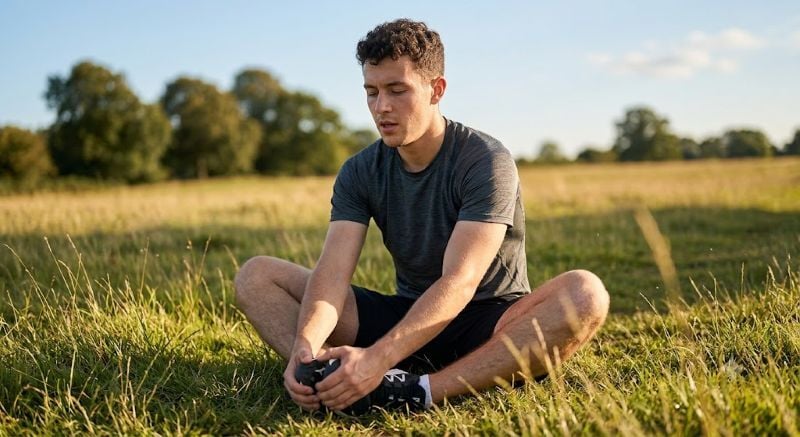
Do these once you're home (or on a park bench). Hold each for 20–30 seconds, breathing steadily. You should feel a comfortable stretch, never sharp pain. Repeat each side twice if you have time.
- Wall calf stretch (gastrocnemius). Hands on a wall, one leg back, heel down, back knee straight. Feel it in the upper calf. Especially useful if you have a history of plantar fasciitis or heel pain.
- Soleus stretch. Same wall stance, but bend the back knee slightly and drop the hips. Targets the deeper calf muscle — the one that quietly stiffens on hilly walks.
- Standing quad stretch. Hold a wall for balance, bend one knee and draw the heel toward the buttock. Keep the knees close together and the pelvis level.
- Hip flexor stretch (half-kneel). Kneel on one knee, other foot forward. Gently tuck the tailbone and press the front hip forward. Excellent counterbalance to a day spent sitting.
- Figure-4 glute stretch. Sitting or lying, cross one ankle over the opposite knee and gently draw the supporting leg toward you. Useful if you're prone to gluteal or hip pain.
An honest note on evidence: a widely cited Cochrane review by Herbert and colleagues concluded that muscle stretching — before, after, or both — does not produce clinically important reductions in delayed-onset muscle soreness. The value of these stretches is comfort, mobility and stiffness relief. Real injury prevention comes from graded loading and sensible progression, which is where the next section comes in.
 Getting back into walking this spring
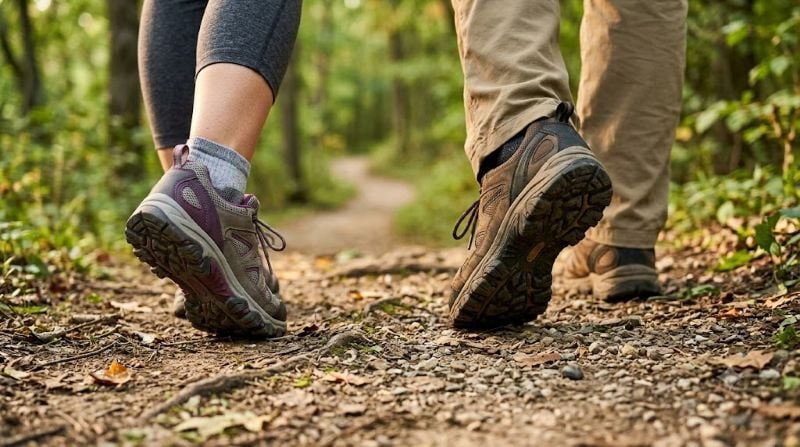
Add roughly 10% to your weekly walking time or distance, not more. Wear supportive shoes that suit the terrain. Start with flatter, softer surfaces. If you have hay fever, walk mid-morning or after rain, when pollen counts tend to be lower.
The most common reason people limp into the clinic in April and May is a sudden jump in volume. Someone who has been managing 20 minutes on winter pavements decides to do a two-hour Sunday along the Grand Union Canal, and their calves, plantar fascia or hip flexors flatly refuse. The muscles, tendons and joints all adapt, but they adapt gradually.
Two simple rules go a long way:
- Progress the easiest variable first. Add minutes before you add miles, and add miles before you add hills or pace.
- Treat the first warm week as a stress test. Layer sensibly — spring weather in West London switches from t-shirt to fleece across a single Osterley Park loop — and don't judge your fitness by a warm-day walk.
Coming back from an injury, or worried about the same one flaring? A tailored physiotherapy assessment is the fastest way to build back safely.
Book an assessmentCommon walking injuries — and how to prevent them
Most spring walking niggles fall into a small number of recognisable patterns. Each is manageable, and none of them mean you have to stop walking.
- Plantar fasciitis (heel pain). Per Physiopedia, plantar fasciitis affects 4–7% of people and accounts for around 15% of foot injuries, most commonly between 40 and 60. Progressive calf loading and specific stretching are the mainstays. See our plantar fasciitis guide.
- Shin splints (medial tibial stress syndrome). Overuse from a rapid jump in distance or intensity, or hard surfaces without support. Manage with load reduction, calf strengthening and better footwear.
- Iliotibial band (ITB) irritation. Lateral knee ache, load-related. Lateral hip strengthening tends to help far more than stretching "the band" itself. Details in our running injuries guide, which also applies to fast walkers.
- Calf strain. A sudden overload, often on a hill or when picking up pace. Rest, gentle movement and graduated return — not aggressive stretching.
- Low back and hip flexor tightness. Prolonged sitting shortens the hip flexors and tilts the pelvis, which the low back doesn't love. Regular walking, mobility work and the half-kneel stretch above all help. If it radiates or persists, see our sciatica guide.
For a sudden sprain or strain, the NHS advises rest, ice, compression and elevation for the first 48–72 hours, and keeping the area gently moving as it settles. See a physiotherapist if things aren't improving after a couple of weeks.
Red flags — don't stretch through these
Calf pain with swelling, warmth or redness in one leg can suggest a deep vein thrombosis (DVT) and needs urgent medical review. Chest pain, sudden severe headache, or losing sensation on one side while walking should be treated as emergencies. Persistent night pain, unexplained weight loss, or a sudden inability to bear weight all warrant a same-week appointment with your GP.
Walking for health: what the 2026 UK guidelines say
The UK Chief Medical Officers' refreshed guidelines, published on 10 July 2026, continue to recommend at least 150 minutes of moderate activity a week — brisk walking counts — plus muscle-strengthening on two or more days. The refresh emphasises that every movement counts and that strength and balance matter across life.
The full CMO report did not change the numeric targets, but it did strengthen two messages that matter for spring walkers. First, the biggest health gains come from moving from inactivity to any activity — a ten-minute daily walk really does count. Second, protecting muscle strength and balance is increasingly important with age (and particularly important for anyone taking GLP-1 weight-loss or diabetes medications, where preserving lean muscle mass matters).
Walking is one of the most well-evidenced activities for mental as well as physical health. A 2024 meta-analysis in JMIR Public Health and Surveillance, drawing on 44 randomised trials, found that walking significantly reduced depressive symptoms. It's a genuinely under-rated intervention.
Best places to walk in West London this spring
Living and working in Hanwell and Ealing, our clinicians are on these paths themselves — and so are many of our patients. A few that reliably reward a spring visit:
- Walpole Park, Ealing. Twenty-eight acres of Grade II-listed parkland by Pitzhanger Manor, about eight minutes from Ealing Broadway. Good flat loops.
- Gunnersbury Park. 186 acres of lakes, meadows and paths — long enough for a proper walk without leaving the borough.
- Osterley Park. A National Trust site with roughly 350 acres of park and farmland; longer routes for the day you want distance.
- Grand Union Canal towpath. Flat, quiet, and stretches for as far as your legs feel like carrying you.
- Brent River Park and Pitshanger Park. Softer underfoot — useful if you're returning from a foot or knee issue.
- Horsenden Hill. When you're ready for a gentle climb.
For structured company, the Ramblers Wellbeing Walks are free, short, volunteer-led walks with no need to book — ideal if you're building back up or walking alone feels daunting. National Walking Month runs every May.
When to see a physiotherapist
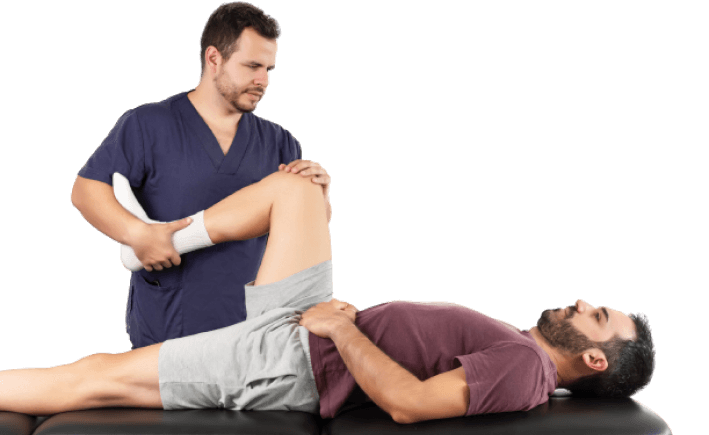
Most walking niggles settle within a week or two with sensible rest, gentle movement and a small step back in distance. It's worth booking an appointment if:
- Pain has lasted more than two weeks despite reducing your walking.
- The same injury keeps returning every time you build up your distance.
- You're limping, or changing how you walk to avoid discomfort.
- You have an upcoming walking holiday, event or long-distance goal and want to arrive at the start line comfortable.
- You're managing arthritis, a joint replacement, or a long-term condition and want a tailored plan. Our arthritis management guide is a useful starting point.
- You're an older adult concerned about balance or falls — see our thoughts on ageing, rehabilitation and physiotherapy.
How CK Physiotherapy helps walkers in Hanwell and Ealing
At CK Physio, we look after keen walkers, casual strollers and everyone in between — from West London Ramblers preparing for a longer route, to patients coming back from surgery who want to feel steady on Walpole Park again. Our HCPC-registered, Chartered Physiotherapists offer one-to-one physiotherapy, sports physiotherapy, and tailored return-to-activity plans out of our Hanwell clinic. We won't hand you a generic sheet of stretches — we'll work out why your particular calf, knee or hip is complaining, and build you back to comfortable walking on your own routes.
Frequently asked questions
Should I stretch before walking?
For a gentle stroll, no formal stretching is needed — walk slowly for the first five minutes. For a brisk, long or hilly walk, use dynamic moves (leg swings, hip openers, walking lunges) for five to ten minutes before you go.
Is it better to stretch before or after a walk?
Both have a role, but for different purposes. Dynamic stretching before helps mobility and readiness; static stretching after helps stiffness, range of motion and how you feel that evening.
How long should I warm up before walking?
Five to ten minutes is plenty. That includes starting your walk at an easy pace for the first few minutes — not just standing still doing exercises.
Should pre-walk stretches be dynamic or static?
Dynamic. Prolonged static holds before exercise can cause a small, temporary drop in muscle power. For walking the effect is minor, but the habit — move first, hold later — is worth keeping.
Why do my calves get tight after a long walk?
Usually because the load exceeded what your calves are currently used to. Ease off distance for a few days, do the wall calf and soleus stretches, and build back up gradually. If tightness comes with swelling or warmth, see a GP promptly — that can indicate a DVT.
Does stretching prevent injury or muscle soreness?
The best evidence suggests not reliably. Stretching improves range of motion and comfort, but a Cochrane review found it does not produce clinically important reductions in delayed-onset muscle soreness. Graded, progressive loading is the strongest injury-prevention lever — add about 10% to your walking each week, not more.
What stretches are best for older walkers or people with arthritis?
The five cool-down stretches above are all suitable, but you may prefer to do them seated or with the support of a chair or wall. Standing calf and hip flexor stretches, plus a seated figure-4 for the glutes, cover most of what's helpful. Consistency matters more than intensity.
How do I get back into walking after a winter off?
Start shorter than you think you should. Build by roughly 10% a week. Choose flatter, softer surfaces first. Wear shoes that fit the terrain. And if a niggle grumbles for more than two weeks, book an assessment rather than pushing through.
Walk further, more comfortably, this spring
Our Chartered Physiotherapists in Hanwell help walkers of every level return to their favourite West London routes — without the niggles that keep coming back. Whether you're managing an old injury or building up for a walking holiday, a single assessment often makes the difference.
References
- UK Chief Medical Officers. Physical Activity Guidelines: UK Chief Medical Officers' Report. Updated 10 July 2026. gov.uk
- Department of Health and Social Care. New UK CMO activity guidelines show every movement counts. Press release, 10 July 2026. gov.uk
- NHS. Walking for health. nhs.uk
- NHS. How to warm up before exercising. Media reviewed December 2023. nhs.uk
- NHS. Sprains and strains. nhs.uk
- Herbert RD, de Noronha M, Kamper SJ. Stretching to prevent or reduce muscle soreness after exercise. Cochrane Database of Systematic Reviews, 2011, Issue 7. Art. No.: CD004577. cochranelibrary.com
- International Delphi consensus on stretching. Journal of Sport and Health Science / ScienceDirect, 2025. sciencedirect.com
- Xu Z, et al. Effects of walking on depression and anxiety: meta-analysis of 44 RCTs. JMIR Public Health and Surveillance, 2024;10:e48355. publichealth.jmir.org
- Chartered Society of Physiotherapy. csp.org.uk
This article is educational and does not replace individual clinical advice. If you have a specific injury, condition, heart or lung problem, are pregnant, or are unsure whether an activity is safe for you, please speak with your GP or an HCPC-registered physiotherapist before beginning.




.svg)

.svg)

.svg)