
25. May 2023
Epsom salt baths are one of the most widely recommended home-recovery tools in physiotherapy — and as chartered physiotherapists at CK Physiotherapy in Hanwell, we get asked about them constantly. The warm water genuinely eases muscle tension, reduces joint stiffness and improves sleep. Whether the dissolved magnesium adds extra benefit beyond the heat is an open and honestly-answered scientific question — and this guide gives you the full, evidence-graded picture so you can decide whether an Epsom salt soak belongs in your recovery routine.
Key Takeaway
Epsom salt (magnesium sulphate) baths are a low-risk complementary treatment for muscle pain, joint stiffness and post-exercise recovery. The warm water delivers proven physiological benefits — vasodilation, parasympathetic activation, improved sleep latency. A small University of Birmingham study found that 12-minute daily soaks raised blood magnesium levels, though no large randomised controlled trial has yet confirmed clinically meaningful transdermal absorption. As chartered physiotherapists, we recommend them alongside — never instead of — professional treatment.
300+
Enzymatic Reactions
Magnesium acts as a cofactor in over 300 biochemical processes
~38%
UK Women Below EAR
Estimated average requirement for dietary magnesium
36%
Faster Sleep Onset
Warm baths at 40–42.5°C taken 1–2 hours before bed
10M+
UK Adults with Arthritis
Over 10 million people in the UK live with an arthritic condition
Sources: NIH Office of Dietary Supplements 2024, Haghayegh et al., Sleep Medicine Reviews 2019, Arthritis Research UK
What is Epsom salt — and why do people still bathe in it?
Epsom salt is magnesium sulphate (MgSO₄·7H₂O), a naturally occurring mineral compound of magnesium, sulphur and oxygen. It was first identified in the mineral springs of Epsom, Surrey, in 1618 — and despite the name, it is chemically unrelated to table salt (sodium chloride). The two active components — magnesium and sulphate — are both involved in musculoskeletal health, which is why physiotherapists have recommended Epsom salt soaks for generations.
Magnesium is a cofactor in over 300 enzymatic reactions in the body, supporting muscle and nerve function, energy production, bone density, protein synthesis and heart rhythm. It also helps regulate cortisol and supports the parasympathetic nervous system — both critical for recovery from injury, exercise and the daily demands of an active life. The NHS sets the UK Reference Nutrient Intake at 300 mg per day for men and 270 mg per day for women — yet studies suggest a significant proportion of UK adults fall short of these targets through diet alone.
Sulphate supports protein synthesis, the production of collagen and keratin (important for joint cartilage, skin and connective tissue), and the body's natural metabolic processes. It also contributes to the formation of joint proteins essential for maintaining cartilage integrity — directly relevant to patients we see at our Hanwell clinic with osteoarthritis and chronic joint stiffness.
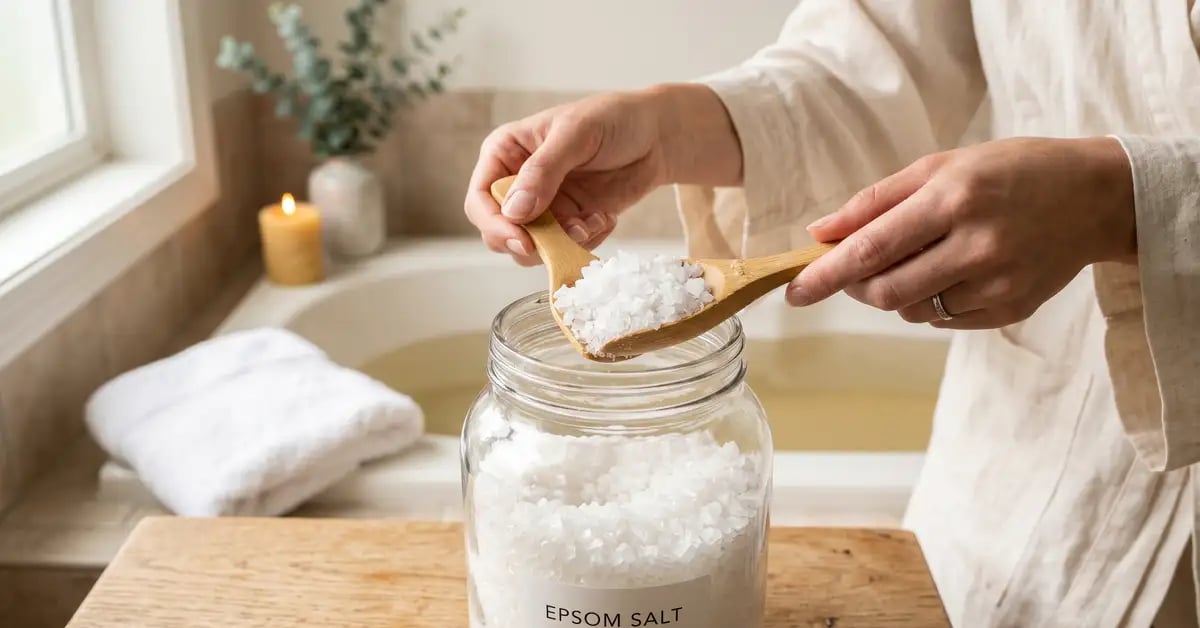
Epsom salt — magnesium sulphate (MgSO₄) — has been used therapeutically since its discovery in Epsom, Surrey, in 1618.
Do Epsom salt baths actually work? What the evidence says in 2026
Partly — and the honest answer matters. The warm water itself delivers well-established physiological benefits: vasodilation, muscle relaxation, parasympathetic activation and improved sleep onset. Whether the dissolved Epsom salt adds a distinct, measurable benefit on top of that remains an open scientific question. As chartered physiotherapists at CK Physio, we believe patients deserve a straight answer rather than overstated claims.
The University of Birmingham study — what it really found
The most frequently cited evidence for Epsom-salt bathing is a study by Dr R.H. Waring at the University of Birmingham. Nineteen volunteers bathed daily for 12 minutes with Epsom salt dissolved in their bathwater; blood and urine samples were taken at baseline and after seven days. Seventeen of the nineteen participants showed elevated serum magnesium and urinary sulphate after the week of bathing. The researchers recommended approximately 500–600 g of Epsom salt dissolved in a standard UK bath of around 60 litres.
Important Caveat
The Birmingham study involved only 19 participants, had no control group, and has not been published in a peer-reviewed journal. It is frequently cited in the wellness press but was classified as "questionable quality" by the 2017 Nutrients systematic review. It is supporting evidence — not definitive proof.
The University of Queensland skin-permeation study
A separate, peer-reviewed study by Chandrasekaran and colleagues (Magnesium Research, 2016) at the University of Queensland used multiphoton microscopy to study magnesium ion penetration through ex-vivo human skin samples. Their findings confirmed that magnesium ions can cross the stratum corneum, primarily via hair follicles — with follicle pathways contributing roughly a 40% increase in penetration. Importantly, the mechanism is concentration- and time-dependent, and absorption is faster through barrier-compromised skin.
The key clinical nuance: hair follicles account for only 0.1–1% of total skin surface area, so the systemic dose delivered through a typical bath — while real — is likely to be modest compared to oral supplementation.
The "Myth or Reality" review — the most balanced read of the evidence
The most rigorous overview of the literature remains the 2017 systematic review "Myth or Reality — Transdermal Magnesium?" by Gröber et al., published in Nutrients. The reviewers concluded that while topical magnesium application — including bathing — can raise serum levels in some studies, the evidence base remains small, methodologically limited, and insufficient to make definitive clinical recommendations. The mechanism is biologically plausible; the clinical proof is not yet there.
New evidence in 2024: magnesium and muscle soreness
A major 2024 systematic review by Tarsitano and colleagues (Journal of Translational Medicine) confirmed that oral magnesium supplementation significantly reduces muscle soreness across different types of physical activity, and that physically active individuals may need 10–20% more magnesium than their sedentary counterparts. This strengthens the physiological plausibility of the Epsom salt bath — but it is important to be clear: the study examined oral supplementation, not transdermal delivery. The two routes are not interchangeable, and we should not extend the oral findings to bathing without direct evidence.
The Bottom Line on the Evidence
As of 2026, no peer-reviewed randomised controlled trial has confirmed that magnesium dissolved in an Epsom salt bath is absorbed in clinically meaningful quantities. Magnesium ions can cross the skin barrier (Chandrasekaran 2016), and small human studies including Waring's Birmingham work suggest serum levels may rise after repeated bathing. However, the 2017 Nutrients review concluded the claim remains unproven at scale. What we can say with confidence is that warm-water immersion at 40–42.5°C reduces muscle stiffness, improves sleep latency by around 36%, and is safe and pleasant for most people. Whether the dissolved salt adds anything above and beyond the heat is plausible but not established. We recommend Epsom salt baths on that basis — as a low-risk complementary measure with genuine warm-water benefits and a biologically credible extra mechanism that hasn't yet been disproved.
How much Epsom salt should you put in a UK bath?
For a standard UK bath of approximately 60 litres, dissolve 500–600 g (roughly 2 cups) of Epsom salt in warm water. This is the dose used in the University of Birmingham study and is the most commonly referenced clinical recommendation. For a foot soak, use 100–150 g (about half a cup) dissolved in a basin of warm water.
| Application | Amount | Water Temp | Duration | Frequency |
|---|---|---|---|---|
| Full bath | 500–600 g (∼2 cups) | 38–40°C | 15–20 min | 2–3× per week |
| Foot soak | 100–150 g (½ cup) | 38–40°C | 15–20 min | Daily if needed |
| Sleep recovery | 500–600 g (∼2 cups) | 40–42.5°C | 10–15 min | 1–2 hrs before bed |
| Injury recovery | 500–600 g (∼2 cups) | 38–40°C | 15–20 min | Daily (short-term) |
Based on University of Birmingham study recommendations and standard physiotherapy clinical guidance. Always consult your physiotherapist or GP if recovering from injury or surgery.
Most people use far too little — a small handful of crystals in a full bath is unlikely to produce much effect. Conversely, adding more than 600 g is unnecessary and wasteful; there is no evidence that doubling the dose doubles the benefit. The key is to dissolve the salt fully before getting in and allow at least 15 minutes for absorption to occur.
What temperature should an Epsom salt bath be?

A 15–20 minute soak at 38–40°C eases muscle tension; 40–42.5°C taken 1–2 hours before bed has been shown to improve sleep latency by around 36%.
For muscle recovery and joint pain, aim for 38–40°C. For sleep improvement, the evidence points to a slightly warmer range of 40–42.5°C, taken 1–2 hours before bed. A 2019 meta-analysis of 13 trials by Haghayegh and colleagues found that passive body heating in this range shortened sleep latency by around 36% and improved sleep efficiency. The mechanism is elegant: warm water dilates peripheral blood vessels, the body's core temperature drops as heat dissipates, and that drop triggers natural sleep onset.
Avoid water above 42.5°C. Overly hot baths raise heart rate, lower blood pressure, can worsen acute inflammation, and increase the risk of dizziness when standing — particularly relevant for older adults, anyone with cardiovascular conditions, and pregnant women (keep below 39°C in pregnancy).
Do Epsom salt baths help with DOMS and post-exercise muscle recovery?
Epsom salt baths can meaningfully ease the symptoms of delayed-onset muscle soreness (DOMS) — but most of that benefit comes from the warm water increasing blood flow to fatigued muscle tissue, not specifically from the salt. DOMS typically peaks 24–72 hours after unaccustomed exercise as microscopic muscle fibre damage triggers an inflammatory response. Warm-water immersion reduces perceived stiffness, promotes tissue perfusion, and shortens the subjective recovery window.
The 2024 Tarsitano systematic review confirmed that oral magnesium reduces muscle soreness and protects against exercise-induced muscle damage — but as noted above, that evidence is for oral supplementation, and the route matters. Until a direct RCT compares Epsom-salt bathing against a plain warm-water control for DOMS outcomes, the salt-specific contribution remains uncertain.
For athletes and active individuals in Hanwell and Ealing, we typically recommend the following recovery sequence after heavy training:
Rehydrate first
Drink 500 ml of water before getting into the bath. Warm immersion causes sweating and fluid loss, which will slow recovery if you go in already depleted.
Time it within 2 hours of exercise
Take the bath while blood flow to muscles remains elevated. Use 500–600 g of Epsom salt at 38–40°C and soak for 15–20 minutes.
Gentle movement after the soak
While muscles are warm and pliable, a short round of light stretching — hip flexors, hamstrings, calves — helps maintain the range of motion gained and reduces the likelihood of stiffening overnight.
Use it as one part of a recovery strategy
Epsom salt baths work best alongside sleep, nutrition, active recovery and — if you have recurring tightness, pain or performance plateaus — professional physiotherapy assessment to identify underlying biomechanical issues that home remedies cannot fix.
Recurring muscle pain or DOMS that won't resolve? CK Physio's chartered physiotherapy assessments identify the root cause — not just the symptom.
Book an AssessmentCan Epsom salt baths help arthritis and joint pain?
Evidence is limited, but warm water bathing reliably eases joint stiffness and pain — and is recognised as a useful adjunct therapy in NICE guideline NG226 for osteoarthritis. Over 10 million people in the UK live with an arthritic condition; for many, an Epsom salt soak is one of the few accessible, low-cost interventions that reliably makes mornings feel more manageable.
From a physiotherapy perspective, the benefits for arthritic patients are primarily warm-water driven: vasodilation reduces joint congestion, the buoyancy partially unloads compressed joints, and the parasympathetic shift reduces the muscle guarding that worsens stiffness. Magnesium and sulphate may provide a mild anti-inflammatory contribution — but we would not stake a clinical recommendation on that alone.
Important clinical context: Epsom salt baths do not slow joint damage, modify disease progression, or replace the exercise, load-management and hands-on treatment that physiotherapy for osteoarthritis patients provides. They sit usefully alongside these measures as a comfort and maintenance tool — particularly on high-pain mornings before exercise, or on evenings following a physiotherapy session.

At CK Physiotherapy in Hanwell, we integrate home-care guidance — including Epsom salt bath recommendations — into every recovery programme.
Epsom salt baths and back pain — a physiotherapist's view
Back pain is the most common musculoskeletal complaint we see at our Hanwell clinic, and the question of whether an Epsom salt bath will help comes up regularly. The short answer: yes, with caveats. A warm soak can reduce the muscle spasm and protective guarding that often accompanies acute and sub-acute back pain, making it easier to perform the gentle rehabilitation exercises that are the real driver of recovery.
What a bath cannot do is address the underlying cause — whether that is a disc bulge, facet joint irritation, or a movement pattern problem. If your back pain is acute (less than six weeks), a warm bath on the same evening as a bout of pain can provide short-term relief. If pain is persistent, recurrent or accompanied by leg symptoms such as sciatica, please do not rely on bathing alone — see a physiotherapist. Our guide to physiotherapy for sciatica explains what a thorough assessment and structured rehabilitation plan involves.
Epsom salt baths, sleep and stress reduction
Evening Epsom salt baths support the body's natural sleep mechanisms through peripheral vasodilation and core temperature drop.
The sleep benefit of a warm bath is one of the most robustly evidenced effects in this space. The 2019 meta-analysis by Haghayegh et al. — which pooled data from 13 trials — found that warm-water bathing at 40–42.5°C taken 1–2 hours before bedtime shortened sleep latency by approximately 36% and improved sleep quality. The mechanism involves peripheral vasodilation: warm water draws blood to the skin, heat dissipates, core body temperature falls, and this drop activates the body's sleep-onset circuits.
Magnesium also plays a direct role in sleep quality via a different route: adequate magnesium levels are associated with lower cortisol, calmer GABA receptor activity, and improved parasympathetic tone. Whether bathing raises magnesium levels sufficiently to produce this neurological effect is unknown — but many patients at CK Physio report noticeably better sleep after an evening Epsom salt soak, and the warm-water mechanism alone is sufficient to explain that experience.
Poor sleep is one of the most underestimated barriers to musculoskeletal recovery. If sleep disruption is contributing to your pain or performance problems, it is worth exploring the fuller picture with your physiotherapist or GP — but an evening bath is a genuinely useful first step. We also explore the relationship between physical health and wellbeing in our article on how physiotherapy supports mental health.
Epsom salt bath vs oral magnesium supplement — which is better?
🛁 Epsom Salt Bath
Benefits: Whole-body warm-water effects (vasodilation, muscle relaxation, sleep improvement), skin contact for topical absorption, accessible and low cost, no gastrointestinal side effects.
Limitations: Systemic magnesium delivery unproven at scale; time-consuming; not suitable for all conditions or mobility levels.
💊 Oral Magnesium
Benefits: Well-absorbed systemically (especially glycinate, malate and citrate forms); directly addresses dietary deficiency; supported by RCT evidence for DOMS reduction (Tarsitano 2024) and sleep improvement.
Limitations: No whole-body warm-water benefits; can cause loose stools at high doses; requires consistent daily habit; some forms less bioavailable.
The honest answer is that they do different things. If you are genuinely magnesium-deficient and want to address that, an oral supplement (magnesium glycinate or citrate) has the better evidence base. If you want the whole-body relaxation, muscle-recovery and sleep benefits of warm-water immersion — with the possible bonus of topical magnesium — the bath is the more enjoyable option. Many of our patients at CK Physio do both. As always, if you are considering supplements, discuss with your GP or pharmacist first — particularly if you have kidney problems, as magnesium clearance depends on healthy renal function.
Who should avoid Epsom salt baths?
Epsom salt baths are safe for most healthy adults — but certain conditions warrant caution or a conversation with your GP before starting.
Check with Your GP or Physiotherapist First if You Have:
Kidney disease — kidneys regulate magnesium excretion; reduced clearance can lead to accumulation. Heart failure or severe cardiovascular disease — hot baths and magnesium absorption may both affect blood pressure and cardiac load. Uncontrolled low blood pressure — warm immersion causes peripheral vasodilation and can precipitate dizziness. Open wounds, burns or active skin infection — Epsom salt solution will irritate damaged or infected tissue. Pregnancy — keep water below 39°C; consult your midwife in the first trimester or if high-risk. Diabetes with peripheral neuropathy — reduced sensation in the feet and legs increases burn risk from hot water. Children — use under medical guidance only.
One important point that is sometimes missed: never ingest Epsom salt bathwater. Oral use of Epsom salt as a laxative is an entirely separate, FDA-approved application that requires specific medical guidance and very different dosing. Drinking bathwater containing 500 g of dissolved Epsom salt could cause serious gastrointestinal or cardiovascular effects.
Other everyday uses for Epsom salt
Beyond full-body bathing, Epsom salt has several practical uses that patients at our Hanwell clinic find helpful as part of their home-care routine:
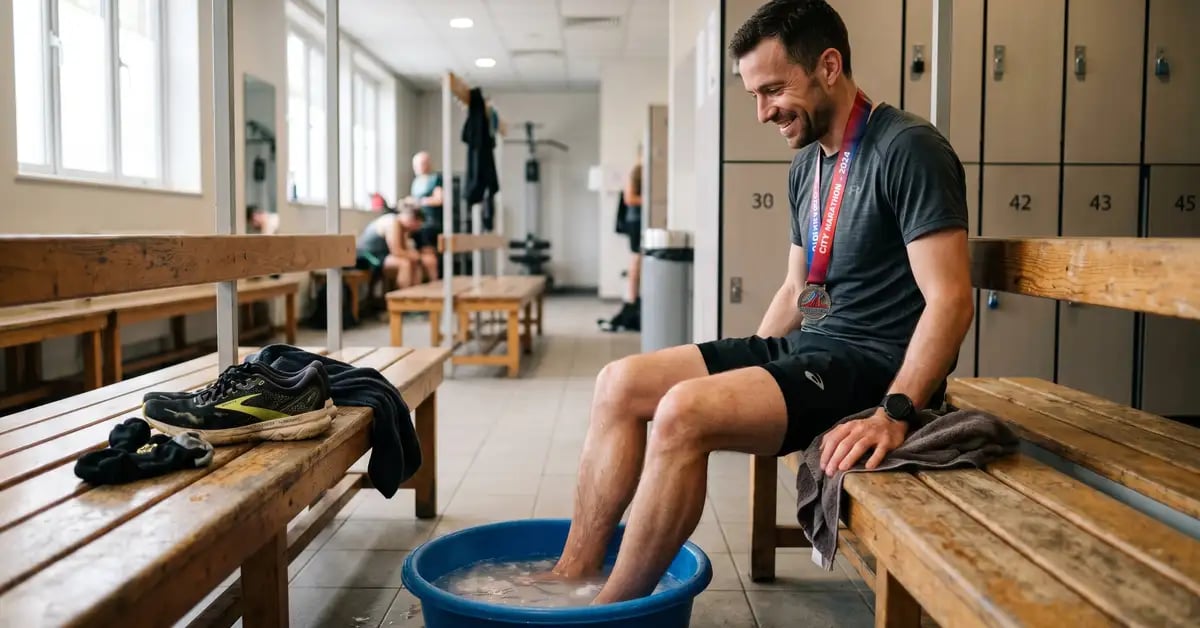
- Foot soaks — particularly useful for patients with plantar fasciitis, ankle stiffness, or generalised foot fatigue after a long day on your feet. Use 100–150 g in a basin of warm water for 15–20 minutes.
- Post-manual-therapy maintenance — an Epsom salt bath on the same evening as a physiotherapy session can help preserve the muscle relaxation achieved during hands-on treatment.
- Skin exfoliation — mixed with a small amount of coconut or olive oil, Epsom salt makes a gentle body scrub. Note: use this sparingly and avoid broken skin.
- Post-surgical rehabilitation — once wounds have fully healed and your physiotherapist or surgeon has given the go-ahead, Epsom salt baths can help reduce stiffness and improve range of motion during the recovery phase.
- Gardening — Epsom salt is a well-regarded source of magnesium for magnesium-depleted soils, particularly effective for tomatoes, peppers and roses.
A physiotherapist's verdict: when an Epsom salt bath is (and isn't) the right choice
After 22 years treating musculoskeletal conditions at CK Physiotherapy in Hanwell, here is our straightforward clinical take:
Epsom salt baths are a genuinely useful complementary tool for muscle recovery, joint stiffness, post-exercise soreness, stress management and sleep quality. The warm water does the heavy lifting evidentially; the dissolved salt is a biologically plausible add-on that hasn't been disproved and carries essentially no risk for healthy adults at the recommended doses.
They are not a treatment for disc herniations, tendon damage, osteoarthritis progression, nerve impingement or structural joint problems. If your pain is severe, persistent (more than six weeks), worsening, or accompanied by neurological symptoms — numbness, pins and needles, weakness — please seek professional assessment. Our conditions page covers the full range of presentations we assess and treat at the clinic.
For older adults in particular, an Epsom salt bath is one of the most accessible, affordable and low-risk home-care measures available. We discuss mobility and home-management strategies in more detail in our guide to the need for physiotherapy in senior years.
What This Means for Your Recovery
Use Epsom salt baths as a complement to professional physiotherapy — not a substitute for it. They are most effective when integrated into a broader recovery programme that includes structured exercise, professional treatment, load management and sleep hygiene. If you are unsure whether they are right for your specific condition, ask your chartered physiotherapist at your next session.
Frequently Asked Questions
Does soaking in Epsom salt actually work?
Partly. The warm water reliably eases muscle tension, improves blood flow and shortens sleep onset by around 36% (Haghayegh 2019). Whether enough magnesium crosses the skin to add a measurable benefit is unproven by peer-reviewed trials. Most people feel better after an Epsom salt bath, even if much of the credit belongs to the heat.
How much Epsom salt should you put in a UK bath?
For a standard UK bath of about 60 litres, dissolve 500–600 g (roughly 2 cups) of Epsom salt in warm water — the dose used in the University of Birmingham study. Stir until fully dissolved before getting in. For a foot soak, use 100–150 g in a warm basin.
How long should you soak in an Epsom salt bath?
Soak for 15–20 minutes. The University of Birmingham study used 12 minutes; most clinical guidance recommends 15 minutes as a minimum. Longer than 20 minutes adds little extra benefit, can dry the skin, and may lower blood pressure — particularly in hot water. Drink water afterwards to stay hydrated.
How often can you take an Epsom salt bath?
Most healthy adults can take an Epsom salt bath 2–3 times a week — the frequency studied at the University of Birmingham. Daily use is not harmful for most people but can dry the skin. If you have a heart condition, kidney disease, low blood pressure or are pregnant, check with your GP first.
What temperature should an Epsom salt bath be?
Aim for 38–40°C for muscle recovery and joint pain. For sleep improvement, the evidence supports 40–42.5°C taken 1–2 hours before bed — a range shown in a 2019 meta-analysis to shorten sleep latency by around 36%. Avoid water that feels uncomfortably hot, which can raise heart rate and worsen acute swelling.
Do Epsom salt baths help with DOMS?
Epsom salt baths can ease the symptoms of delayed-onset muscle soreness, but most of the relief comes from warm water increasing blood flow to tired muscles, not specifically from the salt. A 2024 systematic review (Tarsitano et al., Journal of Translational Medicine) confirmed oral magnesium reduces DOMS; transdermal absorption from bathing is less certain.
Can Epsom salt baths help arthritis or joint pain?
Evidence is limited, but warm water bathing reliably eases joint stiffness and pain — recognised as a useful adjunct in NICE guideline NG226 for osteoarthritis. Dissolved Epsom salt may add a mild anti-inflammatory effect. It does not slow joint damage and should sit alongside, not replace, exercise, weight management and physiotherapy.
Who should avoid Epsom salt baths?
Avoid Epsom salt baths without medical guidance if you have kidney disease, severe heart failure, very low blood pressure, open wounds, active skin infection, or are pregnant. People with diabetes and peripheral neuropathy should be cautious due to reduced sensation and burn risk. Children should only use them under medical advice. Never ingest Epsom salt bathwater.
Persistent pain that an Epsom salt bath isn't resolving?
CK Physiotherapy has been treating Hanwell and Ealing patients since 2003. Our HCPC-registered, CSP-accredited chartered physiotherapists will identify the root cause and build a personalised treatment plan — from manual therapy and shockwave to corrective exercise and home visits.
References & Further Reading
- Gröber U, Werner T, Vormann J, Kisters K. Myth or Reality — Transdermal Magnesium? Nutrients. 2017;9(8):813. pmc.ncbi.nlm.nih.gov/articles/PMC5579607
- Chandrasekaran NC, Sanchez WY, Mohammed YH, Grice JE, Roberts MS, Barnard RT. Permeation of topically applied magnesium ions through human skin is facilitated by hair follicles. Magnesium Research. 2016;29(2):35–42. pubmed.ncbi.nlm.nih.gov/27624531
- Tarsitano MG, Quinzi F, et al. Effects of magnesium supplementation on muscle soreness in different types of physical activity: a systematic review. Journal of Translational Medicine. 2024;22:629. link.springer.com/article/10.1186/s12967-024-05434-x
- Haghayegh S, Khoshnevis S, Smolensky MH, Diller KR, Castriotta RJ. Before-bedtime passive body heating by warm shower or bath to improve sleep: A systematic review and meta-analysis. Sleep Medicine Reviews. 2019;46:124–135. pubmed.ncbi.nlm.nih.gov/30453683
- NHS — Vitamins and minerals: magnesium (Others). nhs.uk/conditions/vitamins-and-minerals/others
- NIH Office of Dietary Supplements — Magnesium: Health Professional Fact Sheet. ods.od.nih.gov/factsheets/Magnesium-HealthProfessional
- NICE Guideline NG226 — Osteoarthritis in over 16s: diagnosis and management (2022). nice.org.uk/guidance/ng226
- Chartered Society of Physiotherapy (CSP). csp.org.uk
- Health and Care Professions Council (HCPC) — Check the Register. hcpc-uk.org/check-the-register
- Sport England — Active Lives Adult Survey 2024–25. sportengland.org — England is getting more active
- Arthritis Research UK. arthritis-research.org
Medical disclaimer: This article is for general information only and does not replace personalised clinical advice. If you have a medical condition, are pregnant, or take prescribed medication, consult your GP, pharmacist or chartered physiotherapist before starting any new home-care routine. Bryan Kelly MCSP and Angela Benjamin MCSP are registered with the Health and Care Professions Council (HCPC) and are members of the Chartered Society of Physiotherapy.
Bryan Kelly
Chartered Physiotherapist (MCSP, HCPC-registered), CK Physiotherapy, Hanwell
Bryan graduated in physiotherapy from Curtin University, Perth, in 1995 and has been practising in West London since 1997. He founded CK Physiotherapy in Hanwell in 2003. His clinical interests include musculoskeletal rehabilitation, sports injuries, spinal conditions and postural assessment, integrating manual therapy, exercise programmes and evidence-based home-care guidance into every treatment plan.




.svg)

.svg)

.svg)